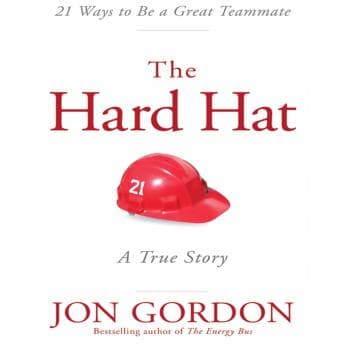

Two hours. That's it. Jon Gordon respects your time, and honestly? That alone puts this book in the top 10% of business audiobooks I've consumed this year.
Look, I'll be upfront—I went into this expecting another rehash of teamwork platitudes. You know the type. "Communication is key!" "Trust your teammates!" Groundbreaking stuff. But Gordon anchors everything in the real story of George Boiardi, a Cornell lacrosse player who died young but left behind a legacy that still shapes that program decades later. That narrative backbone makes all the difference.
The George Boiardi Effect
My parents never read leadership books. They just showed up at 5 AM, treated their employees like family, and outworked everyone on the block. George Boiardi sounds like he had that same energy—the kind of teammate who makes everyone around him better not through speeches, but through showing up. Every. Single. Day.
The 21 principles themselves aren't revolutionary. I've seen variations of most of them in boardrooms and failed startups alike. But Gordon's genius is in the specificity. He doesn't just tell you to "be selfless"—he shows you what that looked like when George did it, through interviews with his actual teammates and coaches. That's the difference between a TED talk and real wisdom.
Gordon Behind the Mic
So Gordon reads his own book. This is always a gamble. Some authors should stick to writing (looking at you, every economist ever). But Gordon pulls it off. His voice has this warm, almost pastoral quality—like your favorite coach giving you a pep talk after a tough loss. The pacing is solid, maybe a touch casual for corporate training types, but I didn't mind.
I listened at 1.5x during my morning commute, which felt about right. At 2x it gets a little breathless, but totally doable if you're in a hurry. The production is clean, nothing fancy, no dramatic music or sound effects. Just Gordon talking to you like a human being.
Here's my one gripe: some of the 21 lessons blend together. By lesson 15, I was starting to zone out a bit. Not because the content is bad, but because there's only so many ways to say "be a good person" before it starts feeling repetitive. Character had the same problem—solid principles stretched a bit thin across too many chapters. The exercises at the end of each section help, but I found myself wishing he'd cut it to 12 lessons and gone deeper.
Worth Your Two Hours If...
You're a coach, team leader, or anyone building culture from scratch—this is worth your two hours. Period. The ROI is there. You'll walk away with at least 3-4 actionable ideas you can implement immediately. Skip it if you're looking for cutting-edge organizational theory or data-driven insights. This isn't that book. It's more heart than head, more story than strategy.
Jenny would say I'm being harsh when I call it "simple." And Jenny is right—sometimes simple is exactly what you need. Not every business book needs to be a 400-page manifesto. Sometimes the best leadership advice fits on a hard hat. Gambler proved that to me too—sometimes the sharpest insights come from people who lived it, not theorized it.
The Two-Hour Test
It's not going to change your life. But it might change how you show up for your team tomorrow. And honestly? That's enough.