
Can you actually think yourself into being a better person? Or is that just something we tell ourselves while doom-scrolling at 2 AM?
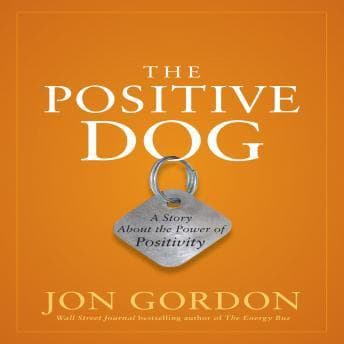
I was making dal—my mother's recipe, the one that requires actual attention and stirring—when I decided to queue up something short. Ninety minutes seemed perfect. Something to occupy the part of my brain that wasn't monitoring cumin seeds. Jon Gordon's The Positive Dog promised simplicity, and honestly? After a week of dense case studies on attachment disorders, I needed something that wasn't going to make me take notes.
The Two Dogs Framework (Yes, It's That Simple)
Here's the premise: you have two metaphorical dogs inside you. One's positive, one's negative. Whichever you feed more wins. Gordon delivers this through Matt, a negative mutt, and Bubba, the big dog who becomes his positivity mentor. The transformation arc is predictable—Matt learns to feed the right dog, changes himself, changes the shelter.
Psychologically, this is cognitive behavioral therapy dressed in a fur coat. The research shows that thought patterns can be redirected through conscious effort and repetition. For a more rigorous exploration of these same principles—complete with actual therapeutic exercises—Emotional First Aid offers what Gordon's fable format necessarily omits. Gordon isn't wrong about the mechanism. He's packaging legitimate psychological principles into a fable format that Fortune 500 executives can digest between meetings.
The protagonist exhibits classic negative cognitive distortions early on—catastrophizing, filtering out positives, the whole diagnostic checklist. Bubba's interventions? They're basically reframing techniques. My therapist would have thoughts about this character, and most of them would be approving nods.
Author-Narrated: The Double-Edged Bone
Gordon reads his own work, which creates an interesting dynamic. His tone is clear, warm, genuinely positive—no surprise there, given his brand. There's an earnestness that comes through when authors narrate their own motivational content. You're not just hearing the words; you're hearing the belief behind them.
But here's the thing. Compared to The Energy Bus, which I've encountered in various professional development contexts (academia loves its mandatory positivity training), this one feels... thinner. Listeners who've read Gordon's other work consistently note that The Positive Dog is his least substantial offering. It's not bad. It's just the appetizer when you were expecting an entrée.
The 90-minute runtime is both a feature and a limitation. You get the core message without padding, but you also don't get much depth. No extended case studies, no nuanced exploration of when positivity becomes toxic bypassing, no acknowledgment that sometimes the negative dog is actually trying to protect you from genuine threats. (My research brain couldn't help noticing this gap.)
Who Should Listen—And Who Should Skip
What makes Matt's arc work is its simplicity. He's not fighting complex trauma or systemic barriers. He's just... negative. And then he chooses not to be. For some listeners, this is exactly right. It's permission to believe that change is possible through daily practice.
For others—and I found myself asking: why does this bother some people so much?—the message feels dismissive. One reviewer noted that certain personal elements should have been disclosed upfront. I suspect this refers to the spiritual undertones that run through Gordon's work. If you're looking for secular psychology, you might find the framework a bit too faith-adjacent for comfort.
Listen if: you're new to positivity frameworks, need a quick mental reset, or want something light during chores. Skip if: you're a psychology nerd hoping for research citations, you've already read Gordon's other books, or spiritual undertones in self-help make you twitchy.
This is a fascinating case study in audience self-selection. The people who need to hear "feed the positive dog" will love this. The people who are already cynical about positivity culture will find their cynicism confirmed. Neither group is wrong, exactly. They're just feeding different dogs.
Best Consumed With Low Expectations
Listen during housework, a short commute, or while doing something that requires only partial attention. This isn't a book that demands dedicated focus. It's a pep talk in audiobook form—effective for what it is, limited by what it isn't.
If you're new to Gordon's work, start with The Energy Bus instead. It's the fuller meal. If you've already read his other books and want a quick reinforcement of principles you already know, this serves that purpose.
Case Closed
Ninety minutes. One metaphor. A clear message about cognitive choice. Jon Gordon delivers exactly what he promises—no more, no less. The research shows that simple frameworks, repeated consistently, can shift thought patterns over time. Whether you find this inspiring or reductive probably says more about where you are in your own journey than about the book itself.
My dal turned out perfectly, by the way. The book finished right as I was adding the final tadka. Sometimes simple recipes work.