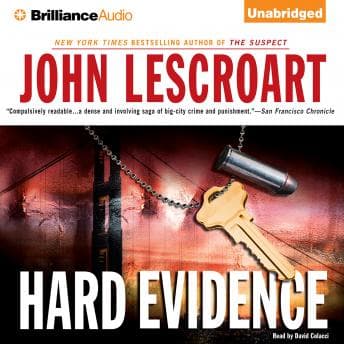

Seventeen hours with a legal thriller that opens on a severed hand in a shark's stomach. That's how Lescroart hooks you, and I'll admit—the man knows how to start a mission.
I finished this one during a week of windshield time between client sites, and by hour three I was genuinely invested in Dismas Hardy's predicament. Here's a prosecutor who ends up switching sides mid-case. That's not a spoiler—it's the premise. And Lescroart handles the ethical gymnastics with the kind of procedural detail that tells me he actually talked to lawyers instead of just watching Law & Order reruns.
The Courtroom Actually Works
I've sat through enough JAG proceedings and military tribunals to know when legal fiction gets it wrong. Lescroart doesn't. The courtroom sequences have weight—motions that matter, evidence chains that make sense, judge interactions that feel authentic rather than theatrical. Good Samaritan delivers that same procedural authenticity, though with a prosecutor facing different moral compromises. When Hardy's case involving the Japanese call girl starts unraveling, you can follow the logic of why it falls apart. That's harder to pull off than most authors realize.
The San Francisco setting works too. This isn't generic Big City backdrop—Lescroart clearly knows his terrain. Second Wife uses its setting with similar precision, though in a completely different context. Silicon Valley money, the particular flavor of Bay Area politics, the way class operates differently there than it does in, say, Austin. It grounds what could've been a sensational murder-of-the-week plot into something with actual texture.
Colacci's Sledgehammer Problem
Here's where I have to be straight with you. David Colacci narrates this like he's briefing a room full of people who might fall asleep. Everything lands with the same intensity. His character differentiation runs from gruff to gruffer to gruffest—I counted maybe three distinct voice registers across a cast of at least a dozen significant players.
Now, I've heard Colacci in later work and he gets better. This is clearly an early performance, and it shows. The man can tell a story—the pacing of scenes works, the humor comes through, the suspense builds where it should. But the lack of vocal subtlety means you're doing extra mental work to track who's speaking. By hour twelve, I was ready for someone to just whisper for once.
He nails Hardy's internal voice though. The protagonist's dry observations and moral wrestling come across clearly. When Hardy's questioning his own choices about which side of the courtroom he belongs on, Colacci delivers that conflict. It's the ensemble work that suffers.
Where It Drags
Seventeen hours is a commitment. I listen at 1.25x because life's too short for slow narrators, but even accelerated, this one has sections that feel like we're marching in place. The middle act especially—there's subplot territory involving the victim's daughter and some judicial complications that could've been tighter. Lescroart's doing worldbuilding for a series here, and sometimes you feel the scaffolding more than the story.
The payoff's worth it though. When the case finally cracks open and Hardy has to reconcile everything he thought he knew, it lands. Not with fireworks, but with the kind of quiet satisfaction of a puzzle finally making sense.
Who Should Deploy
If you're a legal thriller completist or you're already invested in the Dismas Hardy series, this is essential. The procedural authenticity alone sets it apart from the Grisham-lite crowd. If you've read the print version and loved it, the audio adds dimension even with Colacci's limitations.
Skip it if you need dynamic narration to stay engaged, or if you're looking for something to half-listen to while doing other things. This demands attention—the plot's too intricate for background noise, and the similar character voices mean you'll lose the thread if you zone out.
Ranger slept through most of this one, which tracks—he prefers books with more action sequences. But I kept coming back to it, which says something.
Mission Debrief
Solid legal thriller with authentic procedural chops, hampered by narration that hasn't found its nuance yet. Lescroart clearly did his homework, and Hardy's moral complexity elevates this above standard courtroom fare. But at seventeen hours with Colacci's early-career delivery, it's a long haul. Wait for a sale unless you're already committed to the series.