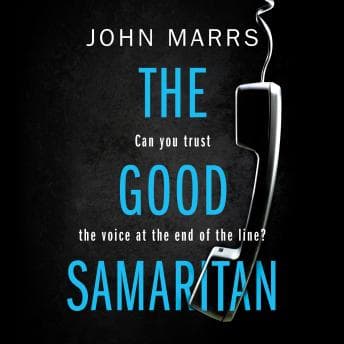

What happens when the voice on the other end of a crisis hotline doesn't actually want you to live?
I've been chasing that specific flavor of horror for years - the kind that lives in the mundane, in the places we're supposed to feel safe. John Marrs found it. And honestly? I'm still a little unsettled.
The Monster Wearing a Headset
Laura is one of the most effectively terrifying antagonists I've encountered in psychological thriller audiobooks. She's not supernatural. She doesn't have a tragic backstory that makes you sympathize. She's just... wrong. In the most human, most believable way possible. She volunteers at a suicide prevention hotline because she feeds on vulnerability. She wants callers to die.
The slow realization of what Laura is doing, the way she manipulates people at their lowest moments - Marrs doesn't flinch from it. And neither does Elizabeth Knowelden, whose narration of Laura is genuinely chilling. There's this soothing quality to her voice that makes it worse, you know? Because that's exactly what Laura would sound like. Calm. Helpful. The last voice some people ever hear.
I listened to chunks of this during late-night shelving at the library. The fluorescent lights buzzing, empty stacks stretching out behind me. A book fell off the cart during a particularly tense scene and I nearly knocked over an entire display. No regrets.
Four Voices, One Twisted Web
The full cast approach works beautifully here - Charlotte Cole, Matthew Lloyd Davies, and Tim Campbell round out the ensemble, and the character differentiation is solid. Ryan's grief over his wife's suicide comes through raw and real. The pacing of switching between perspectives keeps you off-balance in exactly the right way.
But here's the thing - some listeners have mentioned the narrator switches felt interruptive at times. I get it. There are moments in the middle where the momentum stutters a bit, where you're pulled out of the tension. It's not a dealbreaker, but it's there. The story drags in places, particularly when we're circling the same emotional beats before the plot kicks back into gear.
What I appreciate is that the performers don't pull back when the material gets dark - and it gets DARK. The production is clean, no weird audio issues, just pure psychological manipulation piped directly into your ears. Compare this to something like Back of Beyond, which also plays with psychological tension and unreliable perspectives - Marrs leans harder into the domestic horror angle, making the everyday feel poisonous.
When the Villain Thinks She's the Hero
Look, I've listened to a lot of unreliable narrator stories. Most of them telegraph their twists from chapter two. Marrs keeps you guessing - not because of cheap tricks, but because Laura is so thoroughly convinced she's the hero of her own story. She's helping people, in her mind. Setting them free.
There's that same sense of wrongness that seeps into everything, that feeling that the walls are closing in even when nothing overtly horrifying is happening. The revised edition apparently includes an epilogue that ties things up nicely - I appreciated the closure without it feeling forced.
This is exactly the kind of psychological horror that sparks good discussion on my podcast. Is Laura a product of her circumstances? Does her difficult past explain anything? Marrs doesn't let her off the hook, and neither should we. The best horror villains are the ones who believe they're righteous.
Who Should Listen (And Who Should Skip)
Content warnings are real here. Suicide is central to the plot, not just mentioned in passing. There's psychological manipulation that might hit close to home for some listeners. If you're sensitive to these themes, skip this one. This isn't cozy thriller territory - it's the kind of book that makes you look at helpful strangers a little differently.
Perfect for commutes where you want to be completely absorbed. I'd maybe avoid bedtime listening unless you're like me and find this stuff weirdly comforting. (We all cope differently.)
The pacing issues in the middle section are real - 1.25x speed helps push through the slower bits without losing the atmosphere. Some sections feel a little stiff, and I'm honestly not sure if that's the writing or the performance. Probably a bit of both. But when this book works? It really works.
Marrs understands that the scariest monsters are the ones who look just like everyone else. The ones who answer the phone when you're at your most vulnerable. The ones who smile while they watch you fall.
My cat knocked a book off my nightstand while I was finishing this. Fitting, really. She's unimpressed by most things. I was genuinely unsettled. That's usually how I know something worked.









