
Twenty-Three Minutes That Wrecked Me
I was grading sophomore essays on symbolism—the irony isn't lost on me—when I put this on. Twenty-three minutes. That's it. Barely longer than my commute to school. And yet here I am, red pen abandoned, staring out the window at the Chicago lakefront like some Victorian protagonist myself.
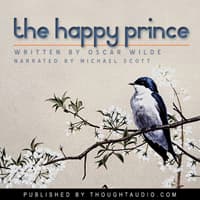
Look, I teach Wilde. I've taught "The Happy Prince" probably thirty times. I know every beat of this story. The gilded statue. The loyal swallow. The slow, beautiful dismantling of privilege in service of compassion. My students roll their eyes when I get emotional about it. (They think I'm being dramatic. They're not entirely wrong.) But hearing it read aloud—really read, not just performed—hit differently.
What Wilde Was Really Doing
Here's the thing about this story that I don't think people appreciate enough: it's not just sad. It's angry. Wilde wrote this in 1888, peak Victorian self-congratulation, and he created a tale where a dead prince—literally dead, turned to gold and jewels—has to lose everything beautiful about himself to actually see the suffering right below his pedestal. The sapphire eyes. The ruby from his sword. The gold leaf, strip by strip. Only in blindness does he finally see.
My students always want to read it as a simple charity fable. Give to the poor, feel good about yourself. But Wilde's sharper than that. The town councilors at the end—declaring the melted statue "no longer beautiful" and therefore "no longer useful"—that's the real gut punch. That's Wilde saying: you people don't actually want salvation. You want aesthetics.
Scott's reading of the Tao Te Ching wrestles with similar tensions between appearance and truth, though obviously from a completely different philosophical tradition.
This is why we still read the classics. Not because they're old. Because they're still mad about the same things we should be mad about.
The Voice Behind It
Michael Scott's narration is... fine. I want to be careful here because I couldn't find much about this particular narrator online, and honestly, at 23 minutes, there's only so much room to really showcase range. Scott's also narrated Call of the Wild and Heart of Darkness—seems like he's carved out a niche in classic literature, which tracks. What I can say is that his voice is clear, his diction is proper, and he doesn't get in the way of Wilde's prose. That last part matters more than people think.
The pacing works for a bedtime listen or a quick commute piece. Some reviewers have mentioned it feels rushed in spots, and I can see that—there are moments where I wanted him to sit in the silence a bit longer, especially during the swallow's final moments. The prose deserves to be savored. Wilde chose those pauses for a reason.
But here's my honest take: for a story this short, from what appears to be a smaller production, Scott does the job. He's not doing full character voices—this isn't a theatrical performance—but his tone carries the melancholy without tipping into melodrama. That's harder than it sounds. I've heard versions where narrators lean so hard into the sadness that it becomes parody. Scott keeps it restrained. Almost British in that way. (Though some reviewers noted his accent might not quite land the Victorian era perfectly—I'll leave that debate to people more particular about such things than I am.)
Who Should Listen (And Who Should Skip)
Let me be real: this is not the definitive audiobook version of "The Happy Prince." If you want theatrical, seek out the 1976 BBC adaptation with John Gielgud—that's the gold standard. (Pun intended. Sorry. Teacher humor.) Skip this one if you're an audiophile expecting premium production values or a narrator with dramatic range.
But if you want a quick, accessible introduction to Wilde's fairy tales? If you've got a 20-minute window and want something that'll make you feel something? This works. It's clean audio, unabridged, and respects the source material.
I'd recommend this for:
- Parents looking for a bedtime story with actual literary weight
- Commuters who want something complete in one trip
- Anyone who loved Wilde's wit and wants to see his heart
- My students who claim they "don't have time" to read classics (you have 23 minutes, Tyler)
If you loved this, the spiritual successors are obvious: "The Nightingale and the Rose" (same collection, same devastating beauty), "The Selfish Giant" (Wilde's most overtly Christian parable), or honestly, just dive into the full Happy Prince and Other Tales collection. And if you want something in a similar vein but longer, "A Christmas Carol" hits many of the same notes about wealth, blindness, and redemption.
Final Grade
Is this a must-listen? For Wilde completists and fairy tale lovers, yes. For people wanting top-tier audiobook narration, maybe sample first. The production is solid but not spectacular.
But the story itself? The story is why I became an English teacher. It's Wilde at his most sincere, his most vulnerable, his most furious at a world that values gold over goodness. Twenty-three minutes to remind you what literature can do when it stops showing off and starts caring.
I should probably get back to grading. But I think I'm going to sit here another minute. The lakefront looks different when you've just watched a swallow die for love.
Worth pausing the faculty meeting for. (Sorry again, Principal Martinez.)