"We are leaving the era of passive observation and entering the era of active participation in the cosmos."
I wrote that quote down somewhere around hour three, sitting on a packed Caltrain at 6:47 AM while some guy's elbow was literally in my ribs. And honestly? It hit different. Here I am debugging distributed systems for a living, and Kaku's over here talking about humanity becoming a multi-planetary species like it's just the next sprint on the roadmap.
Bottom Line: Worth your commute. Solid science pop, great for the train, but don't expect anything you haven't heard if you've been following SpaceX news and reading Ars Technica for the past decade.
When the Engineer Brain Kicks In
Okay, so here's the thing about Michio Kaku books. He's basically the friendly professor who makes physics accessible, which is great. But I'm a software engineer. I work with systems. And sometimes - look, I don't want to be that person - but sometimes I wanted him to go deeper on the actual engineering challenges instead of hand-waving past them.
The Mars terraforming section? Fascinating. He covers everything from magnetic shields to genetically engineered plants that could survive Martian conditions. The ROI on this audiobook is definitely there for anyone who wants a high-level tour of where we might be headed. But when he started talking about "uploading consciousness" and "laser porting" ourselves across the galaxy, my brain started throwing exceptions. The science holds up... mostly. Until it doesn't. And then you're just kind of along for the ride on pure speculation.
Which, fine. That's the point. It's futurism. I get it.
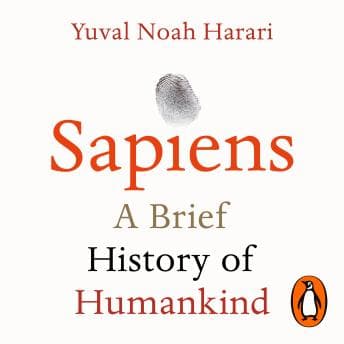
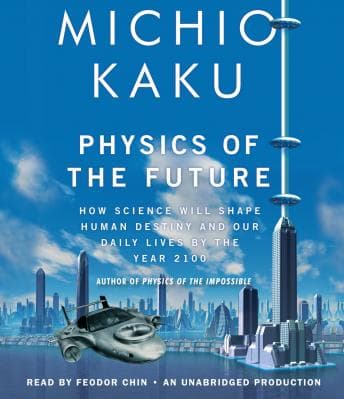
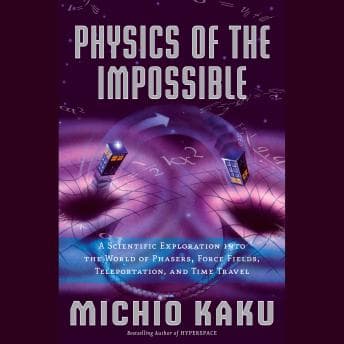
But I finished Physics of the Impossible a few years ago and this feels like Kaku doing his greatest hits. For a broader historical perspective on humanity's trajectory, Sapiens pairs surprisingly well with this—same big-picture thinking, just looking backward instead of forward. Wormholes, check. Parallel universes, check. The Kardashev scale, obviously check. If you've never encountered these concepts, this is a great entry point. If you've been nerding out on this stuff since high school like me, it's more of a refresher course with some updated references.
Feodor Chin Made This Work
I finished this in about 5 commutes (plus one late night after an on-call incident where I couldn't sleep anyway). Feodor Chin is not Ray Porter - need I say more about my preferences - but he's solid. Really solid, actually.
His pacing is well-balanced for science content, which matters more than people realize. Some narrators rush through technical explanations like they're trying to catch a train. Chin gives you space to process. His tone has this curiosity to it that matches Kaku's enthusiasm without tipping into cheesy. I listened at 1.5x and it worked perfectly.
A few reviewers complained about his accent being distracting. I honestly didn't notice? Maybe I'm just used to tuning out background noise on public transit. The audio quality is clean and crisp - no weird production issues, no jarring volume changes. Exactly what you want for a 12-hour science book.
Perfect for: Train, Gym. Skip for: Deep Work
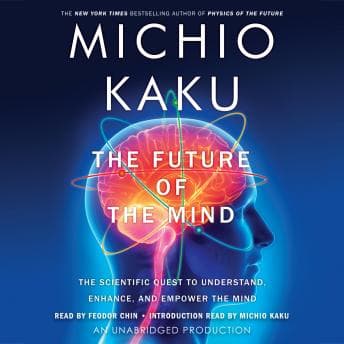
This is basically "The Future of the Mind" but for space. Same structure, same accessible tone, same mix of established science and wild speculation. If you loved that book, you'll like this one. If you found it too surface-level, you'll probably feel the same way here.
The book is at its best when Kaku is explaining near-term possibilities - the Mars stuff, the nanoship concepts, the laser sail technology that's actually being tested right now. It loses me a bit when he gets into the far-future immortality and consciousness uploading chapters. Not because those aren't interesting topics, but because the speculation-to-science ratio tips too far.
Who should listen: Anyone who wants a broad overview of space exploration possibilities. People new to these concepts. Commuters who want something engaging but not too demanding. Who should skip: If you've read more than three Kaku books, you've probably heard most of this. If you want deep technical dives, this isn't it. This is a survey course, not a graduate seminar.
Kevin asked me what I thought about halfway through and I said "it's like a really good TED talk that goes on for 12 hours." That's... both a compliment and a critique? I enjoyed it. I learned a few things. I'm not rushing to re-listen.
But for getting through a week of early morning trains? Yeah, it did the job.




![Steve Jobs [unabridged audiobook] audiobook cover](/_next/image?url=https%3A%2F%2Fcovers.audiobooks.com%2Fimages%2Fcovers%2Ffull%2F9788499923406.jpg&w=1920&q=75)