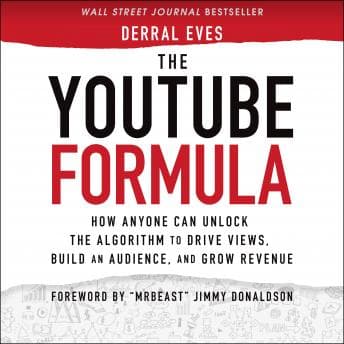

"The algorithm doesn't care about your feelings. It cares about watch time."
Somewhere around hour three, stuck on a delayed Caltrain at Redwood City, that line hit me. And honestly? That's the most useful distillation of this entire 10-hour audiobook. Derral Eves clearly knows his stuff—60 billion views isn't a number you stumble into—but the delivery of that knowledge is... well, let's say it's optimized for the wrong metrics.
The Tom Parks Problem
Here's the thing. Eves narrates parts of this book himself, and when he does, you can hear the enthusiasm of someone who genuinely geeks out about CTR optimization and audience retention graphs. Then Tom Parks takes over, and it's like switching from a YouTube creator who's excited about their niche to someone reading a technical manual at 0.75x speed. The contrast is jarring.
I bumped it to 1.75x (my standard "this could've been a blog post" speed) and Parks still sounded like he was reading bedtime stories to robots. Not his fault, really—business audiobooks are hard to make exciting. But when you're trying to absorb information about thumbnail psychology and watch-time optimization while surrounded by snoring commuters at 6:47 AM, you need SOME energy to stay locked in.
Skip to Hour Seven for the Good Stuff
Let's be fair to the actual content. The first two-thirds covers ground that anyone who's watched a few YouTube strategy videos already knows. Same surface-level stuff you'd find in Who Moved My Cheese—obvious once you hear it, but packaged as revelation. Algorithm basics, the importance of consistency, why your first 48 hours matter. YouTube Growth 101. If you're completely new to the platform, solid foundational stuff. If you've already watched a dozen videos from Eves's own channel or read YouTube Secrets by Sean Cannell, you're going to be checking your phone a lot.
BUT. The final third? That's where Eves actually earns his credibility. The case studies get specific. The analytics breakdowns get granular. There's a section on reading your audience retention graphs that genuinely changed how I think about content structure—and I don't even have a YouTube channel. I just find this stuff fascinating from a systems perspective. (Distributed systems, content distribution systems—optimization is optimization, right?)
The Religious Detour Nobody Asked For
I need to mention this because it caught me off guard. There are several sections where Eves weaves in religious references and faith-based motivation. Look, I'm not here to judge anyone's beliefs, but when I'm trying to learn about YouTube analytics, sudden pivots into spiritual territory feel like a context switch my brain wasn't prepared for. It's not constant, but it's noticeable enough that some listeners apparently bailed entirely. Your mileage will vary.
YouTube Secrets vs. YouTube Formula
If you're choosing between this and Sean Cannell's YouTube Secrets—and let's be real, most people considering this book are—here's my take: YouTube Secrets is more actionable for beginners, more engaging to listen to, and gets to the point faster. YouTube Formula goes deeper on the algorithm mechanics and has more advanced case studies, but you have to wade through a lot of repetition to get there.
Basically a graduate-level course disguised as an intro textbook. The advanced material is genuinely valuable, but it's buried under hours of content that assumes you've never heard of a thumbnail before.
Who Should Queue This Up (And Who Should Skip)
Listen if: You're brand new to YouTube strategy and want comprehensive (if dry) coverage, OR you're intermediate and willing to skip to the last three hours for the advanced analytics breakdowns.
Skip if: You've already consumed significant YouTube growth content—you'll spend most of your time waiting for information you already know to finish loading. Also skip if you need something for divided-attention listening. I tried this while debugging a flaky integration test and retained exactly nothing. You need a notebook (or at least aggressive bookmarking) to get real value here.
The Debug Report
The ROI on this audiobook is situational. I finished it in about 5 commutes, and I'd estimate maybe 3 hours of genuinely new-to-me content. That's not terrible, but it's not great either. The narration issues compound the problem—Parks's delivery makes even the interesting parts feel like a slog.
Would I recommend it? With caveats. Wait for a sale, keep your finger on the 30-second skip button, and maybe just buy the physical book so you can skim to the good parts. The information is solid. The audiobook experience is not.






![Steve Jobs [unabridged audiobook] audiobook cover](/_next/image?url=https%3A%2F%2Fcovers.audiobooks.com%2Fimages%2Fcovers%2Ffull%2F9788499923406.jpg&w=1920&q=75)