
Look, I'm going to be honest with you - I started this at 11 PM on a Tuesday, thinking I'd listen for an hour before bed. It was 3 AM before I realized I'd been holding my breath through an entire murder scene. Shirley (my cat) was asleep. I was not.
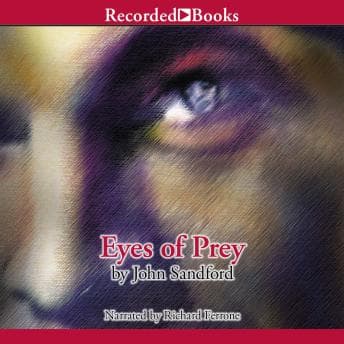
John Sandford's Eyes of Prey is the third book in the Lucas Davenport series, and it understands something fundamental about horror and thriller fiction that a lot of writers miss: the monster is scarier when you can see inside its head. We get chapters from the killer's perspective here, and they're... unsettling. Not in a gore-fest way (though Sandford doesn't shy from violence - content warning for that), but in a "this person's logic makes a horrible kind of sense" way. The eye mutilation thing? It's not gratuitous. It means something to the killer. And that's way more disturbing than shock value.
Richard Ferrone Gets It
Here's the thing about narrating thrillers - you can't phone it in. You just can't. The tension lives in the pauses, in the way a character's voice shifts when they're lying, in how you handle the quiet moments before everything goes sideways. Richard Ferrone? He commits. That's rare.
His voice has this gritty warmth that's perfect for Lucas Davenport - a cop who's dealing with depression, who's a little broken, who's still somehow magnetic. Ferrone doesn't try to make Davenport likeable. He makes him real. And when he switches to the killer's POV chapters, there's this subtle shift - not cartoonish villain voice, just... something off. Something wrong. My podcast listeners are going to love dissecting how he pulls that off.
Now, I've seen some folks mention the Minnesota accents sound more East Coast than authentic. And yeah, okay, fair. If you're from Minnesota, you might notice. But honestly? It didn't pull me out of the story. The character work is too strong for a minor regional accent thing to matter much.
When Procedural Becomes Personal
Sandford was a Pulitzer Prize-winning journalist before he started writing fiction, and you can feel it. The police procedural elements don't read like someone watched a lot of Law & Order and called it research. There's a texture to how investigations actually work - the dead ends, the politics, the way cops talk to each other when they're frustrated. It's not glamorous. It's grinding work punctuated by moments of horrible clarity.
But what elevates this beyond standard procedural fare is Davenport himself. The guy is genuinely struggling with depression in this book. He's unfocused, questioning everything, barely holding it together. And Sandford doesn't treat that as a quirky character trait - it's woven into how Davenport approaches the case, how he interacts with people, how he thinks. Ferrone's narration handles these quieter, darker internal moments with real care. No melodrama. Just a man trying to function while his brain is working against him.
(Side note: I appreciate when thrillers let their protagonists be genuinely messed up without making it their whole personality. Davenport's depression isn't his superpower. It's just... part of him. That feels more honest than most.)
The Slow Burn That Actually Pays Off
At fourteen hours, this is not a quick listen. And I'll be real - there are stretches in the middle where the investigation feels like it's spinning its wheels. If you're the type who needs constant action, you might get impatient around hour seven or eight. But stick with it. The final act has a twist that genuinely got me - and I've consumed enough horror and thriller content that I'm usually three steps ahead. Sandford played me. I respect that.
The pacing works better in audio format, I think. Ferrone knows when to let scenes breathe and when to pick up the tempo. There's a rhythm to his narration that matches the story's pulse - slower during the investigative legwork, tighter when things start clicking into place. I listened at 1x speed because I didn't want to miss the nuances, but if you're a faster listener, 1.25x would probably work fine for the middle sections.
Who This Is For (And Who Should Run)
This is for folks who like their crime fiction raw and character-driven. Blowback has that same unflinching approach to violence and consequences. If you want a police procedural that doesn't sanitize the violence or the psychological damage it causes, Sandford delivers. If you've been meaning to start the Prey series, this is a solid entry point - you don't need the previous books to follow what's happening.
Skip if: you're sensitive to violence (especially eye-related - yeah, it's in the title for a reason), you need your protagonists to be upbeat and functional, or you're looking for a cozy mystery. This ain't it.
Lights Out, Headphones On
I listened in the dark. Mistake? Maybe. Worth it? Absolutely. Horror-adjacent thriller fiction that respects the genre and trusts its audience to handle the darkness. Shirley Jackson walked so authors like Sandford could run - in a different direction, sure, but with the same understanding that real dread comes from character, not just body count.