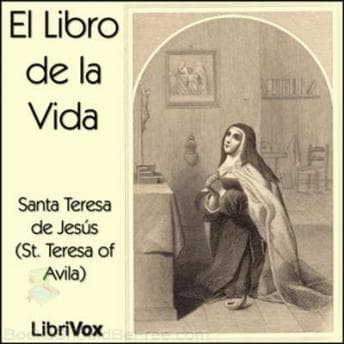

Here's the thing nobody tells you about Teresa of Ávila: she's funny. Not in a stand-up way, but in that deeply self-aware, almost neurotic way where she keeps apologizing to her confessors for going on tangents - and then immediately goes on another tangent. I expected a pious, distant saint speaking through centuries of dust. What I got was a woman who writes like she's thinking out loud, interrupting herself, doubling back, saying things like 'I don't know why I'm telling you this, but...' and then telling you the most extraordinary thing about her interior life.
So let me be honest about how I came to this. It was three in the morning, couldn't sleep - Denise was out cold, the apartment was that particular Chicago winter quiet where you can hear the radiator doing its thing - and I'd been cycling through my library looking for something dense enough to either put me to sleep or wake my brain up. El Libro de la Vida. Eleven and a half hours. A sixteenth-century Spanish mystic's autobiography. Sure. Why not.
A Voice From the 1560s Deserved Better Than a Machine
Let me get this out of the way: the narration is computer-generated. You can feel it immediately. And look, I'm the guy who listens at 1.0x because the author chose those words and I want to hear them properly. Teresa chose her words with extraordinary care - even when she's rambling, she's rambling purposefully. The prose deserves to be savored. But this voice... it's flat. It's steady. It doesn't breathe where Teresa breathes. When she describes her famous mystical experiences - the transverberation, that moment with the angel and the golden spear - the virtual voice reads it with the same inflection as her descriptions of convent administration. That's a problem.
Teresa's writing has this incredible rhythm to it, these long cascading sentences that build and build and then land on something devastatingly honest. A human narrator would know to let those sentences gather momentum. A human narrator would understand that pause is punctuation. The machine just... continues. Evenly. Relentlessly. Like a metronome reading poetry.
I will say this: the text has been adapted to modern Spanish, and the virtual voice handles the clarity of that adaptation well enough. You won't struggle to follow the words. But following words and feeling them are very different things, and Teresa's entire project - her whole reason for writing - is about the inadequacy of words to capture feeling. The irony of stripping her text of emotional delivery is pretty stark.
Teresa the Writer, Not Just Teresa the Saint
Here's where I have to separate the content from the container, because the content is genuinely remarkable. This reminds me of what Hemingway said about writing - that what you leave out matters as much as what you put in. Teresa does the opposite. She puts everything in. Every doubt, every backslide, every moment she worried she was being deceived by the devil instead of visited by God. The early chapters where she talks about her childhood - sneaking off to read romances of chivalry with her mother, trying to run away to be martyred by the Moors at age seven - that's vivid, specific, alive.
And then there's her extended metaphor of the four waters of prayer. She compares the stages of spiritual development to different methods of irrigating a garden: hauling water from a well, using a waterwheel, diverting a stream, and finally rain from heaven. It's such a concrete, agricultural image for something so abstract, and she works through it with the patience of a teacher who really wants you to get it. (I know that patience. I use it every day with juniors who think Gatsby is 'just about some rich guy.')
Her account of meeting fray Pedro de Alcántara is worth the listen alone - she describes this gaunt, intense ascetic with such genuine affection and relief, because he's the first person who actually believes her visions are real. You can feel her loneliness lifting in those passages. Or you could, if the narration let you.
The founding of San José de Ávila in the final sections reads almost like a thriller - a woman navigating church politics, local opposition, poverty, and her own poor health to build something new. My students would hate this. I love it.
Who Should Brave the Machine Voice
If you're studying Spanish mysticism, theology, or sixteenth-century literature, the text itself is essential. If you're someone who treats audiobooks as a way to access important works you might not otherwise read - which, honestly, is half the reason audiobooks saved my own reading life - then there's real value here. I had a similar experience with Prayer: Experiencing Awe and Intimacy with God - a book I probably wouldn't have picked up in print but found genuinely rewarding once I gave it a chance. Teresa is one of the great prose stylists in Spanish, full stop, and hearing the language even in this flattened form has its own power.
But if you need a narrator to carry you through eleven hours? If you want the kind of performance that interprets rather than just reads? This isn't it. You'll need to do the emotional heavy lifting yourself. I found myself mentally adding the inflections, the pauses, the emphasis - essentially narrating over the narrator in my own head. Which is exhausting, but also kind of proves Teresa's point about the work of contemplation.
Worth Pausing the Faculty Meeting For - But Barely, In This Form
The book is extraordinary. The audiobook experience is compromised. Teresa of Ávila wrote one of the most honest, psychologically sophisticated autobiographies of any century, and she did it while battling illness, suspicion, and the Spanish Inquisition. She deserves a narrator who can match that courage with craft. What she got is a machine that can pronounce the words correctly. That's necessary. It's not sufficient.
If this is your only way in, take it. But know what you're getting. And if anyone ever records this with a real human voice - someone who understands that Teresa's digressions aren't flaws but architecture - let me know. I'll be first in line. Probably at three in the morning again.