
Look, I'll be honest - I'm not the most religious person on my train car. But after a particularly brutal week of production incidents and exactly zero sleep, I found myself downloading this at 5:47 AM because someone on a Slack channel I trust mentioned it helped them think more clearly. Desperate times, right?
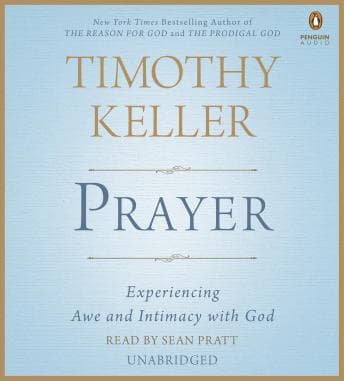
Here's the thing about Timothy Keller: he writes theology like someone who's actually had conversations with skeptical people. As a software engineer surrounded by other engineers who treat anything faith-adjacent with suspicion, I appreciated that he doesn't talk down to you or assume you already buy everything he's selling.
The Framework That Actually Clicked
Keller basically treats prayer like... okay, this is going to sound weird, but like a debugging process? Not in a reductive way, but in the sense that he's systematic about breaking down what prayer actually IS versus what most people assume it is. He pulls from Augustine, Luther, Calvin - heavy hitters - but translates their insights into something you can actually apply.
The book is structured around understanding prayer theologically first, then practically. Some people might find the first half slow (I did zone out during one particularly dense section about medieval mystics while stuck at Millbrae station), but the payoff is that when he gets to the "how to actually do this" parts, you understand WHY the techniques work.
For someone like me who optimizes everything - commute routes, code efficiency, even my grocery shopping - having a framework for something as nebulous as "talking to God" was weirdly satisfying. He gives you actual structures: ways to use the Psalms, how to combine different types of prayer, how to deal with when it feels like you're just talking to yourself.
Sean Pratt Does the Heavy Lifting
Sean Pratt narrates this, and he's got that clear, warm delivery that works perfectly for this kind of content. Not dramatic, not monotone - just steady and present. At 6 AM on a packed Caltrain, you need a narrator who doesn't require your full attention to follow, but rewards it when you give it. Pratt nails that balance.
I listened at 1.25x (my usual 1.5x felt wrong for this one - the content needs a little more space to land). His pacing matched Keller's pastoral tone without making it feel like a sermon. Which, given that Keller IS a pastor, is actually impressive.
Where Keller Wanders (And Why It's Okay)
Fair warning: Keller occasionally goes off on theological tangents. There's a section where he's comparing different historical approaches to contemplative prayer that felt like it could've been tightened. I had a similar reaction to Character Building - dense historical content that initially felt excessive but ended up adding real depth. But honestly? After years of listening to business books that could've been blog posts, I found myself appreciating that he actually has enough material to fill nine hours.
The man clearly knows his stuff. He's not padding. He's just... thorough. If you're coming from a background of "I pray sometimes but don't really know what I'm doing," this is basically Prayer 101 through 401 in one package.
The ROI Question
Here's where I land: this isn't a book that gives you quick wins. It's not "7 Prayer Hacks for Busy Professionals" (thank God, honestly). It's more like refactoring your entire understanding of what prayer is supposed to be. Takes longer, but the codebase is cleaner afterward.
I finished it over about two weeks of commutes, and I've already gone back to re-listen to the section on praying through the Psalms. That almost never happens for me with non-fiction.
Who Should Listen (And Who Should Skip)
Perfect for: long commutes, weekend mornings, any time you can give it 70% of your attention. If you're curious about prayer but find most books on the topic either too fluffy or too preachy, Keller hits a sweet spot. Skip for: gym sessions or anything requiring high energy - this is contemplative stuff. Also skip if you want quick tips without the theological foundation.
He's intellectually serious without being cold, and practical without being shallow. Nine hours is a commitment, but it's the kind of book that repays the investment.
(And yes, I did tell Kevin about it. He's still processing that his atheist-adjacent girlfriend voluntarily listened to a prayer book. Twice.)