
I was up at 1 AM prepping a pitch deck for a Series B client who's burning cash like it's kindling, and I needed something to keep me from screaming into the void. Picked up The Frackers because I figured - hey, at least someone else's financial recklessness might make my client's burn rate look responsible.
I was right. And then some.
These Guys Make Your Favorite Startup Founder Look Risk-Averse
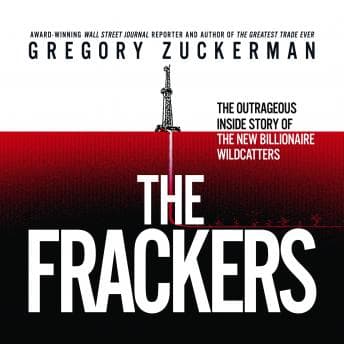
Gregory Zuckerman does something rare for a business journalist - he actually makes you feel the insanity of betting everything on an unproven thesis. Not in a sanitized Harvard Business Review way. In a "Harold Hamm literally divorcing his wife in a billion-dollar settlement while doubling down on North Dakota shale" way. Aubrey McClendon leveraging his personal stake in Chesapeake Energy to buy $100 million worth of antique maps and wine while his company teetered. Mark Papa at EOG quietly executing while everyone else was playing cowboy.
This is what separates The Frackers from your average industry book. Zuckerman got exclusive access to these guys, and it shows. You get the personal obsessions, the boardroom knife fights, the moments where a geological hunch either makes you a billionaire or bankrupts you. McClendon's story alone - the charm, the excess, the catastrophic fall - reads like a Greek tragedy set in Oklahoma City.
The key takeaway is worth the listen. The other 7 hours? Actually, this time, most of them earn their keep too.
My Parents' Business Model, Just With More Zeros
Here's what got me. My parents ran a dry cleaning business. 14-hour days, chemicals that would make an EPA inspector faint, razor-thin margins. They didn't have a grand thesis about disrupting the garment care industry. They just worked. Harold Hamm's story hits the same nerve - son of sharecroppers, started pumping oil as a teenager, and basically outworked and out-stubborned every Ivy League geologist at Exxon. This is what my parents did instinctively. Now it has a TED talk.
But Zuckerman is honest enough to show you the other side. These aren't just scrappy underdogs. McClendon's spending was pathological. The environmental costs of fracking get real airtime here - contaminated wells, communities fighting back, the genuine tension between energy independence and poisoning your neighbor's water supply. Zuckerman doesn't pick a side so much as lay out the mess and let you sit in it.
I've seen this fail at three different companies - the founder who's so convinced of their vision they confuse recklessness with conviction. The Frackers shows you both outcomes. Hamm became one of the richest men in America. McClendon lost control of his company and died in a car crash the day after being indicted. Same industry, same era, wildly different endings. I kept thinking about Oscar Wilde's Happy Prince — another story where generosity and recklessness blur until you can't tell the martyr from the fool.
Sean Pratt Does the Job Without Getting in the Way
Look, at 15 hours and 18 minutes, this is a commitment. Sean Pratt's narration is clean and professional - smooth delivery, clear enunciation, consistent pacing. He's a seven-time AudioFile Earphones winner and you can hear why. He doesn't try to do dramatic character voices or turn it into a one-man show. For a book this dense with financial details, geological terminology, and corporate politics, that's the right call.
Is it the most electrifying narration I've ever heard? No. But Pratt understands that the material itself is dramatic enough. He stays out of the way and lets Zuckerman's reporting do the heavy lifting. At 1.5x speed (I actually dialed back from my usual 2.0x because the financial mechanics require some processing), it clipped along nicely without losing clarity.
Who Needs This and Who Doesn't
If you're in energy, finance, or venture - this is required reading. Period. If you want to understand why America went from panicking about oil dependence in 2006 to becoming the world's largest oil producer, this is the book. If you're a founder who thinks they're taking big risks, listen to this and recalibrate your definition of risk.
Skip it if you want a polished takeaway framework with bullet points and action items. This is narrative journalism, not a playbook. There's no "7 habits of highly effective frackers" section. (Thank God.)
Jenny would say I'm being harsh when I note the book could've trimmed 2-3 hours in the middle where the geological details and corporate restructuring timelines blur together. Jenny is right - I'm being harsh. But at 15+ hours, even good books earn scrutiny on efficiency.
The ROI Calculation
Finally, a business book that respects your intelligence if not entirely your time. Zuckerman wrote a genuine piece of American business history - the kind that'll age well because it's about the people, not just the technology. The frackers changed geopolitics, energy markets, and environmental policy in under a decade. Understanding how matters. This book delivers that understanding with more personality and less padding than 90% of what's on my Audible shelf.
Worth the credit. Worth the 15 hours. Just maybe not at 2.0x.