
Here's what really boils my blood.
In my line of work, if a CEO's kid goes missing, we move heaven and earth. We deploy assets, we scrub comms, we turn over every rock. But if a girl working the fringes of society—a sex worker, an escort, someone living on the edge—vanishes? The system just shrugs. Marks it down as a "lifestyle hazard" and goes to lunch.
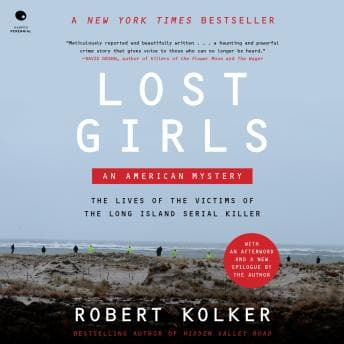
That's the vibe of Lost Girls. And frankly, it pissed me off. In a good way.
I listened to this while driving back from a consultation in Dallas—about four hours of straight highway—and I found myself gripping the steering wheel so hard my knuckles turned white. Not because of a high-speed chase or an explosion. But because of the sheer, staggering incompetence and apathy detailed in this book.
The Anti-Thriller Narrator
Let's talk about Sean Pratt. I've listened to hundreds of books. Usually, with true crime, you get one of two types: the guy who sounds like he's announcing a monster truck rally, or the one who whispers like he's telling ghost stories at a sleepover.
Pratt does neither.
He sounds like a seasoned investigator giving a debrief. Measured. Respectful. Pratt brings that same steady professionalism to Body Keeps the Score, where the subject matter demands exactly that kind of respect. (Considering what we're dealing with here, anything else would've been grotesque.) He doesn't act out the weeping mothers or the terrified calls; he just delivers the intel.
Compared to the narrators in the fiction thrillers I usually binge—where everyone tries to sound like a gravel-voiced tough guy—Pratt is a relief. He steps back and lets the tragedy speak for itself. Treats these women like humans, not plot points. Ranger, my German Shepherd, usually perks up when narrators start yelling, but even he stayed calm in the back seat. That's a compliment.
When the Intel is Solid (But the Ops Failed)
Robert Kolker didn't just write a crime book. He did the recon.
Most true crime books focus on the killer. They turn the bad guy into this mythic genius. Kolker flips the script. He focuses on the five women—Shannan, Maureen, Melissa, Megan, Amber. He digs into their backgrounds, their families, the economic traps they fell into.
I've read reports on insurgency cells with less detail than Kolker puts into these women's lives.
It reminds me of The Wire more than CSI. It's about systems failing. The police in Suffolk County? Absolute clown show. That kind of institutional breakdown—where leadership fails the people counting on them—is exactly what Dare to Lead tries to address, though from the corporate side. I'm talking about the kind of jurisdictional ego-tripping and laziness that gets people killed in combat. Hearing about the delays, the dismissed 911 calls, the "not our problem" attitude... it's infuriating.
(I actually yelled at the windshield at one point. If my guys ran an operation this sloppy, I'd fire them before they could pack their gear.)
No Mission Accomplished Banner
Here's the kicker, and you need to know this going in: There is no neat bow at the end.
If you're used to fiction where the detective shoots the bad guy in the final chapter and goes home to his family, this might frustrate you. This is real life. It's messy. The case (at the time of the book) is unsolved.
But that's why it hits harder.
Most "True Crime" feels like entertainment. This feels like a memorial. It forces you to look at the girls we usually look away from. It made me think about the security gaps in our own society—who we protect and who we leave out in the cold.
Who This Mission Is For
Listen if you want true crime that treats victims as people, not props. If you're interested in systemic failure and why institutions let people fall through the cracks. Skip it if you need a solved case with a satisfying arrest—this one stays open, and that ambiguity will gnaw at you.
Debrief Complete
Is it an easy listen? No. It's heavy. Tragic. But worth your time? Absolutely.
Sometimes the scariest thing isn't a serial killer in the night—it's a society that stops caring. Kolker did his homework, Pratt delivered the briefing, and I was left staring at the road ahead, thinking about how easily people slip through the cracks.
Now, I need something lighter. Maybe something where things blow up and the good guys actually win.