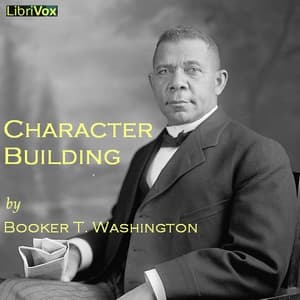

The Elephant in the Room (It's the Accent)
Look, I'm going to address this upfront because it's the thing everyone mentions: Luke Sartor narrates this collection of Booker T. Washington's speeches with a British accent. Washington was born into slavery in Virginia, became one of the most influential African-American leaders of his era, and delivered these addresses to Black students in Alabama in the early 1900s. And here we have... a British narrator.
I listened to this during my morning jogs through Cambridge, and I'll be honest - the first twenty minutes, my brain kept snagging on the disconnect. It's like watching a biopic where the casting just feels off. But here's the thing I found myself asking: why does this bother me so much, really? Is it because I'm bringing my own assumptions about what "authenticity" should sound like? Or is it a genuine barrier to the material?
By mile two, I'd mostly stopped noticing. Sartor's enunciation is crisp, his pacing steady, and there's a genuine warmth in his delivery that suggests he actually believes in what he's reading. Which matters, because Washington's speeches are essentially motivational psychology dressed in early 20th-century formality.
The Psychology of Self-Making
Okay, so here's where I got genuinely interested. Washington's approach to character development is fascinating from a behavioral standpoint. His methods - emphasizing habit formation, environmental design, and what we'd now call "growth mindset" - were remarkably ahead of their time. He wasn't just telling students to "try harder." He was giving them cognitive frameworks.
Take his repeated emphasis on the dignity of labor. Washington argues that how you do small tasks shapes who you become. This is essentially behavioral activation theory a century before we had the term. It's the same framework that makes 10% Happier work so well—identity through practice, not revelation. He understood that identity isn't something you discover - it's something you construct through repeated action. (My therapist would have thoughts about this. Approving ones, probably.)
The speeches cover everything from punctuality to personal hygiene to the importance of saving money. Some of it feels dated - there's a lot about proper dress and "civilized" behavior that carries uncomfortable assimilationist undertones. Washington was operating in a brutally constrained environment, advocating for economic self-sufficiency as a path to equality. Whether that was pragmatic survival strategy or accommodation to white supremacy is a debate that's been going on for over a century. I'm not here to settle it. But I am here to say: the psychological insights are real, even when the politics feel complicated.
Where Sartor Actually Shines
Once I got past my initial resistance, I noticed something. Sartor's measured, almost formal delivery actually suits the material in an unexpected way. These are speeches, not conversations. They were meant to be delivered from a podium to an assembly hall. The slight formality creates distance, yes, but it also lends the words a certain weight.
His pacing is consistent - maybe too consistent for some listeners. There's not a lot of dynamic range here. No dramatic pauses, no emotional crescendos. It's more like being read to by a thoughtful professor than being swept up in oratory. For a six-and-a-half-hour listen, that evenness can feel monotonous if you're looking for entertainment. But if you're treating this as what it is - a historical document, a psychological case study in self-improvement philosophy - the steadiness works.
The audio quality is clean. No weird background noise, no volume fluctuations. LibriVox productions can be hit or miss, but this one's solid on the technical side.
Who Should Listen (And Who Should Skip)
This is a fascinating case study in early self-help psychology, and I mean that sincerely. If you're interested in the history of personal development, in understanding how a formerly enslaved man conceptualized success and character in the Jim Crow era, this is genuinely valuable. Washington's framework - build habits, master small things, let your work speak for you - predates Carnegie, predates Covey, predates the entire modern self-help industry.
Best for: commutes, chores, anything where you can let the ideas wash over you and percolate. I found myself pausing mid-run to jot down notes more than once. (Yes, I carry my phone. Yes, I looked ridiculous stopped on the sidewalk typing into it.)
Skip if: you need high-energy narration to stay engaged, or if the accent mismatch is going to pull you out of the material entirely. Some listeners never get past it. That's valid. Also skip if you're looking for critical analysis of Washington's political positions - this is the speeches themselves, not a scholarly examination of their context.
Final Assessment
Psychologically, this tracks. Washington understood human motivation in ways that still hold up. The narrator issue is real but surmountable. And honestly? There's something quietly moving about hearing these words - written by a man who taught himself to read, who built a university literally brick by brick, who believed that character could be constructed through daily practice - delivered with such earnest clarity.
One listener review said this should be required study for every American. That's probably overselling it. But for anyone interested in the roots of self-improvement psychology, in how we've always tried to answer the question "how do I become the person I want to be?" - this is worth your time. Just give it twenty minutes to settle in.