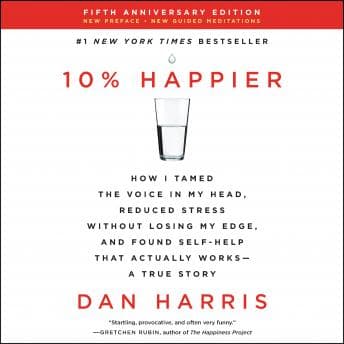

Look, I don't usually do self-help books.
My shelves are strictly divided: academic journals on one side, murder mysteries on the other. (My mother calls this "morbid," I call it "balanced.") But my therapist—let's call her Dr. L—suggested I try something that isn't about fictional people killing each other or dry statistical analysis of trauma. She suggested 10% Happier.
I rolled my eyes. Hard. But I listened during my morning run along the Charles River, and... okay. Fine. She was right. (Don't tell her I said that.)
The Anchor Voice vs. The Internal Scream
Here's the thing about Dan Harris narrating his own book: He sounds exactly like a news anchor. Because he is one.
For some listeners, this is going to be a problem. I've seen the complaints—people saying he has that rhythmic, punchy "reporter cadence" that feels artificial. And they aren't wrong. He talks like he's reading the nightly news, even when he's describing his cocaine use or his ego imploding.
But psychologically? It works. It actually adds a layer of fascinating dissonance.
You're hearing this polished, professional, "I have it all together" voice describing a total internal collapse. It's the perfect auditory representation of high-functioning anxiety. It's the mask we all wear, just amplified. When he talks about the voice in his head—the one that drives him to check his email compulsively or snap at his wife—the contrast between his tone and his reality is basically a case study in compartmentalization.
So yes, the "reporter voice" is there. If you're allergic to network news cadences, you might twitch. But if you listen closely, you hear the vulnerability cracking through the polish. That's where the good stuff is.
Finally, A Skeptic I Can Tolerate
I spend my professional life studying behavior, and let me tell you: the self-help industry is mostly fluff. Meaningless platitudes wrapped in nice fonts.
What Harris does—and why I didn't turn this off after chapter one—is approach meditation with the same hostility I usually reserve for people who talk about their "journey." He's a skeptic. He thinks it's weird. He thinks it's for people who collect crystals.
He treats the mind like a biological machine that needs tuning, not a spirit that needs cleansing. As a scientist, I appreciate that. He talks about the neuroscience (loosely, but accurate enough for a layperson) and frames meditation not as a path to enlightenment, but as a bicep curl for the brain.
The title 10% Happier is the most psychologically healthy goal setting I've seen in years. The human mind isn't designed for constant bliss. We're designed for survival. Aiming for 100% happiness is a recipe for neurosis. Aiming for a 10% reduction in being a jerk? That's achievable. That's data I can work with. QBQ! The Question Behind the Question takes a similar approach to personal accountability—small, measurable shifts instead of grand transformations.
Who Should Listen (And Who Should Skip)
If you're the type of person who rolls their eyes at the word "mindfulness" but secretly knows your blood pressure is a ticking time bomb... listen to this. If you want a step-by-step meditation manual or can't tolerate that news anchor cadence, skip it.
Final Thoughts Over Cold Coffee
This isn't a how-to guide. It's a memoir about a Type-A personality crashing into a wall and trying to figure out how to stand back up without losing his edge.
It dragged a bit in the middle—I zoned out somewhere around the retreat section while chopping onions for a curry—but the ending lands. The humility feels earned.
It's practical. It's messy. It's imperfect.
And honestly? That's the only kind of psychology I trust.