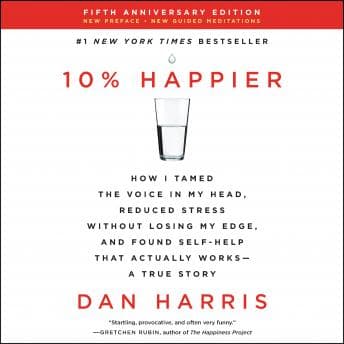

What if the thing driving your career success is also the thing slowly destroying you?
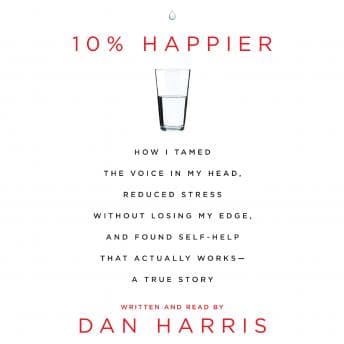
That question hit different at 1 AM, staring at a pitch deck I'd been revising for the fourth time. My brain wouldn't shut up - client expectations, revenue projections, that one slide that still wasn't quite right. Then Dan Harris describes his own relentless inner monologue, the one that pushed him to cover war zones and climb the ABC News ladder, and I'm thinking: yeah, I know that voice. We all do.
The Panic Attack That Launched a Thousand Downloads
Harris opens with his 2004 on-air meltdown during Good Morning America - a nationally televised panic attack that he traces back to cocaine use and the crushing pressure of network news. It's a gutsy move, leading with your most humiliating professional moment. But it works because Harris isn't asking for sympathy. He's diagnosing a problem.
The first third of the book is pure memoir: war correspondent days, the drug experimentation, the ego that comes with being a young rising star at a major network. Some listeners find this section excessive. I get it. If you picked this up expecting a meditation how-to guide, you're going to feel like you're wading through someone else's therapy session to get there.
But here's the thing - the memoir IS the argument. Harris is building a case for why a hypercompetitive, skeptical journalist would even consider something as "woo-woo" as meditation. Without the backstory, the conversion doesn't land.
A Skeptic's Tour of America's Spiritual Circus
The middle section is where Harris really shines. He profiles Eckhart Tolle, Deepak Chopra, and a parade of self-help figures with the same investigative eye he'd bring to a political scandal. His takedown of the "prosperity gospel" crowd is particularly satisfying - the kind of clear-eyed analysis my parents would've appreciated after watching televangelists promise wealth to people who couldn't afford their own dry cleaning bills.
Harris reading his own book is the right call here. His skeptical tone comes through perfectly - that slight edge of "I can't believe I'm doing this" when he describes his first meditation retreat. You can hear him rolling his eyes at the more ridiculous spiritual claims while remaining genuinely curious about what might actually work.
The 10% Promise (And Why It's Honest)
Bottom line: Harris isn't selling enlightenment. He's selling a marginal improvement. Ten percent happier. That's it.
This is what my parents did instinctively - they didn't expect work to be fulfilling or life to be easy. They just showed up, managed their stress through routine and discipline, and got slightly better at handling the chaos each year. Now it has a TED talk. Now it has neuroscience backing it up.
The meditation instruction itself is minimal - maybe 45 minutes of actual practical guidance in a 9-hour book. If you want a how-to manual, this isn't it. Harris even admits this, pointing you toward apps and teachers for the actual practice. What he's really selling is permission. Permission for ambitious, skeptical, type-A people to try something that sounds soft without feeling like they're betraying their edge.
Who Should Listen (And Who Should Skip)
This book is for the consultant who checks email at 5 AM, the founder who can't stop optimizing, the professional whose greatest asset - that relentless drive - is also their biggest liability. If you've ever had a panic attack in a bathroom before a big presentation (or worried you might), Harris is speaking directly to you. Still Life offers a different angle on the same problem—finding stillness when your brain won't cooperate.
Skip this if you want practical meditation instruction. Skip this if you find memoir sections tedious. And definitely skip this if you're already a meditation practitioner looking for advanced techniques - you'll be bored.
At 2.0x speed, this clocks in around 4.5 hours. That's a reasonable investment for the core insight, though I'll admit I drifted during some of the war correspondent flashbacks. Not because they're poorly told - Harris is a skilled storyteller - but because I was here for the mental health content, not the journalism memoir.
The Consulting Partner's Take
I've recommended this book to three clients dealing with burnout. Two of them actually started meditating. The third said it was "too much autobiography." Fair enough.
The 10% framing is genius positioning. It's underselling the product, which builds trust. It sets realistic expectations, which prevents disappointment. It's exactly how I'd advise a startup to launch - promise less, deliver more.
Jenny would say I'm being too analytical about a book about not being analytical. Jenny is right. But that's kind of the point - Harris wrote this for people like me, people who need the business case before they'll try the product.
Worth a credit if you're a skeptic curious about meditation. Wait for a sale if you just want the techniques.