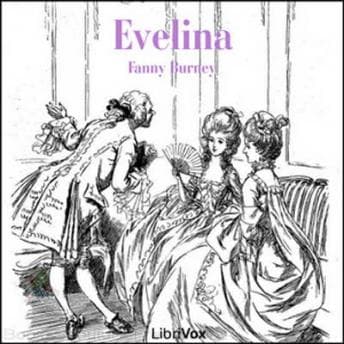

I was three hours into grading sophomore essays on The Scarlet Letter - you know, the ones where every student discovers that the A stands for 'adultery' like they've cracked the Da Vinci Code - when I finally gave up and put on Evelina. Best decision I made that week.
Here's the thing about Fanny Burney that drives me a little crazy: we spend entire semesters on Austen (and rightfully so), but Burney basically wrote the blueprint twenty years earlier and gets treated like a footnote. If you loved Pride and Prejudice, this is its spiritual ancestor. The wit, the social satire, the heroine navigating a world designed to trip her up at every turn - it's all here. Burney was doing this in 1778, people.
Why This Epistolary Format Actually Works in Audio
I'll admit I was skeptical. Epistolary novels - stories told through letters - can feel clunky in audiobook form. Where's the drama when someone's just reading correspondence? But honestly, it works here. The letters give Evelina this intimate, confessional quality. You're literally inside her head as she writes to her guardian about the absolute chaos of her London debut.
And chaos is the right word. This poor girl gets thrown into 18th-century high society with zero preparation. The scenes at the opera, the assembly rooms, the constant parade of fops and fortune hunters - Burney captures the anxiety of not knowing the rules while everyone's watching you fail. (My students would hate this. I love it.)
The narrator understands that pause is punctuation. There's a rhythm to how the letters are read that gives you space to appreciate Burney's observations. When Evelina describes Captain Mirvan's crude jokes or Madame Duval's theatrical tantrums, the timing lands. I couldn't find much about this particular narrator online, but based on this performance, they clearly get the material.
The Comedy That Hits Different Now
Look, some of the humor is genuinely timeless. The scene where Evelina accidentally snubs Lord Orville because she doesn't know the social protocols? Pure cringe comedy. I was walking the lakefront with Denise and actually laughed out loud - she thought I was losing it.
But then there are moments that feel almost too real. Evelina's constant anxiety about being judged, her fear of saying the wrong thing, the way she second-guesses every interaction afterward - this is basically social anxiety before we had a name for it. Burney nails that feeling of being young and uncertain in a world that offers no grace for mistakes.
The satire cuts deeper than you'd expect, too. Burney isn't just making fun of silly aristocrats. She's showing how women had to perform a constant balancing act - be charming but not forward, be witty but not clever, be beautiful but pretend you don't know it. The prose deserves to be savored. There are sentences here that I'd put up against anything Austen wrote. Still Life has that same quality of language that rewards close attention—every sentence doing double duty.
Where It Drags (And Where It Flies)
I won't pretend this is a quick listen. Sixteen hours is a commitment, and yes, there are stretches in the middle where the social rounds start to blur together. Some listeners have noted the pacing gets repetitive - another ball, another awkward encounter, another letter apologizing for the previous letter. That's fair.
But here's what I'd say: the slow burn pays off. By the time you reach the revelations about Evelina's parentage and the resolution of her romance with Lord Orville, you've earned it. You understand why these moments matter because you've lived through her uncertainty.
The character differentiation in the narration helps. Each voice has its own texture - the vulgar Captain Mirvan, the pretentious Mr. Lovel, the genuinely kind Lord Orville. It's not a full-cast production, but you never lose track of who's speaking.
Who Gets an A, Who Gets an Incomplete
If you need action and plot twists, you'll bounce off this hard - skip it. But if you love watching a sharp writer dissect social pretension while telling a genuinely sweet love story, if you want to understand where Austen came from, this is essential listening.
Class Dismissed
This reminds me of what I always tell my students about reading the classics: context matters. Evelina was a sensation when it came out. Samuel Johnson praised it. It basically invented the comedy of manners as a genre. Understanding that history makes the listening richer.
I finished it during a particularly tedious professional development session on 'synergizing cross-curricular outcomes.' Principal Martinez, if you're reading this, I was definitely engaged with your presentation. (I wasn't. I was in 18th-century London, and it was glorious.)