
What happens when a Victorian art critic decides economists have it all wrong - not just a little wrong, but fundamentally, morally, catastrophically wrong?
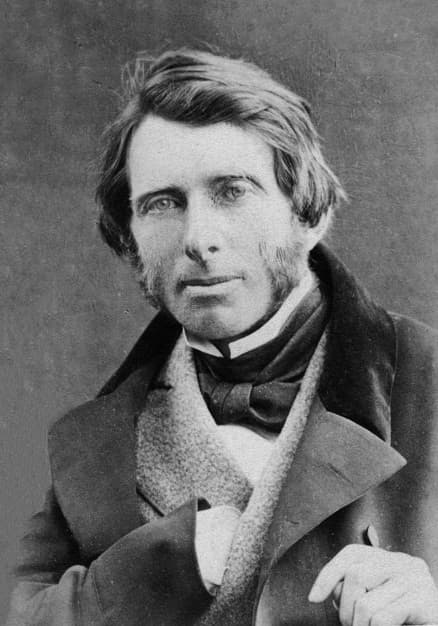
You get Unto This Last, which is basically Ruskin walking into the room where Adam Smith's disciples are having a party and flipping the table. At 3 hours and 17 minutes, this is one of those rare cases where a 160-year-old economics text actually earns its runtime. I knocked it out in two morning commutes, and honestly, it hit different at 6AM surrounded by a train full of tech workers optimizing their way to Mountain View.
Ruskin Invented the Angry Substack Post in 1860
Here's the thing about this book - it's four essays, originally published in a magazine, and they caused such outrage that the magazine actually stopped publishing them. That's Victorian-era cancellation. Ruskin's core argument is that classical economics treats humans as purely rational wealth-maximizers, and he calls BS on that with the fury of someone who's been stewing about it for years. He argues that political economy can't be separated from morality, that the "wealth" of a nation means nothing if it's built on exploitation, and that the relationship between employer and worker should be governed by justice and affection - not just market rates.
If you've ever rage-read a thread about how companies treat workers as interchangeable units optimized for output... congratulations, Ruskin got there 164 years before you. The ROI on this audiobook is surprisingly high for something written before electricity was common.
What makes it genuinely interesting rather than just historically quaint is how specific Ruskin gets. He doesn't just wave his hands about morality. He dissects the concept of "value" versus "wealth," argues that a thing only has value insofar as it contributes to life (not just accumulation), and builds this framework where the merchant's duty is analogous to the soldier's or the physician's - you're supposed to serve, not just extract. The bit where he compares the honor we give to a captain who goes down with a ship versus the zero accountability we demand from a factory owner whose workers die in unsafe conditions? That landed. Hard.
The Audio Situation (Let's Be Honest)
So here's where I have to be transparent - this is a LibriVox recording, which means volunteer narrator, and the narrator isn't credited in the metadata I have. The production is... functional. Clean enough audio, no weird background noise that pulled me out, but this isn't a professional studio production with Ray Porter bringing Victorian prose to life (a girl can dream). The reading is steady and clear, which for dense 19th-century prose is actually what you need - someone who doesn't get in the way of sentences that are already doing a lot of heavy lifting on their own.
But I can't give you the narrator deep-dive I usually do because there's just not much to work with. No dramatic range to evaluate, no character voices needed - it's essay-form nonfiction read by one person. It does the job. At 1.5x it was perfectly followable, which is the baseline for my commute-worthiness test.
The Ruskin Problem (And Why It Still Works)
Ruskin writes like a man who assumes you've read everything he's read. His sentences are long, winding, full of classical allusions and biblical references (the title itself comes from the Parable of the Laborers in the Vineyard - Matthew 20, where workers hired at the last hour get paid the same as those who worked all day). If you're not ready for Victorian prose cadence, you'll bounce off this pretty fast.
But if you can tune into his frequency - and audiobook format actually helps here, because you can't get lost re-reading the same paragraph like you would in print - there's a brain that's operating at serious wattage. Gandhi cited this book as one of the most influential in his life and renamed it Sarvodaya ("the welfare of all"). That's not nothing.
Perfect for: commute, focus listening. Skip for: background, gym. You need at least 60% of your brain available.
Who Gets the Most Out of This
If you're in tech (hi, fellow Caltrain zombies) and you've ever felt a weird dissonance between the optimization culture we swim in and the human cost of that optimization - Ruskin articulated that feeling before any of us were born. If you're into the history of economic thought beyond the Smith-to-Keynes pipeline, this fills a gap. If you want something short that punches way above its runtime.
Skip if: Victorian prose makes you want to throw your AirPods into the Bay. Or if you need actionable frameworks - Ruskin is prescriptive but in a "restructure society around justice" way, not a "5 steps to optimize your Q3" way. The optimization-obsessed reader who needs those tidy frameworks might get more mileage out of something like Ultimate Sales Machine — I reviewed it and it delivers exactly the relentless tactical focus Ruskin would have found morally bankrupt.
The Commit Message
Three hours and change for a book that influenced Gandhi, challenged the foundations of classical economics, and was literally too controversial for a Victorian magazine. The audio production is bare-bones but serviceable. The ideas are genuinely sharp enough to survive 160+ years. I wouldn't spend an Audible credit on this when the LibriVox version exists for free, but the content itself? Worth your commute. Twice over.