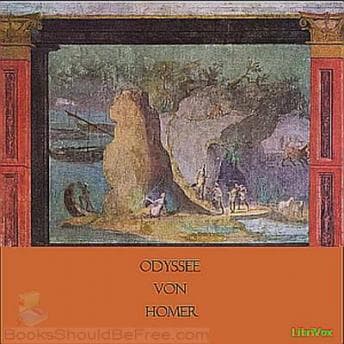

What happens when the foundational text of Western literature meets the medium it was actually designed for?
Twenty years of teaching Homer and I'd never actually listened to the whole thing. Let that sink in. I've assigned excerpts, lectured on the hero's journey, made seventeen-year-olds diagram Odysseus's character arc—but sitting with the full epic, all twenty-eight hours of it? That's a different beast entirely.
This is the Johann Heinrich Voß translation into German, which is fascinating if you're into translation history (I am, my students aren't) because Voß basically invented how Germans hear Homer. Published in 1781, it's the version Goethe praised. The version that made "Odyssee" mean "long wandering journey" in German the same way it does in English. That's cultural impact.
The Voice Behind Three Millennia of Story
The narrator here—unnamed in the credits, which is frustrating—delivers this in a measured, almost ceremonial pace. Male voice, clearly trained, with the kind of deliberate enunciation that suggests someone who takes the hexameter seriously. He doesn't rush the epithets. "Rosy-fingered Dawn" gets its full weight. The "wine-dark sea" actually sounds like it matters.
Is it the best Homer narration I've encountered? Honestly, no. There's a slight formality that keeps you at arm's length during the more intimate moments—when Odysseus weeps on Calypso's island, when Penelope finally recognizes her husband. The narrator reads these scenes correctly but doesn't quite inhabit them. It's the difference between recitation and performance.
But here's the thing—for this translation, that approach might actually work. Voß was going for classical grandeur, not modern accessibility. He wanted Germans to hear Homer the way educated Greeks might have. A more theatrical narrator might have clashed with the formal register of the text.
The action sequences land better. The Cyclops blinding—still makes me hold my breath after reading it dozens of times—gets genuine energy. The Sirens episode builds properly. When Odysseus strings that bow in the final books, there's a satisfying gravity to the delivery.
Why Audio Might Actually Be the Point
Here's what I tell my students: Homer didn't write for silent reading. He composed for performance. The epithets aren't lazy repetition—they're rhythmic anchors for oral recitation. They work better when you hear them.
Listening while grading papers at 11 PM (yes, I'm that teacher), I caught things I'd missed in thirty years of reading. The way certain phrases recur like musical themes. How the story-within-a-story structure in Books 9-12 creates this layered effect of Odysseus performing his own legend. You don't get that reading silently. You just don't.
The pacing in the original poem varies wildly—you've got the action-packed adventures, but also long stretches of Telemachus visiting old war buddies and extended hospitality scenes. Some listeners find these sections slow. I'd argue they're essential to understanding Greek culture, but I'm also the guy who makes students read footnotes. (Don't tell them I admitted that's weird.)
The Twenty-Year Homecoming
The Odyssey isn't about a guy trying to get home. It's about what home means after you've been changed. Odysseus leaves for Troy as a young king. He comes back twenty years later having seen monsters, lost all his men, slept with goddesses, and descended to the underworld. The man who finally reaches Ithaca isn't the man who left.
That same exploration of identity after trauma hits even harder in Their Eyes Were Watching God, where Janie's journey home carries similar weight.
At nearly 29 hours, this is a commitment. I listened over three weeks—lakefront walks with Denise, late-night grading sessions, one particularly boring faculty meeting about budget allocations. (Principal Martinez, if you're reading this, I was definitely paying attention. I wasn't.)
The length works for the epic scope. You need that time to feel the weight of twenty years of wandering. The repetitions that seem tedious on the page become almost meditative when you're walking and listening. There's a reason bards performed this over multiple nights.
Who This Is (and Isn't) For
German speakers wanting to experience the foundational translation of this epic, or anyone curious about how Voß interpreted Homer for the Romantic era—this is your text. The narration serves the material respectfully, even if it doesn't transcend it.
New to The Odyssey entirely? Start with a more dynamic English version first. Get the story in your bones, then come back to Voß for the translation history. And if you need Netflix pacing to stay engaged, this isn't it—this is the original slow burn, the one that invented the hero's journey we're still recycling in every Marvel movie.
Sense and Sensibility operates on a similar wavelength—measured pacing that rewards patience, characters who earn their resolutions through actual development rather than plot convenience.
Class Dismissed
Worth the 29 hours? For me, absolutely. Hearing Homer the way he was meant to be experienced—even through 18th-century German—reminded me why I started teaching literature in the first place. Before the grading destroyed my eyesight and patience. Before I became the guy who listens to Middlemarch during budget presentations.
Some stories earn their length. This one earned three thousand years.