
What happens when the smartest man in the room realizes that knowing everything means feeling nothing?
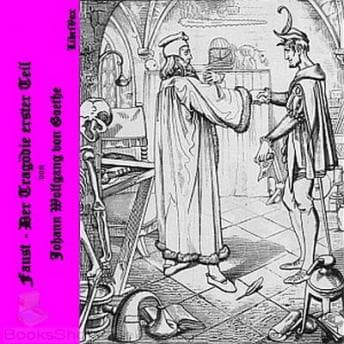
I was grading sophomore essays on Hamlet at 11:30 PM—the usual parade of "Hamlet was sad because his dad died" insights—when I decided I needed something to remind me why I fell in love with literature in the first place. So I put on Goethe's Faust. In German. Which I barely speak. And somehow, that was exactly right.
The Original Deal With The Devil
Here's what my students don't understand about classics: they're not famous because some dusty academics decided they should be. They're famous because they got there first. Every demon deal, every "be careful what you wish for," every tortured genius who trades his soul for something he thinks he wants? It starts here. Goethe spent nearly sixty years writing this thing, and you can feel it—the weight of a lifetime's obsession pressing through every scene.
Faust isn't just bored with knowledge. He's disgusted by it. He's mastered philosophy, law, medicine, theology, and discovered that none of it brings him closer to understanding what it means to be alive. That's not melodrama. That's the fundamental crisis of anyone who's spent too long in their own head. (I've been teaching for twenty years. I know the feeling.)
Mephistopheles, though—Mephistopheles is the real revelation. He's not some cartoonish tempter with a pitchfork. He's witty. He's charming. He's having fun. When he mocks Faust's pretensions, when he dismisses human striving as ultimately pointless, he's not entirely wrong. That's what makes him dangerous. The devil's best argument has always been cynicism dressed up as wisdom.
The German Problem (And Why It Doesn't Matter)
Let's address the elephant: this is in German, and the narrator is listed as "Unknown." Not ideal for an audiobook review, I'll admit. I can't tell you about accent work or character differentiation because I was mostly following along with the rhythm and catching words I recognized from two semesters of college German and a lot of Rammstein lyrics. (Denise thinks this is hilarious. She's not wrong.)
But here's what I can tell you: German has a music to it that English translations can't capture. Goethe wrote this as poetry—actual rhyming, metered verse—and hearing it performed in the original language reveals why. The sounds themselves carry meaning. Hard consonants for Mephistopheles's mockery. Softer flows for Gretchen's innocence. Even without full comprehension, the emotional architecture comes through.
At six hours, this is a genuine commitment. Not the kind of thing you put on during faculty meetings. (Sorry, Principal Martinez, but even I have limits.) This demands attention. I'd recommend following along with a translation if your German is as rusty as mine—it transforms the experience from "interesting sounds" to "actual literature."
Gretchen Deserved Better
The Gretchen tragedy is where Faust becomes genuinely difficult. She's young, she's innocent, she's destroyed by a man who claims to love her but really just wants to feel something. Faust seduces her, impregnates her, abandons her, and she ends up executed for infanticide while he's off having supernatural adventures. Goethe doesn't soften this. The content warnings for violence and sexual content are earned.
What strikes me—what always strikes me when I teach tragedy—is how modern this feels. The powerful man who ruins a woman's life and faces no consequences? The way society punishes her for his sins? We're still telling this story. We're still living it.
My students would hate this. Too long, too German, too much talking about philosophy instead of just doing things. But that's precisely why it matters. Faust isn't an action story. It's a meditation on desire, on the impossibility of satisfaction, on what happens when you get everything you want and discover it's not enough.
Who This Is (And Isn't) For
Skip this if you need a polished English performance or want something you can half-listen to while grading papers. But if you loved Paradise Lost, this is its spiritual successor—same cosmic stakes, same flawed protagonist, same uncomfortable sympathy for the devil. Where Milton gives us an angel's fall, Goethe gives us a man's choice. That's scarier, somehow. We can't fall from heaven. But we can absolutely sell our souls for something that turns out to be worthless.
This particular recording has limitations I can't fully assess—the unknown narrator situation means I'm grading on incomplete information. What I can say is that the source material is inexhaustible. I've taught excerpts from Faust for years, and hearing the full first part performed reminded me why Goethe matters. The verse deserves to be savored. At 1.0x, obviously. The author chose those words.
There There explores that same kind of soul-selling in a modern context—characters trading pieces of themselves for belonging, for identity, for survival in a world that's already decided what they're worth.
Back to Those Essays
I finished grading at 1 AM. The essays didn't get any better, but I remembered why I keep assigning them. Somewhere in that stack of "Hamlet was sad" papers, there might be a student who'll eventually understand what Goethe understood: that the real tragedy isn't getting what you want. It's wanting it in the first place.