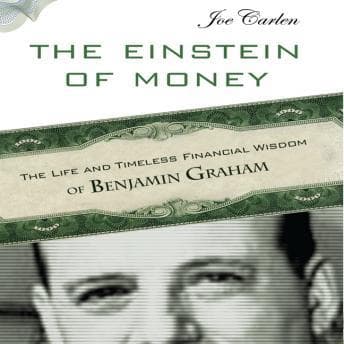

What's the ROI on a 10-hour biography of a guy who died in 1976?
I asked myself this halfway through Joe Carlen's book, stuck in traffic on the 405. My parents never had time for biographies. They were too busy living one—running their dry cleaning business, building something real. But here's the thing: Benjamin Graham basically wrote the playbook they were following without knowing it. Buy undervalued assets. Have a margin of safety. Don't get caught up in the hype. My dad didn't call it "value investing." He called it "not being stupid with money."
So yeah, I finished all 10 hours. And I have thoughts.
The Guy Behind Buffett's Brain
Look, most business books give you the framework and call it a day. Carlen does something different—he gives you the man. Graham's life is genuinely wild. Immigrant kid from London. Lost his father at nine. Watched his family's money evaporate in a bank run. Then he builds himself into the "Dean of Wall Street" while also writing a Broadway play and apparently having a romantic life that would make a soap opera writer blush.
The financial wisdom stuff? It's solid. Carlen claims Buffett himself helped select which concepts to highlight, and honestly, that shows. You're not getting Graham's entire six-book library compressed into audio form. You're getting the greatest hits—intrinsic value, margin of safety, Mr. Market—woven through the narrative of his actual life. This is what my parents did instinctively. Think Like a Freak does something similar—takes intuitive problem-solving and gives it academic frameworks. Now it has a TED talk.
But here's my consultant brain kicking in: if you've already read "The Intelligent Investor" or "Security Analysis," the investing principles will feel repetitive. Not wrong, just familiar. Like hearing your favorite song covered by a decent band. Nice, but you've heard it before.
Walter Dixon Does the Heavy Lifting
The narration is where this audiobook earns its keep. Dixon has this warm, lively delivery that keeps what could be dry material moving. He's not doing character voices or dramatic pauses—this isn't that kind of book. But he's engaged, and that engagement is contagious. I've listened to enough business audiobooks where the narrator sounds like they're reading a terms of service agreement. Dixon sounds like he actually cares about Graham's story.
Good pacing too. At 2.0x, nothing felt rushed or garbled. (Yes, I listened at 2.0x. Time is money. Graham would approve.)
Where It Drags—And Where It Doesn't
The middle section gets into Graham's personal life, and I'll be honest—I zoned out during some of the romantic entanglements. The man had a complicated marriage situation that Carlen treats with what some listeners call a "judgmental" tone. I didn't find it judgmental so much as... thorough? Like, we get it, Ben Graham was a complicated dude. Can we get back to the currency reform ideas?
But when Carlen connects Graham's life experiences to his investing philosophy? That's gold. You understand why he was obsessed with margin of safety when you know about his family's financial collapse. You get why he distrusted market sentiment when you see what he lived through in the 1929 crash. The biography isn't just context—it's the explanation.
The interviews with Buffett and Charles Brandes add credibility, though they're not as extensive as I'd hoped. Still, when Buffett says "Ben Graham is still a hero to me" in 2012, that's not nothing.
The Spreadsheet Summary
Is this the most exciting business audiobook I've ever heard? No. The writing style occasionally dips into textbook territory, and if you're already deep in the value investing world, you won't find revolutionary new concepts.
But if you want to understand where modern value investing actually came from—not just the formulas but the lived experience that created them—this delivers. It's the origin story behind the methodology. And Dixon's narration keeps it from becoming a slog.
Who should listen: Finance enthusiasts who want context for their investment philosophy. People curious about the man behind Buffett's brain. Who should skip: Anyone looking for actionable trading tips, or casual listeners who just heard Buffett's name and got curious—sample first.
My parents never got to read Graham. They were too busy doing what he preached. But I think they would've appreciated knowing someone had written it all down—that their instincts had a name and a history. That's worth something.
Jenny says I'm being generous with this one. Jenny might be right.