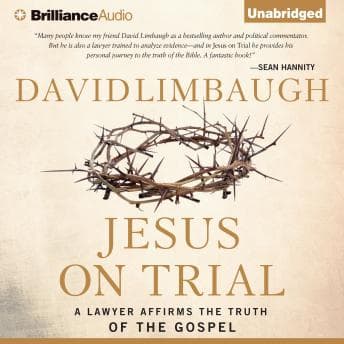

I was grading sophomore essays on The Great Gatsby at 11:47 PM—you know, the ones where every student discovers for the first time that the green light is a symbol—when I decided I needed something completely different. Something that would engage the analytical part of my brain without making me want to weep over comma splices. David Limbaugh's legal examination of the gospels turned out to be exactly that kind of palate cleanser.
Here's the thing about this book that caught my attention: Limbaugh isn't writing from the ivory tower of seminary. He's a practicing attorney, and he treats the canonical gospels the way he'd treat depositions. Cross-referencing. Looking for inconsistencies. Testing witness reliability. It's the kind of rigorous textual analysis I try to teach my students when we're examining primary sources—except he's applying it to Matthew, Mark, Luke, and John.
When the Courtroom Meets the Classroom
What makes this different from your standard apologetics fare is Limbaugh's willingness to put his own journey on the stand. He was a skeptic. Not the casual "I just don't think about it" kind, but the determined, intellectually combative variety. The book becomes genuinely interesting when he examines the same evidence that once pushed him away from faith and explains—with a lawyer's precision—why his conclusions changed.
This reminds me of what Hemingway said about writing true sentences. Limbaugh isn't trying to write pretty theology. He's trying to write true arguments. Whether you find them convincing depends largely on what you bring to the table, but you can't accuse him of being intellectually lazy about it.
At 12 hours and 19 minutes, this is a commitment. This isn't background listening while you pretend to pay attention to someone explaining budget allocations. (Not that I would know anything about that, Principal Martinez.) This is the kind of audiobook that rewards—actually demands—your full attention. I found myself pausing to think through his arguments, sometimes agreeing, sometimes pushing back in my own head.
Walter Dixon Does the Heavy Lifting
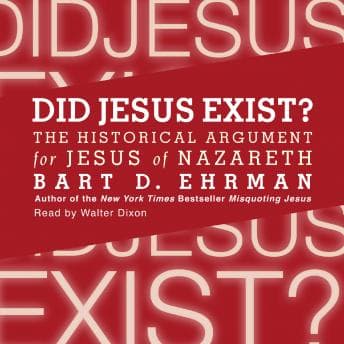
The prose deserves to be savored, and Walter Dixon understands that. His narration is clear, measured, and—here's the word I keep coming back to—inspired. He reads Limbaugh's legal analysis with the kind of conviction that makes you believe he's thought about these arguments himself. There's no theatrical flourish, no dramatic pauses for effect. Just steady, intelligent delivery that serves the material.
For a book this dense with argumentation, that's exactly what you need. A narrator who tried to make this exciting would have ruined it. Dixon trusts the content to do the work, and it does.
Who Should Pick This Up (And Who Shouldn't)
Let me be direct: if you're looking for an emotional devotional experience, this isn't it. Limbaugh isn't trying to move your heart—he's trying to engage your mind. The book functions essentially as a comprehensive Bible study wrapped in legal framework, pitched at listeners who want to think through the historical and textual evidence for Christianity.
My students would absolutely hate this. Too slow. Too methodical. Too many words they'd have to look up. I love it.
But I also want to be honest about something. This is apologetics. Limbaugh reaches the conclusions he reaches because he's already arrived at faith, and he's working backward to show how the evidence supports that conclusion. That's not a criticism—every writer has a perspective—but listeners should know what they're getting. This isn't a neutral academic examination. It's a lawyer making his case.
Skip this if you want warm devotional comfort or if legal-style argumentation makes your eyes glaze over. But if you loved C.S. Lewis's Mere Christianity, this is its spiritual successor—with more footnotes and legal terminology. For something less argumentative and more contemplative, Shepherd Looks at Psalm 23 offers a different kind of biblical engagement—quieter, but no less thoughtful.
Class Dismissed (At 2 AM)
I finished this at 2 AM, which is either proof of its engaging nature or evidence that I'll do anything to avoid grading more essays. Probably both.
Limbaugh has done something genuinely useful here: he's given Christians an intellectual framework for their faith that holds up under cross-examination, and he's given skeptics a clear articulation of the case they're arguing against. Whether you end up agreeing with his verdict or not, you'll understand the evidence better than you did before.
That's more than I can say for most of my students' Gatsby essays.