
Bottom Line: Worth your commute if you're new to Freakonomics. Skip if you've binged the podcast.
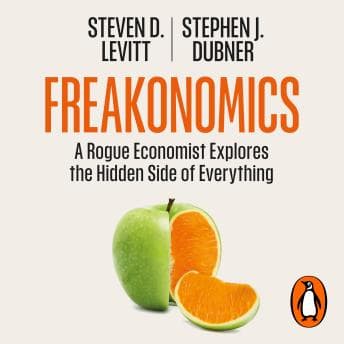
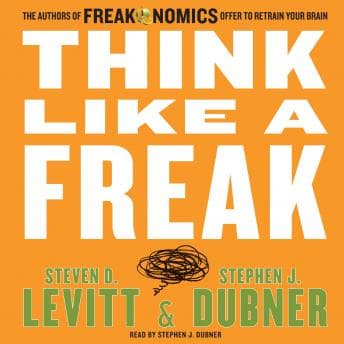
Okay, so here's the thing about Think Like a Freak - it's basically Freakonomics: The Methodology. The first two books showed you the magic tricks. This one's trying to teach you how to do them yourself. And honestly? The ROI on this audiobook depends entirely on how deep you already are in the Levitt-Dubner universe.
I finished this in about 4 commutes (Mountain View and back, you know the drill), and my verdict is... complicated. It's good. It's entertaining. But if you've been listening to Freakonomics Radio for years like I have, you're gonna hit some serious déjà vu.
When Your Podcast Host Becomes Your Audiobook Narrator
Dubner narrating his own work is both the biggest strength and the weirdest quirk here. The man has a voice made for explaining why Nigerian scammers intentionally make their emails obvious (spoiler: it's a brilliant filtering mechanism). He's warm, he's clear, and he sounds like that friend who always has the most interesting thing to say at dinner parties.
But here's the catch - if you're a podcast listener, this literally sounds like a 7-hour Freakonomics episode. Which isn't a bad thing, exactly? It's just... not different. I kept waiting for the "coming up after the break" that never came. The production is clean, no weird audio artifacts, good pacing. Ray Porter this is not, but Dubner knows his material because, well, he wrote it.
The Framework That Could've Been a Blog Post
Look, I'm gonna be honest. Some of these chapters felt like they could've been Medium articles. "Learn to say I don't know" and "think like a child" are solid principles, but they're stretched thin across entire chapters. Rich Dad Poor Dad had the same issue—one good insight diluted across way too many pages. The hot dog eating champion story? Genuinely fascinating - Kobayashi basically A/B tested his eating technique like a startup optimizing for conversions. The Australian doctor who gave himself an ulcer to prove bacteria caused it? Wild. That's the good stuff.
But then you get sections that feel like padding. The persuasion chapter drags. The quitting chapter has some gems (sunk cost fallacy applied to personal decisions is always relevant) but meanders before it gets there.
The thing is, their core insight is actually useful for anyone in tech: most problems look hard because we're asking the wrong questions. Reframe the problem, and suddenly solutions appear. This is basically debugging methodology applied to life. I appreciated that framing.
Who Should Listen (And Who Should Skip)
This is ideal half-attention listening. Complex enough to be interesting, simple enough that you won't miss critical plot points when the Caltrain announcement blares over your headphones. I listened at 1.5x (my default) and it felt right - Dubner's natural speaking pace is already pretty conversational, so you can push it without losing comprehension.
The bonus Freakonomics Radio episodes at the end are a nice touch. Honestly, those felt more polished than some of the book chapters, which says something about how their podcast format has evolved.
If you're new to the Freakonomics world, this is actually a solid entry point. Maybe even better than the original because it gives you the thinking tools rather than just the conclusions. But if you've read both previous books AND listen to the podcast? You're gonna feel like you're paying for content you've already consumed for free. Kevin pointed this out halfway through my second commute with it, and he wasn't wrong.
The production quality is genuinely good though. Clean audio, no distracting breaths, solid volume balance throughout. Whatever studio they used, they knew what they were doing.
Would I listen again? Probably not. But I don't regret the time spent. It's comfort food for the analytically minded - nothing revolutionary, but satisfying enough if you're in the mood for it. Just don't expect the same "wait, WHAT?" moments that made the original Freakonomics feel like a revelation.
For my fellow commuters: this is a solid 3-4 day companion. Won't change your life, but won't make you wish you'd picked something else either. That's honestly not a bad bar to clear.