
I'm going to start this with a complaint. A big one. I am sick to death of startup founders pitching me their "disruptive" ideas while quoting this book, yet having absolutely zero clue how incentives actually work in their own companies.
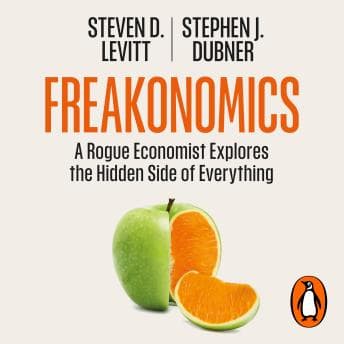
Freakonomics has been out long enough to vote. It's practically a historical document at this point. Yet, listening to it again this week—while crushing a 10-mile run, because multitasking—I realized why people still get it wrong. They think this book is about sumo wrestlers or crack dealers. It's not. It's about why your sales team is gaming the compensation plan I just spent three weeks designing.
The "NPR Voice" That Saves You From Boredom
Let's be real for a second. If Steven Levitt (the actual economist) narrated this, I would've fallen asleep and fallen off the treadmill. Economics is dry. My parents' dry cleaning ledger was more exciting than most econ textbooks.
But Stephen Dubner? He's the journalist. He knows how to package the boring stuff. He brings that same clarity to SuperFreakonomics, though I'll admit the sequel doesn't quite hit the same high. He narrates this himself, and honestly, he nails the tone. It's that specific "curious intellectual" vibe—smooth, slightly smug (but in a way that works), and enthusiastic.
I saw some reviews saying the narration wasn't "engaging enough." Seriously? It's a book about regression analysis disguised as pop culture. What did you expect, sound effects? Explosions when he talks about real estate agents? Dubner does exactly what he needs to do: he gets out of the way of the data. At 2.0x speed, he sounds like a caffeinated venture capitalist, which is exactly my speed.
When Data Acts Like Gossip
The reason this book blew up—and why it's still in my library—is because it treats data like dirty laundry.
Take the chapter on real estate agents. (This one hits home because we just sold a house and I watched our agent do exactly what the book predicted). The book argues that agents keep their own houses on the market longer to get a higher price, but push clients to sell fast for a quick commission.
That's the ROI of this audiobook right there. It teaches you that everyone—literally everyone—is operating on incentives that you probably aren't seeing. My dad knew this instinctively. He knew exactly which customers would complain about a "wrinkle" just to get a discount. He didn't need a PhD for that. But for the rest of us who didn't grow up behind a counter in Koreatown, Dubner and Levitt spell it out.
Is It Still Relevant? (Or Just Nostalgia?)
Okay, so some of the examples feel a bit... 2005. The internet references are quaint. And yeah, some of the sociology is simplified to the point where actual academics probably scream into their pillows.
But here's the thing. Most business books I review are 300 pages of fluff wrapped around one single idea that could've been a blog post. Bad Blood is one of the rare exceptions—it's packed with actual investigative depth, not consultant platitudes. Freakonomics is dense with actual questions.
(And yes, I know the abortion-crime hypothesis is controversial. I'm not here to debate the ethics, I'm here to tell you if the book is worth 7 hours of your life.)
It challenges "conventional wisdom." I hate that phrase because it's overused, but in my line of work, conventional wisdom is usually what kills companies. "We've always done it this way" is the most dangerous sentence in business. This book is the antidote to that.
Bottom Line
If you haven't listened to this, you're basically culturally illiterate in the business world. It's the OG of pop-science.
Is it perfect? No. Is it deep academic rigor? No. But it respects your intelligence enough to assume you can handle the idea that teachers cheat and sumo wrestlers throw matches.
Who should listen: Anyone in business who wants to understand hidden incentives, founders who keep quoting this book without actually absorbing it, and skeptics who enjoy having their assumptions challenged. Skip it if: you need cutting-edge data or can't tolerate mid-2000s cultural references.
Jenny would probably say I like it because it validates my cynical view of human nature. She's not wrong. But if you want to understand why people do what they do—not what they say they do—put this in your queue. Just don't try to explain the sumo wrestling theory on a first date. Trust me on that one.