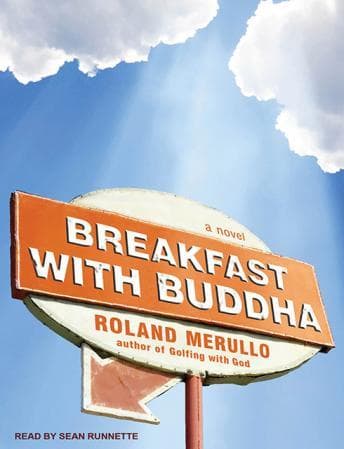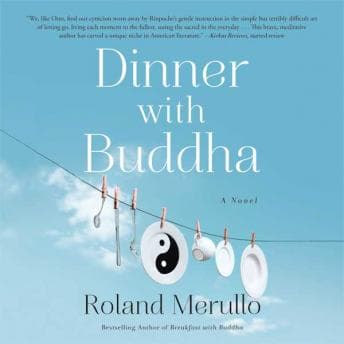

I have a bone to pick with Roland Merullo. Twenty years of teaching American literature, and this man casually drops more wisdom about the American experience into a road trip novel than I manage to convey in an entire semester on Steinbeck. It's honestly a little insulting.
I finished this one during a late-night grading marathon - sophomore essays on The Great Gatsby, each one explaining that the green light represents hope (yes, I know, we covered this) - and Merullo's meditation on loss and meaning hit different when you're surrounded by red pen marks and wondering if any of this matters.
The Odd Couple We Didn't Know We Needed
Here's what I kept thinking about: Otto Ringling is basically every middle-aged man I know. Wife gone, job gone, kids scattered to the winds. He's a New York book editor - a literary man! - and yet he's spiritually adrift in ways that his beloved books never prepared him for. Rinpoche, his Mongolian monk brother-in-law, is his polar opposite. The setup sounds like a sitcom pitch that would get rejected for being too on-the-nose.
But Merullo makes it work because he respects both men. Otto's skepticism isn't played for laughs, and Rinpoche's wisdom isn't delivered in fortune-cookie platitudes. Their journey from North Dakota to Las Vegas - and yes, the symbolism there is about as subtle as a sledgehammer, but I forgive it - becomes something genuinely moving.
Sean Runnette understands this balance perfectly. His Otto is every exhausted intellectual who's read all the right books and still can't figure out how to live. Very American, slightly defensive, perpetually confused by his brother-in-law's serenity. Then he shifts to Rinpoche and there's this Russian-inflected patience that never feels like a caricature. The two voices create an instant chemistry - you hear the class divide, the cultural gap, the unlikely affection.
What Hemingway Would Have Called 'The Real Stuff'
This is the third book in the series, and I'll confess I came in cold. (Principal Martinez, if you're reading this, I was definitely listening to your budget presentation last week. I wasn't. I was listening to this.) The novel doesn't punish you for it, though. Merullo gives you enough context without those tedious recap paragraphs that make sequels feel like homework.
What surprised me was the darkness. The description mentions "a hint of menace" and I expected maybe some mild tension. But there's a genuine thriller element here - men pursuing Rinpoche's daughter Shelsa, who may or may not be the next Dalai Lama. It's handled with restraint, never overwhelming the spiritual journey, but it adds stakes that kept me listening past midnight.
The sections about Native American communities hit hard. Otto witnessing "the decimated lives of so many American natives" - Merullo doesn't preach, doesn't lecture. Five Little Indians does something similar with residential school survivors - no lectures, just devastating clarity. He just shows Otto seeing, really seeing, and that's enough. This is Hemingway's iceberg theory in action. The emotion is below the surface, and Runnette trusts the listener to feel it.
Why My Students Would Hate This (And Why They Shouldn't)
Let me be honest: this is a slow book. If you need action every chapter, if you're listening at 2x speed while doom-scrolling, this isn't for you. The prose deserves to be savored. Merullo writes sentences that unfold like meditation itself - unhurried, deliberate, occasionally circling back to examine something from a new angle.
Runnette's comedic timing saves it from becoming ponderous. There are genuinely funny moments - Otto's bewilderment at Rinpoche's dietary choices, their misadventures at roadside diners - and Runnette lands every beat. The whimsy never undercuts the spiritual weight; it makes it bearable.
My students would check out by hour two. They'd want the plot to move, the lessons to be explicit, the meaning highlighted and underlined. But that's precisely why they need books like this. (I'm adding it to my summer reading list. They'll hate me. I don't care.)
Who Gets a Seat at This Table
If you loved Travels with Charley or Zen and the Art of Motorcycle Maintenance, this is their spiritual successor - warmer, funnier, more overtly concerned with faith but never preachy. If you're going through any kind of transition - job loss, empty nest, the general existential confusion of middle age - Otto's journey might feel uncomfortably familiar.
Skip this if you need constant plot momentum. Skip it if spiritual themes make you roll your eyes. And definitely skip it if you're looking for background listening while multitasking. This one demands your attention. It rewards it, too.
Worth Pausing the Faculty Meeting For
I've recommended this to Denise for our next lakefront walk. At ten hours and change, it's perfect for a week of morning constitutionals. Sean Runnette has narrated all three books in this series, and there's a reason listeners call it "life changing" without a hint of irony.
Is it a major work of American literature? No. But it's something rarer - a genuinely wise book that doesn't make you feel stupid for not already knowing what it teaches. Otto learns to see his losses differently. So did I, somewhere between grading papers and watching the red ink blur.
My mom will probably fall asleep during my podcast episode about this. But I'm making one anyway.