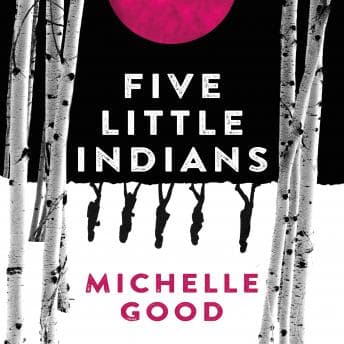

This book broke me. I'm just going to say that upfront.
I thought I knew what I was getting into. Award-winning Canadian novel about residential school survivors? Yeah, I expected it to be heavy. But I wasn't prepared for how deeply Michelle Good would make me care about these five people - Kenny, Lucy, Clara, Howie, and Maisie - and then systematically show me everything the world put them through.
I started this during Sophie's nap time and ended up sitting in my car in the garage for an extra twenty minutes, just... processing. My husband found me there and thought something was wrong. Something WAS wrong. This book was wrong. The history it tells is wrong. And I couldn't stop listening.
Not My Usual Comfort Read (And That's Okay)
Look, I'm usually the mom who needs a guaranteed happy ending. I read romance and light contemporary fiction because my life has enough stress - I don't need my audiobooks adding to it. Railway Children was another one of those books that pulled me out of my comfort zone, though in a completely different way. But sometimes a book comes along that you NEED to hear, even if it's not easy. This is one of those.
The way Good structures the story is brilliant for audiobook listening, actually. We follow each of the five characters through different chapters of their lives, and even though their paths cross and weave together, you can pause and come back without being completely lost. I survived probably 30+ pauses (Sophie's nap schedule is, shall we say, aspirational) and never felt like I'd missed something crucial. The characters are so distinct, so fully themselves, that picking up where I left off felt natural.
But here's the thing - this book doesn't let you look away. Clara's rage, Maisie's self-destruction, Kenny's constant running, Lucy's quiet waiting, Howie's struggle to exist in a society that failed him... Good doesn't soften any of it. And she shouldn't.
Kyla Garcia Made Me Feel Everything
I'd never listened to Kyla Garcia before, but now I'm seeking out everything she's narrated. Her voice has this warmth to it that somehow makes the devastating parts even more devastating? Like she's holding your hand while walking you through the worst moments of these characters' lives.
She does something really smart with the different characters - subtle shifts in tone and pacing that help you immediately know whose story you're in. Clara sounds different from Lucy sounds different from Maisie. Not cartoonish voice acting, just... authentic differentiation. The men are a little harder to distinguish vocally (which, honestly, is true for most female narrators doing male characters), but it never pulled me out of the story.
The pacing felt right. Not rushed, not dragging. At 10 and a half hours, it's a commitment, but it took me about a week and a half of my usual listening windows, which felt manageable. Second Wife had similar pacing that worked perfectly for fragmented listening sessions.
What This Book Did To Me
I grew up in the US, and I'll be honest - I didn't learn much about Canadian residential schools in school. This book is fiction, but it's based on real history, real trauma, real ongoing consequences. Good is Cree, and she worked as a lawyer advocating for residential school survivors. You can feel that knowledge in every page.
There were moments I had to pause not because Sophie woke up, but because I needed to breathe. The scenes at the school are horrific. The aftermath - watching these kids try to become adults with no support, no families, no skills - is somehow even harder. But there's also love here. Fierce, protective love between these five people who became each other's family.
The ending isn't tied up with a bow. Some characters find something like peace. Some don't. It felt honest.
I cried at school pickup. Multiple times. Emma asked if I was okay and I had to explain that sometimes grown-ups cry about books, and she looked at me like I was absolutely insane. Fair.
Who Should Listen (And Who Should Skip)
This isn't a comfort read. It's not something to put on while you're half-paying attention to the kids at the playground. It demands your attention and your emotional energy. If you need lighter fare right now, no judgment - come back when you're ready.
But if you're ready for that - if you want a book that will genuinely change how you think about history and trauma and resilience and what it means to survive - this is it. My book club would love this (if I ever have time for book club again). Actually, I'm going to text them right now.
This book IS groundbreaking. It won Canada Reads for a reason. It just happens to also be heartbreaking.
Worth every difficult minute.