
"The Cuban Revolution took everything from sugar heiress Beatriz Perez—her family, her people, her country."
That line from the description had me pressing play on a Sunday morning walk along the lakefront with Denise, and I didn't take the earbuds out until we were back home and she was giving me that look—the one that says "you haven't heard a single thing I've said in the last forty minutes, have you?" She wasn't wrong. I was somewhere in 1960s Palm Beach, watching a Cuban exile seduce a senator while plotting to kill a dictator.
I wasn't expecting that combination. And honestly? It took me a few hours to figure out how I felt about it.
Espionage in Heels and the Ghost of Graham Greene
Let me be upfront about what When We Left Cuba is and what it isn't. It is not John le Carré. It is not even the historical spy thriller the CIA recruitment angle might suggest. What it actually is—and this took me until about hour three to fully accept—is a romance novel wearing a really convincing Cold War trench coat. And once I stopped expecting the trench coat to be the point, I started enjoying the whole outfit.
Beatriz Perez is the kind of protagonist my AP Lit students would argue about. She's fierce, privileged, reckless, and grieving in ways she refuses to name. Cleeton does something clever with her: she gives Beatriz the exterior of a Bond girl but the interior monologue of someone processing generational trauma. The tension between how the world sees Beatriz—beautiful Cuban socialite, arm candy, political pawn—and how Beatriz sees herself drives the whole book. She's not just fighting Castro. She's fighting the version of herself that everyone else has written for her. That kind of interior resistance—a character defined by what they refuse to become—is something I found handled with equal force in Uncle Tom's Cabin, a book I assigned for years before I actually stopped and listened to how much rage Stowe hides underneath the sentiment.
The Bay of Pigs sequence lands hard. Not because Cleeton gives us battlefield details—she doesn't, really—but because she sits in the aftermath, in the radio silence, in Beatriz waiting for news about people she loves who went ashore. That restraint surprised me. The Cuban Missile Crisis scenes work similarly: Cleeton is less interested in the geopolitics (though she gets the broad strokes right) and more interested in what it feels like to be an exile watching your homeland become a chess piece between superpowers. This reminds me of what Hemingway said about writing—it's not about the war, it's about the people standing in it.
Now, the romance. Beatriz's affair with a fictional senator—think Kennedy-adjacent, all ambition and moral compromise—runs hot. There's real chemistry there, but also a power imbalance Cleeton doesn't shy away from. He's a married American politician. She's a Cuban refugee whose legal status depends on political goodwill. The prose deserves to be savored in these scenes because Cleeton layers desire with desperation in ways that feel earned rather than gratuitous. My students would hate this. I love it.
Where the book stumbles—and I want to be honest—is in the spy craft itself. Beatriz's CIA involvement stays pretty surface-level. She's recruited, she attends some parties, she passes along some information, and the actual mechanics of espionage feel more like plot furniture than lived experience. If you're coming for the spy thriller, you'll find the furniture arrangement pleasant but a little hollow. If you're coming for the emotional and romantic core, you'll barely notice.
Kyla Garcia Knows Where to Put the Grief
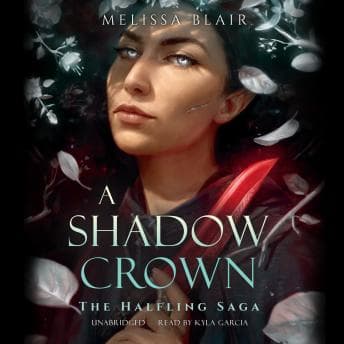
Kyla Garcia narrates this the way I wish more narrators approached historical fiction—with the understanding that accent isn't costume, it's identity. Her Spanish pronunciation is authentic and unself-conscious. She doesn't flag it. She doesn't slow down for it. When Beatriz's mother speaks, there's a formality in Garcia's delivery that carries the weight of a woman who used to run a sugar empire and now lives in exile in Florida. When Beatriz herself narrates, Garcia pitches her slightly younger, slightly angrier, with this edge of barely controlled impatience that fits perfectly.
The narrator understands that pause is punctuation. There's a moment—I think around hour seven—where Beatriz receives news about someone from her past in Cuba, and Garcia just... stops. Half a beat. Maybe a full second. But it lands like a held breath. That's performance art, not just reading aloud.
I don't have specific complaints about Garcia's work here. The AudioFile Earphones Award makes sense. She's done Cleeton's other books and the consistency shows—she knows this family, knows this world, knows when to push and when to pull back.
Who Gets the Most Out of This
If you loved Next Year in Havana, this is its spiritual successor—same family, different sister, higher stakes. If you're a historical fiction reader who can tolerate (or actively enjoy) a strong romance thread, you'll be satisfied. If you want your Cold War fiction to read like espionage procedural, adjust expectations or look elsewhere.
This is a focused listen—the historical and political layers reward attention, and Garcia's performance has subtleties you'll miss at anything above 1.0x. (Yes, I'm that person. Yes, my students mock me for it.)
Worth Pausing the Faculty Meeting For
Chanel Cleeton wrote a book about exile that understands something essential: losing your country isn't one event. It's a daily reoccurrence. Every morning you wake up somewhere that isn't home. Beatriz's revenge plot, her love affair, her political maneuvering—they're all just different ways of refusing to accept that loss. Garcia delivers that refusal with exactly the right heat. Eleven hours well spent, even if Denise disagrees about the lakefront conversation I missed.