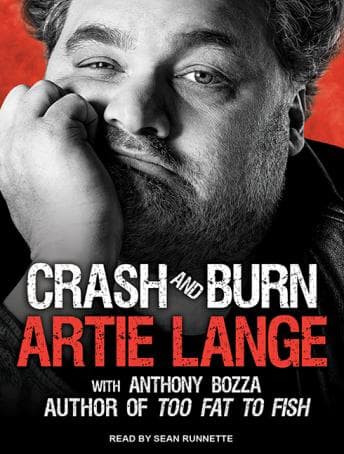

Look, I teach high school English. I spend my days trying to convince teenagers that literature matters, that words have weight, that stories can change how we see the world. And then I listen to Artie Lange describe doing heroin in a Carnegie Hall bathroom before performing for a sold-out crowd, and I think - okay, maybe some stories just need to be told raw. No literary pretense. Just the ugly truth.
This book wrecked me. Not in the way Dostoevsky wrecks you, with existential dread and philosophical weight. This is different. This is a guy who had everything - the Stern Show gig, the comedy career, the fame - and watched himself burn it all down in real time. And he tells you about it with the same timing he'd use for a punchline.
The Elephant in the Room
Let's address it: Artie Lange doesn't narrate his own audiobook. Sean Runnette does. And yeah, I get why that bothers people. When you're reading a memoir about someone's darkest moments - the suicide attempt, the hotel room in Amsterdam with a prostitute and enough drugs to kill a lesser man - you want to hear it in their voice. You want the pauses where they're gathering themselves. You want the crack in the voice when it gets too real.
But here's the thing. Runnette is good. Really good. He doesn't try to do Artie. He doesn't attempt some impression that would feel cheap. Instead, he reads it like what it is - a confession, a cautionary tale, a comedy routine that keeps veering into tragedy. His pacing lets the humor land without rushing past the dark stuff. When Artie describes the suicide attempt in terrifying detail, Runnette doesn't oversell it. He just... tells you. And somehow that's worse. More real.
(My students would probably say I'm overthinking the narrator choice. They'd be right. They usually are.)
When Memoir Becomes Mirror
I've taught addiction narratives before. We read "A Million Little Pieces" back when that was still a thing, before the whole fabrication scandal. We've discussed the memoir form, how memory shapes truth, how the self we present on the page is always a construction. That tension between truth and construction shows up differently in Narrative of the Life of Frederick Douglass - where the act of telling your own story becomes an act of reclaiming yourself.
Artie Lange doesn't seem interested in construction. He seems interested in demolition. He tells you about lashing out at everyone around him - cohosts, celebrity guests, longtime friends. He tells you about the relapses, the rehab stints, the permanent losses. And he does it with this weird mix of self-awareness and self-destruction that feels almost literary. Almost.
The last chapters drag a bit. I'll be honest. There's a repetitive quality to addiction narratives - the cycle of recovery and relapse, the promises made and broken. Some listeners found it overlong, and I get that. But I also think that's kind of the point? Addiction IS repetitive. It IS exhausting. The book makes you feel that.
The Stern Show Context
I should confess something. I wasn't a huge Howard Stern listener. I knew who Artie Lange was, vaguely, the way you know cultural figures who exist at the periphery of your awareness. So I came to this without the fan context, without knowing all the inside jokes and references.
And honestly? That might have helped. I wasn't listening for behind-the-scenes Stern gossip. I was listening to a guy describe how he nearly killed himself, how he climbed out, how he keeps climbing. The celebrity stuff is there - the Carnegie Hall show, the famous meltdown with 6 million people listening - but it's almost incidental to the human story underneath.
Denise asked me what I was listening to during our lakefront walk last week. I tried to explain and she just looked at me. "That sounds incredibly depressing," she said. And yeah. It is. But it's also funny? Artie has this way of making you laugh at things you shouldn't laugh at, and then making you think about why you're laughing.
Who This Is (and Isn't) For
If you want a tidy recovery arc with a triumphant ending, skip this one. Same if you need the author narrating their own memoir - Runnette's excellent, but he's not Artie. But if you can handle unflinching honesty about addiction, if you appreciate dark humor as a survival mechanism, if you're curious about what happens when someone with a platform decides to tell the whole ugly truth? This one's worth your time.
Class Dismissed
I keep thinking about what I'd say if I were teaching this. (Occupational hazard. Everything becomes a lesson plan eventually.) I'd talk about voice - how Artie's writing voice, even filtered through Runnette's narration, is distinctive and immediate. I'd talk about structure - how the book moves between timeframes, building toward moments you know are coming but still hit hard. I'd talk about honesty as a literary device.
But mostly I'd just tell my students to listen. Not because it's uplifting or inspirational - it's not, really. The recovery isn't complete. The ending isn't happy in any traditional sense. But it's true. Brutally, uncomfortably true.
That's worth something. Even if it's not the kind of literature I usually champion on my podcast. (Sorry, Mom. No Faulkner this week.)






![Steve Jobs [unabridged audiobook] audiobook cover](/_next/image?url=https%3A%2F%2Fcovers.audiobooks.com%2Fimages%2Fcovers%2Ffull%2F9788499923406.jpg&w=1920&q=75)