
"She was not about to be managed." That line hit me around the two-hour mark, and I actually laughed out loud during a faculty meeting. Principal Martinez definitely noticed. Worth it.
Look, I'll be honest with you—historical romance isn't my usual territory. I'm the guy who assigns Austen to teenagers and then spends three weeks explaining why Mr. Darcy isn't actually a jerk. But when a colleague (okay, it was Denise) suggested I needed to "broaden my horizons beyond dead white men," I figured a Regency romance couldn't hurt. Fifteen and a half hours later, I have thoughts.
The Governess Problem (And Why It Works)
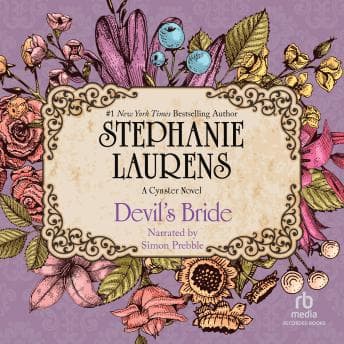
Stephanie Laurens knows exactly what she's doing with Honoria Wetherby. The "plucky governess" trope could've been insufferable—we've all read those books where the heroine is "spirited" in ways that make no historical sense. But Honoria's refusal to marry Devil just because society demands it? That's not anachronistic rebellion for rebellion's sake. It's rooted in genuine character motivation. She wants adventure. She wants agency. The murder mystery subplot gives her both.
And here's where my English teacher brain kicked in: Laurens is essentially writing a comedy of manners with the heat turned way up. That same blend of sharp social observation and emotional intensity shows up in Song of Achilles, though Madeline Miller trades ballrooms for battlefields. There's real Austen DNA here—the social maneuvering, the family dynamics, the way reputation functions as currency. But where Austen would cut to the next chapter, Laurens... does not cut to the next chapter. (My students would die. I'm keeping this one off the syllabus.)
The Cynster family dynamics remind me of what Trollope did with the Pallisers—this sprawling interconnected world where cousins placing bets on wedding dates feels both absurd and completely authentic to the period. Laurens has a Ph.D. in biochemistry, which I find delightfully random, but maybe that scientific precision shows in how carefully she constructs her social ecosystem.
Simon Prebble Understands the Assignment
Now, the narration. Simon Prebble is doing something genuinely impressive here, and I want to be specific about why.
He voices both Devil and Honoria with distinct characterizations that don't feel like caricature. His Devil has this low, controlled authority—the kind of voice that makes you understand why everyone in Regency England apparently swooned over this man. And Honoria gets enough steel in her delivery that you believe she'd stand up to him.
Here's where it gets interesting: Prebble paces the dialogue like he's performing stage drama. There are pauses. Weight. When Devil says something intended to intimidate, Prebble lets the silence do half the work. This is what I mean when I tell my podcast listeners (all 47 of them) that narration is interpretation. He's making choices about emphasis that shape how you understand the power dynamics between these characters.
I'm going to be honest here because what's the point otherwise—the romantic scenes get... fervent. Really fervent. I was grading sophomore essays on The Great Gatsby while listening to one particular scene and had to stop both activities because I couldn't focus on either. If you're sensitive to intensity in those moments, maybe don't listen in public. Or during faculty meetings. Learn from my mistakes.
Some listeners apparently found his voice too mature for younger characters, and I can see that. But for the leads? Spot on.
The Slow Burn That Actually Burns
At fifteen and a half hours, this is not a quick listen. The pacing is deliberate—some might say slow. I'd argue it's period-appropriate. Regency courtship wasn't supposed to be fast. The tension builds through proximity, through charged conversations, through Honoria solving a murder while trying to convince herself she doesn't want to marry the man helping her.
The murder mystery itself is... fine. It's serviceable. It's really a vehicle for forcing Devil and Honoria together, and Laurens knows that, and she doesn't pretend otherwise. The real plot is the romance. The mystery is just the excuse.
I listened mostly on my lakefront walks with Denise, which meant occasionally having to explain why I was smirking at my phone. "It's a romance novel," I'd say. "The hero's name is Devil." She'd nod like this explained everything.
Who's This For (And Who Should Skip)
If you love historical romance and want a narrator who takes the material seriously without taking himself too seriously, this is your book. If you're a Cynster series fan, apparently this is where it all begins—and I can see why people got hooked. But if you need fast pacing, or if explicit romantic content makes you uncomfortable (even when well-performed), sample first. The intensity is a feature, not a bug, but it's definitely present.
The English Teacher's Final Grade
For me? I'm probably not converting to a full-time romance reader. But I understand the appeal now in a way I didn't before. Laurens writes with genuine craft, and Prebble performs with genuine skill. That combination earns respect, regardless of genre.
Denise has already queued up the next Cynster book on our shared account. I'm pretending to resist. I'm not actually resisting.