
"The British were playing a very dangerous game."
That line hit me somewhere around hour three, and I had to pause because - okay, look. I work nights. I see dangerous games every shift. But the kind of calculated, champagne-fueled espionage happening in this book? That's a different kind of adrenaline entirely.
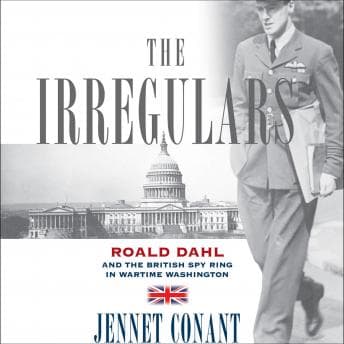
So here's what I knew going in: Roald Dahl wrote children's books. Weird ones. The kind my kids love and I secretly find unsettling. What I did NOT know is that before he was terrifying children with Witches and giant peaches, he was a young RAF pilot turned spy, charming Washington socialites and extracting secrets for British intelligence. The man who wrote Matilda was basically a honeypot. I'm still processing this.
When History Reads Like a Thriller (But Slower)
Jennet Conant does something interesting here - she's not writing a spy thriller. She's writing social history that happens to involve spies. And honestly? That threw me at first. I kept waiting for car chases and dead drops. Instead, I got cocktail parties. A LOT of cocktail parties.
The Baker Street Irregulars - named after Sherlock Holmes' street urchin informants - were this ragtag group of British operatives working to drag America into WWII. We're talking Roald Dahl, Ian Fleming (yes, THAT Ian Fleming), and a Canadian industrialist named William Stephenson who was apparently so cool that Fleming based James Bond on him. The research here is impressive. Conant dug up wartime letters, diaries, interviews - the kind of primary source work that makes my historian friends weep with joy.
But here's the thing. And I say this with love. Sometimes the narrative wanders. Like, really wanders. There were stretches where I'm driving home at 7 AM, exhausted, and Conant is describing the guest list at some Georgetown dinner party in excruciating detail. I found myself muttering "get to the espionage" more than once. Carlos asked why I was talking to myself in the driveway. I blamed the audiobook. He's used to this by now.
Simon Prebble Sounds Like a Wartime Dispatch
Okay, so the narration. Simon Prebble has this perfect British accent - not stuffy, not over-the-top, just... authentic. Period-appropriate, if that makes sense. He sounds like he could be reading wartime dispatches in a wood-paneled club room, and for this material, that's exactly right.
The pacing is steady. Clear. He doesn't rush through the dense historical passages, which I appreciated because my post-shift brain needs a narrator who enunciates. There's something almost vintage about his delivery - like listening to old BBC broadcasts. It fits the subject matter so well that I honestly can't imagine reading this in print. The audiobook IS the experience here.
No weird production issues, no volume fluctuations. Clean audio throughout. Night shift approved.
The Moral Ambiguity That Actually Landed
Here's where Conant got me. Because these weren't noble heroes. They were manipulators. Dahl specifically was tasked with seducing prominent American women to gather intelligence. He slept with congressmen's wives. He used people. And Conant doesn't flinch from that - she presents it as what it was: morally murky work done by charming, complicated people who believed the ends justified the means. Becoming explores similar moral complexity in public service, though Michelle Obama's version involves way fewer honeypots and significantly more vegetable gardens.
As someone who's actually worked a code, who's seen what happens when people make impossible choices under pressure - I appreciated that honesty. War is ugly. Intelligence work is uglier. And the line between patriot and predator gets real blurry real fast.
The sections on the early OSS (what would become the CIA) and how the British basically trained American intelligence from scratch? Fascinating. You can see the seeds of Cold War paranoia being planted in real-time. History nerds will eat this up.
This One's For the Patient History Buffs
If you want a fast-paced spy thriller, this isn't it. You'll be frustrated. The diversions into Washington society - who was sleeping with whom, which hostess threw the best parties - can feel excessive. Skip this if you need action beats every chapter.
But if you're interested in WWII history, British intelligence, or you're just curious about what Roald Dahl was doing before he started writing about chocolate factories? This is worth your time. It's the kind of book that makes you feel smarter for having listened to it.
Perfect for long commutes. Perfect for post-shift decompression when you need something engaging but not emotionally devastating. I listened over about two weeks of drives home, and it worked. The 11+ hours didn't feel like a slog - mostly.
Clocking Out
My mom would actually love this. She's obsessed with WWII documentaries. Maybe I'll recommend it for her next flight to Manila. She still thinks I should've been a doctor, but at least we can bond over audiobooks now.







![Steve Jobs [unabridged audiobook] audiobook cover](/_next/image?url=https%3A%2F%2Fcovers.audiobooks.com%2Fimages%2Fcovers%2Ffull%2F9788499923406.jpg&w=1920&q=75)