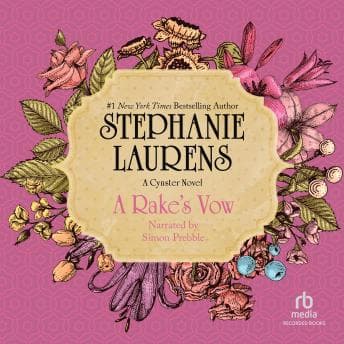

What happens when an immovable object meets an irresistible force—and both of them are too stubborn to admit they're falling?
I was grading sophomore essays on The Great Gatsby at 11 PM, half a glass of Merlot in, when I realized I'd stopped reading about green lights and started listening to Vane Cynster seduce Patience Debbington in a garden. This is not, I should clarify, the kind of literature I typically analyze. But Stephanie Laurens writes Regency romance with the structural precision of a Jane Austen novel, and sometimes a man needs a break from teaching teenagers why Fitzgerald matters. Royally Screwed gave me that same escape—modern setting, same stubborn refusal to admit feelings.
Simon Prebble Does the Impossible (Mostly)
Here's the thing about Simon Prebble: he's a classically trained British narrator attempting to voice both a rakish aristocrat and a sharp-tongued young woman navigating explicit love scenes. The man commits. His Vane has this low, confident rumble—aristocratic without being stuffy, dangerous without being cartoonish. When he shifts to Patience, there's genuine wit in the delivery, a skepticism that makes her resistance believable.
But—and this is the elephant in the drawing room—there are moments during the more... intimate passages where you're acutely aware that a gentleman of a certain age is reading female-perspective passion. It's not bad, exactly. It's just occasionally jarring, like hearing your Shakespeare professor read the bawdier sonnets aloud. Prebble handles it with dignity, but some listeners will find themselves pulled out of the moment.
His character differentiation is genuinely impressive, though. The old colonels sound appropriately blustery, the servants have distinct class markers in their speech, and he manages to make the extended Cynster family (there are many of them) distinguishable. At fourteen hours, that's no small feat.
The Slow Burn That Actually Burns
Laurens understands something about romantic tension that lesser writers miss: the vow itself is the engine. Old Curiosity Shop uses vows differently—promises made out of duty rather than self-protection—but they're just as binding. Vane has sworn never to marry. Patience has sworn never to become vulnerable. The entire novel is watching these two intelligent people try to maintain their positions while their feet slip inch by inch toward each other.
The garden scene where they first truly clash—Patience catching Vane in what looks like suspicious behavior at Bellamy Hall—sets up a mystery subplot that gives the romance something to do besides smolder. It's a smart structural choice. The mystery is predictable (my students would call it "mid"), but it keeps the plot moving between the abundant love scenes.
And about those scenes—they're frequent. Laurens doesn't fade to black; she lingers. If you're listening during your commute, maybe check your Bluetooth settings. I learned this the hard way when Denise walked into the kitchen during a particularly descriptive passage. (She found it hilarious. I found the pause button.)
Where the Prose Deserves Savoring—And Where It Doesn't
Laurens writes with genuine period sensibility. Her dialogue has the formal wit of the era without becoming parody. But at 1.0x speed, some passages feel repetitive—how many times can we describe Patience's conflicted feelings about Vane's broad shoulders? The answer is: more times than necessary.
This is a book that might actually benefit from 1.15x, which pains me to admit. The prose isn't Faulkner; it's not meant to be savored syllable by syllable. It's meant to sweep you along in a tide of longing and lace.
The Faculty Meeting Verdict
Listen if: You appreciate historical details—the house parties, the social maneuvering, the genuine stakes of reputation. You want enemies-to-lovers where the enemies part feels earned. You've ever made a vow about love and suspected, even as you made it, that you were lying to yourself.
Skip if: Male narrators reading female intimacy bothers you. You want a mystery that actually surprises. Or you're grading papers while listening—maybe wait until after the explicit scenes to look up from your red pen.
Prebble's narration is skilled but polarizing—he's a serious actor taking romance seriously, which some will find refreshing and others will find overcooked. I landed somewhere in the middle: impressed by his range, occasionally distracted by his age, genuinely entertained by his commitment to the material.
This reminds me of what Hemingway said about writing: "All you have to do is write one true sentence." Laurens writes one true thing about desire—that the people who swear they'll never fall are often the ones who fall hardest. It's not profound literature. But it's honest about what it is.
My students would hate this. I rather enjoyed it.