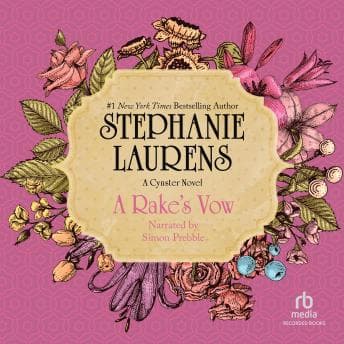
Look, I need to get something off my chest: I am deeply annoyed by Beth Armitage. Not because she's poorly written - she's not - but because Beverley writes her with this maddening refusal to understand her own situation that had me muttering at Lake Michigan like a man who's lost his mind. Denise actually turned to me on our Saturday walk and said, "You're arguing with your headphones again." I was. Because Beth, a woman who runs a girls' school and prides herself on her intellect, somehow arrives at her arranged marriage with a stunning lack of understanding about what marriage actually entails between two people. And the thing is - the thing that kept me listening for all twelve and a half hours - Beverley knows exactly what she's doing with that choice.
This reminds me of what Hemingway said about writing: that the dignity of movement of an iceberg is due to only one-eighth of it being above water. Beverley's working that principle here. The surface story is a Regency arranged marriage between Lucien de Vaux, heir to the Duke of Belcraven, and Beth, who would rather be anywhere else. But underneath? It's about power. Who has it, who doesn't, and what happens when two people who both believe they're being controlled finally stop performing for the audience and start being honest with each other.
Two Stubborn People and the Twelve Hours It Takes Them to Talk
The central frustration - and I do mean frustration, the kind that makes you pause the audiobook and stare at the ceiling - is that Beverley takes forever to reconcile these two. I've seen listeners complain about this, and they're not wrong about the pacing. It is slow. But here's where twenty years of teaching Austen gives me a different lens: the slowness is the point. Beth and Lucien are trapped in a system neither chose. Beth resents being sold off like property (fair), and Lucien resents being told his bloodline is a lie unless he marries this specific woman (also fair). Neither one is the villain. Both are acting like they are.
Beverley has real skill with the small domestic moments that reveal character - the way power shifts during a conversation over breakfast, the way Lucien's public charm masks genuine hurt. The humor is dry and period-appropriate, not the winking anachronistic kind you get in a lot of Regency romance. My students would hate this. I love it. It reads like a novel from the period, not a modern novel wearing a bonnet.
But - and this is where I have to be honest - there's a saggy middle section where the miscommunication dynamic starts feeling like a wheel spinning in mud. You know they'll get there. Beverley knows you know. And yet she lets them circle each other for another two hours before anything cracks open. I'm a patient listener. I run my audiobooks at 1.0x because the author chose those words. Even I thought about reaching for the 1.25 button around hour seven.
Simon Prebble Does What Simon Prebble Does Best
Simon Prebble narrating a Regency novel is like hiring a master carpenter to build a bookshelf. You know what you're getting. The man has narrated so many historical novels that the period cadence lives in his bones - the formal address between characters, the clipped vowels of the aristocracy, the slightly warmer register when Beth is in her own head versus performing for society. He doesn't do vocal pyrotechnics. He doesn't need to. The narrator understands that pause is punctuation, and Prebble deploys silence the way a good conductor uses rests.
I will say this: with a single male narrator performing female characters in a romance, there's always a ceiling on how intimate the love scenes can feel. Prebble handles it with grace rather than passion, which suits Beverley's style - she writes desire as tension more than heat - but if you're coming from dual-narrated romance, adjust your expectations.
Who Gets the Assignment and Who Gets a Hall Pass
If you loved Austen's Persuasion - the quiet agony of two people who could love each other if pride would just get out of the way - this is its spiritual successor in Regency romance form. Beverley is in the Romance Writers of America Hall of Fame for a reason, and that reason is she treats the genre with the same seriousness I wish more people did. I reviewed Love Letter a while back and kept wishing it had that same conviction - the sense that the author genuinely believed the story deserved to be taken seriously. This is for the listener who wants historical accuracy, slow-building emotional stakes, and characters who earn their happy ending by actually changing.
Skip it if slow pacing makes you reach for your phone. Skip it if you need explicit heat - this burns low and steady. And maybe skip it if heroines who are smart about everything except their own hearts make you want to throw things. (I threw nothing. Denise would not have approved.)
The prose deserves to be savored. Even when it's testing your patience. Especially then.