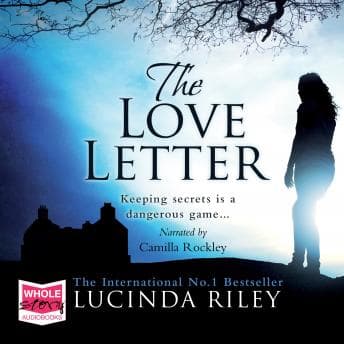

Lucinda Riley understood something that most thriller writers forget: the best mysteries aren't about what happened, but about why it still matters seventy years later.
I started this one during a particularly brutal stretch of midterm grading - you know the kind, where you're reading the same thesis statement about symbolism in The Great Gatsby for the fortieth time and your soul starts to leave your body. Sixteen hours felt ambitious. But Riley's premise hooked me: a legendary actor dies at 95, and suddenly everyone in the British establishment is scrambling to find a letter he left behind. A letter dangerous enough that people are willing to do terrible things to keep it buried.
The Craft of Concealment
What Riley does exceptionally well is layer her timelines. We're following Joanna Haslam, a young journalist in 1995 London who stumbles onto this conspiracy at Sir James Harrison's funeral. But the real story lives in the past - in the secrets of the 1920s that echo forward through decades of lies. This reminds me of what Hemingway said about icebergs: seven-eighths of the story sits beneath the surface. War and Peace, Book 01: 1805 operates on similar principles—massive historical scope with most of the emotional weight living in what characters don't say. Riley gives you just enough glimpses of what's hidden to keep you reaching.
The problem? She might have buried too much. By hour ten, I found myself pausing during a particularly tedious faculty meeting (sorry, Principal Martinez, but the budget projections were not more interesting than a seventy-year-old royal scandal) just to rewind and figure out which secret belonged to which character. The plot gets convoluted. Characters make decisions that serve the mystery more than they serve logic. And the ending - I won't spoil it, but I finished feeling like I'd been handed a beautiful gift box with nothing quite satisfying inside.
My students would probably call this "mid." I'd call it frustrating, because the bones of this story are genuinely compelling.
Camilla Rockley Earns Her Keep
Here's where the audiobook format saves this experience. Camilla Rockley is doing something remarkable with her voice work. She's not just reading - she's interpreting. Her Irish lilt for certain characters versus her clipped aristocratic English for others creates an instant class divide you can hear. She handles Yorkshire accents, American voices, elderly men, and young women with equal confidence. When she voices Sir James Harrison in flashback, there's a weight to it, a theatrical grandeur that makes you believe this man was once the greatest actor of his generation.
Rockley understands that pause is punctuation. In the quieter moments - and there are many, perhaps too many - she lets the tension breathe. She doesn't rush through the slow sections, which is both a blessing and a curse. The prose deserves to be savored, but sometimes you wish someone would just get to the point.
The Pacing Problem
Let's be honest: this book drags. Not everywhere, but enough that I noticed. Riley was clearly in love with her research - the period details, the British establishment, the layers of historical intrigue - and sometimes that love slows the narrative to a crawl. There are stretches in the middle where Joanna is essentially just... waiting. Researching. Making phone calls that lead nowhere. It's realistic, sure. Journalism is often boring. But realistic and compelling aren't the same thing.
I listened at 1.0x because the author chose those words and I choose to hear them properly. But I'll admit there were moments - particularly during a late-night grading session around hour seven - where I wondered if 1.25x might have been the merciful choice.
Class Dismissed
If you loved The Seven Sisters series, this is its spiritual successor in ambition if not execution. Riley's strength has always been weaving family secrets across generations, and that DNA is here. But this earlier work feels less polished, less confident in its pacing.
The audiobook elevates the material. Rockley's performance adds dimension that the text alone might not sustain. If you're going to experience this story, audio is absolutely the way to do it.
Who should listen: Fans of atmospheric British mystery who don't mind trading tight plotting for layered historical intrigue and excellent narration. Who should skip: Anyone who needs their mysteries to land with a satisfying click at the end.
I finished it. I'm not sure I'd recommend it to everyone. But Denise asked what I was listening to on our lakefront walk last Sunday, and I talked about it for twenty minutes.
That probably says something.









