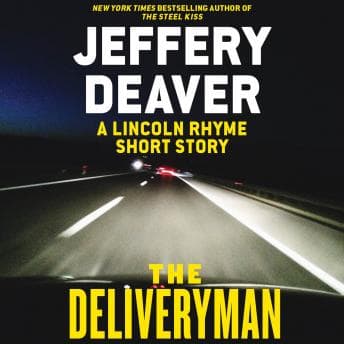

Look, I have a bone to pick with Jeffery Deaver. Not about the writing - the writing's fine. My problem is that this story is an hour and forty-five minutes long, and I spent roughly forty of those minutes convinced I'd figured out the twist, only to be wrong. Twice. In a short story. The audacity.
I was shelving returns at the library on a slow Wednesday afternoon, earbuds in, half-listening the way you do when you think you know where a mystery is headed. Then Deaver pulled the rug, and I actually stopped mid-shelf with a copy of Where the Wild Things Are in my hand, staring at nothing like a person having a small crisis. A patron asked if I was okay. I was not okay. I was recalibrating.
The Evidence Room in Your Ears
Here's what Deaver does that most mystery writers don't bother with in short fiction: he gives you the forensic details like they matter. Because they do. Rhyme and Sachs working through a trash-filled alley's worth of evidence in under two hours of audio feels like watching someone speed-solve a puzzle - you get the cigarette butts, the fiber analysis, the way Rhyme's mind catalogs and cross-references from his wheelchair while Sachs does the legwork. It's compressed but never rushed. The eight-year-old witness - the dead deliveryman's son - adds this gut-punch emotional layer that keeps the procedural stuff from feeling clinical. You've got a kid who just watched his father die, and he's trying to be useful, and Deaver doesn't milk it for sentimentality. He just lets it sit there, awful and quiet, while the investigation churns forward.
The contraband angle is where it gets interesting. The victim isn't just a deliveryman, and the story peels that back in layers thin enough that you're adjusting your theory every ten minutes. For something this short, that's impressive pacing. Deaver's clearly been writing these characters long enough that he doesn't waste time on exposition - you're dropped into Rhyme and Sachs's dynamic like you're joining a conversation already in progress. If you're new to the series, you might feel a half-step behind for the first few minutes, but it clicks fast.
Ballerini Gets the Assignment
Edoardo Ballerini narrates the Lincoln Rhyme audiobooks, and there's a reason he keeps getting called back. His Rhyme has this controlled intensity - clipped, cerebral, slightly impatient in a way that feels earned rather than performed. He doesn't do the thing where narrators oversell a brilliant character by making them sound like they're performing brilliance. Rhyme just sounds like a guy whose brain is three steps ahead of everyone else's, and who finds that more exhausting than impressive.
Sachs gets a warmer register, more grounded, and the kid - the kid's voice walks this careful line between scared and brave that genuinely got to me. (Shirley, my cat, was asleep on my chest by the time I relistened to those scenes at home. She was unimpressed. I was not.)
The pacing of Ballerini's delivery suits the short format. He doesn't stretch scenes or over-dramatize the reveals. When the twist lands, he lets Deaver's writing do the work. The narrator commits. That's rare, and it matters double in something this compact where every beat has to earn its place.
The Credit Question - And Who This Is Actually For
Here's my honest tension with this one: it's good. Really good, even, for what it is. Deaver's plotting is tight, Ballerini's performance is solid, and the emotional core with the kid elevates it past standard procedural fare. But it's an hour and forty-five minutes. That's barely a commute. Spending a full credit on this feels like buying a fancy appetizer at entrée prices - delicious, yes, but you're going to be hungry again in twenty minutes.
If you're already a Lincoln Rhyme fan, you probably don't need me to tell you to grab this. It's a sharp little puzzle box that fits right into the series without demanding the time commitment of a full novel. If you've never read Deaver, this is actually a surprisingly decent entry point - short enough that you're not investing twelve hours before you know if the procedural style works for you.
But if you scare easily at spending credits on short fiction? Wait for a sale or catch it on a streaming service. The quality is there. The quantity isn't.
I will say this: Deaver understands something about mystery that a lot of horror writers could learn from. Dread isn't just for ghosts and dark hallways. A dead man's son sitting in an evidence room, not knowing what his father was really carrying - that's dread. That's the slow creep of realizing the person you loved had secrets. Different genre, same pit in your stomach. My podcast listeners are going to love this comparison and probably yell at me about it. The same slow-creep dread of uncovering a loved one's hidden life is exactly what makes Bones Never Lie so quietly devastating - procedural on the surface, rotting from underneath.