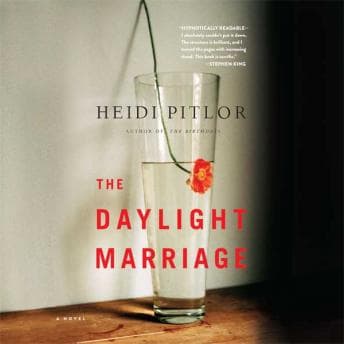

Three AM. The unit was quiet - too quiet, the kind of quiet that makes you knock on every wooden surface within reach. I was charting, half-listening to this one, when Hannah's marriage started falling apart in my ears. And I just... stopped typing. Sat there in the dim glow of my computer screen, coffee going cold, completely wrecked.
This book is five hours of watching two people who probably loved each other once slowly become strangers in their own home. And Heidi Pitlor doesn't let you look away.
The Slow Bleed Nobody Sees Coming
I've worked trauma for fifteen years. I know what sudden catastrophe looks like - the car accidents, the gunshot wounds, the things that happen in seconds. But this book? This is the other kind of damage. The kind that happens so gradually you don't notice until someone's gone.
Lovell is a climate scientist who thinks he can save the world if people would just listen. Hannah was the spirited, impulsive one who picked him - and then slowly disappeared inside their suburban life. Their kids sense the tension but have learned to ignore it, the way kids do. The way my own kids probably did during my first marriage, if I'm being honest.
Pitlor does this thing where she gives you Lovell's perspective after Hannah vanishes, piecing together their marriage through memory. Then she gives you Hannah's single day - the small decisions that take her somewhere she never intended to go. It's not a mystery in the traditional sense. There's no detective, no procedural. It's more like - you know when a patient codes and afterward you're reviewing the chart, looking for the moment things started going wrong? I Am Pilgrim does something similar with its protagonist reconstructing a terrorist's entire life from scattered clues, that same forensic piecing-together of how someone got to their breaking point. That's this book. The retrospective that makes you sick because you can see exactly where it all broke.
Xe Sands and the Intimacy Problem
Here's where I need to be real with you. Xe Sands is a polarizing narrator. I've heard her in other books and sometimes her breathy, conversational style works beautifully. Here? It mostly works. Her intimate delivery fits the suffocating closeness of a failing marriage. When she's building tension toward that final unraveling, she doesn't miss a beat.
But - and this is a real but - she has this tendency to swallow words. During my night shift listen, there were moments I had to rewind because I genuinely couldn't catch what she said. If you're listening while doing something else (dishes, driving, whatever), you might lose some lines. This is a book that demands your attention.
Her Hannah is withdrawn and directionless in a way that feels authentic. Her Lovell is frustratingly oblivious in that way men sometimes are when they're so focused on their Important Work that they miss their wife drowning right in front of them. The kids feel like real kids - sensing more than they should, saying less than they feel.
When Fiction Hits Too Close
Carlos asked why I was crying in the car after my shift. I blamed allergies. (It was not allergies.)
Here's the thing about this book - it's not about a bad person doing bad things. It's about two decent people who stopped talking to each other. Who let resentments pile up like dirty laundry until they couldn't see the floor anymore. Lovell isn't a villain. Hannah isn't either. They're just... tired. Disconnected. Going through the motions.
I've seen this in the hospital. The couples who show up after something terrible happens, and you can tell they haven't really looked at each other in years. The way they stand on opposite sides of the bed. The way they don't touch.
Stephen King called this "hypnotically readable" and for once I agree with the famous blurb. The structure is smart - alternating between Lovell's after and Hannah's during creates this mounting dread. You know something bad is coming. You just don't know exactly what.
Who This Marriage Autopsy Is For
If you're going through a rough patch in your own marriage, maybe... wait on this one. Not because it's bad, but because it's too accurate. It'll make you want to put down your phone and actually talk to your spouse.
If you love domestic suspense that's more psychological than procedural, this is your book. If you need fast action and clear villains, skip it. This is slow-burn dread, not explosions.
At just over five hours, it's a perfect post-shift decompression - but only if you're ready to feel something. I listened on my drive home and then sat in my driveway for ten minutes, just... processing.
Maria's Night Shift Prescription
This book is accurate. Not medically - there's no hospital scenes to yell at my dashboard about - but emotionally accurate. The way marriages fall apart. The way we miss the signs. The way one explosive argument can be the end of something that's been dying for years.
My mom would hate this book. She's been married to my dad for forty-two years and they still hold hands at Mass. But she'd also recognize it, the way anyone who's been paying attention recognizes it.
Not a perfect audiobook - Sands' word-swallowing is a real issue, and you need focused listening time. But the story itself? It'll haunt you. In the best possible way.