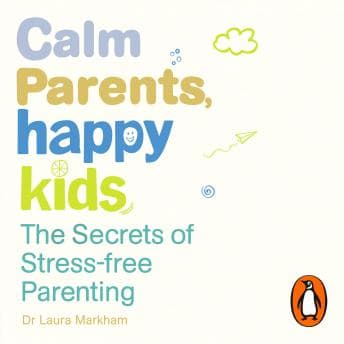

Look, I'll be honest - I grabbed this audiobook after a particularly brutal on-call week where I snapped at Kevin for breathing too loudly while I was trying to debug a memory leak. Not my finest moment. And yeah, I don't have kids, but I figured if Dr. Laura Markham could help parents not lose their minds, maybe she could help me stop treating my boyfriend like a junior dev who just pushed to production without testing.
Quick Verdict: Worth your commute. This is basically emotional regulation training disguised as a parenting book, and honestly? The strategies apply way beyond kids.
The Framework That Actually Makes Sense
So here's the thing about self-help books - most of them could've been blog posts. This one? It earns its seven hours. Markham structures everything around three core ideas: regulating yourself first, fostering connection, and coaching instead of controlling. It's basically the parenting equivalent of "you can't pour from an empty cup," except she actually gives you the tools to fill that cup.
The research backing is solid. Like, actually solid - not the hand-wavy "studies show" nonsense you get in a lot of pop psychology. She explains the brain science behind why kids (and let's be real, adults too) melt down, and why punishment creates compliance without actual behavioral change. As someone who debugs systems for a living, I appreciated the cause-and-effect logic. You can't fix a bug by yelling at the code. Same principle applies to humans, apparently.
The practical scripts she provides are gold. "You wish you could have more screen time. It's hard when fun things have to end." Simple stuff, but hearing it modeled made something click. I've already started using variations with Kevin when he's frustrated about work. (Don't tell him I'm using parenting techniques on him. Wired for Love covers similar relationship communication strategies with more neuroscience backing, if you want the partner-specific version. He'd never let me live it down.)
Xe Sands Brings the Calm
Okay, narrator time. Xe Sands has this voice that's... I want to say "soothing" but that sounds like I'm describing a spa. It's more like - you know that one senior engineer who explains complex systems without making you feel dumb? That energy. She's calm but not monotone, enthusiastic without being performative.
The delivery is a little formal, which I actually think works here. This isn't a casual chat over coffee; it's a clinical psychologist sharing research-backed strategies. The slight formality gives it credibility. Sands handles Markham's longer sentences really well - there are some dense paragraphs in here, and she phrases them so you can actually follow along at 6 AM on a packed Caltrain.
I bumped it up to 1.25x after the first couple chapters once I got the rhythm. At 1.5x it started feeling rushed, which kind of defeats the purpose of a book about staying calm.
Where It Gets Real (And Where It Drags)
The section on managing your own triggers hit different. Markham talks about how your reactions to your kid's behavior often come from your own childhood stuff, and - ugh. Yeah. Open Book had me doing similar unexpected emotional processing during commute time. I didn't expect to be unpacking my mom's anxiety-driven parenting style on my morning commute, but here we are.
There are moments where the book gets repetitive. She really wants you to understand the connection piece, which means you'll hear variations of "children need to feel seen" about forty times. But honestly? Repetition is kind of the point with behavior change. It's like code review - sometimes you need to see the same pattern multiple times before it sticks.
The weakest section for me was some of the specific age-related advice for toddlers. Super useful if you've got a three-year-old, less relevant for my current life situation. But even then, the underlying principles translated.
Who's This Actually For?
Parents dealing with meltdowns (theirs or their kids'), obviously. But also: anyone who wants better emotional regulation tools without wading through meditation-heavy woo. Skip it if you need high-energy content or you're looking for quick fixes - Markham is realistic about the fact that this stuff takes practice.
Perfect for: train, evening wind-down, long walks when you need to reset. Skip for: gym (too calm), deep work (you'll want to take notes).
Pushing This One to Main
The ROI on this audiobook is solid. Seven hours of practical, research-backed strategies for not losing your cool? Way more useful than half the productivity books I've suffered through.
Kevin says I've been less snappy lately. I told him it's the new meditation app. He doesn't need to know I'm getting coached by a parenting book.