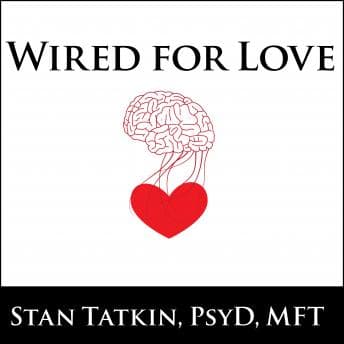

Everyone kept telling me this book would change how I think about relationships. "It's neuroscience-based," they said. "It's not just feelings talk." And look, I'm a researcher. I've read the attachment literature. I've taught it. That's exactly the kind of reductive thinking I found in You Can Heal Your Life, which treats complex psychological patterns like they can be affirmation-ed away. So I went in skeptical - because popular psychology books have a habit of oversimplifying complex research until it's basically astrology with citations.
I was wrong to be skeptical. Mostly.
The Psychology Actually Tracks
Here's what Stan Tatkin gets right: he understands that attachment isn't just about childhood wounds you carry into adulthood like emotional baggage. It's about how your nervous system responds to threat. How your brain literally processes your partner's face, voice, micro-expressions. The "primitives" he talks about - those automatic, below-conscious reactions that hijack your prefrontal cortex during conflict? That's real neuroscience, not pop psychology fluff.
I found myself nodding along during my morning jogs through Cambridge, which is rare for me with self-help audiobooks. (My therapist would be proud.) Tatkin's framework of "anchors" versus "islands" versus "waves" - his attachment style shorthand - actually maps onto the research in ways that feel clinically useful rather than reductive. He's not just slapping labels on people. He's describing patterns of nervous system regulation.
The ten principles structure works surprisingly well for audio format. Each one builds on the last, and Michael Hinton's pacing gives you time to actually process the concepts before moving on. I appreciated that Tatkin includes same-sex couples throughout his examples. It's 2024. This should be standard, but it's still worth noting when authors get it right.
Where I Wanted More Depth
Okay, but. (There's always a but.)
For listeners with actual psychology training, some sections will feel like review. The attachment theory overview is solid but basic - if you've read Bowlby or Ainsworth or even just taken a developmental psych course, you're not learning much new in those early chapters. Tatkin is clearly writing for a general audience, which is fine. Just know that going in.
I also found myself wishing he'd address the limitations of his framework more directly. What happens when both partners are anxiously attached? When trauma responses don't fit neatly into his categories? He touches on complexity, but the book leans toward "here's how to fix it" rather than "here's why this is genuinely hard and might require professional help." The research actually shows that some attachment patterns are remarkably resistant to change without intensive intervention. Tatkin knows this - he's a clinician - but the book's optimistic tone sometimes glosses over it.
The Voice in My Head
Michael Hinton is... fine? I couldn't find much about him online, but based on this performance, he's got that clear, educational narrator quality that works for instructional content. No dramatic flourishes, no character voices (obviously - it's not that kind of book). He sounds like a thoughtful professor reading his lecture notes aloud, which is exactly what you want here.
The pacing is genuinely good. Self-help audiobooks often rush through concepts or, worse, drag them out with unnecessary repetition. Hinton hits a sweet spot where you can follow complex ideas without feeling talked down to. I listened at 1.25x during runs and it still tracked perfectly.
What makes Tatkin compelling as an author is his genuine curiosity about why couples hurt each other. He's not moralistic about it. He's interested. The couples in his case studies exhibit classic patterns of threat response, and he analyzes them the way I'd analyze a fictional character. Without judgment, with fascination.
Who Should Listen (And Who Should Skip)
This is best for people who want to understand the why behind relationship conflict, not just the what-to-do-about-it. If you're the type who needs to know the mechanism before you can trust the advice - if you're wired like me, basically - this will satisfy that need.
Skip it if you want a quick tips-and-tricks approach. Or if you're looking for deep academic rigor. This sits in the middle: accessible enough for general audiences, substantive enough that it won't insult your intelligence. Essentialism occupies a similar sweet spot - practical frameworks grounded in actual research rather than motivational platitudes.
I found myself asking: why does my own nervous system do the things Tatkin describes? And that's the mark of a good psychology book. It makes you turn the lens inward.
Would I recommend it to my students? Yes, actually. With the caveat that it's a starting point, not the whole picture. But as starting points go, it's solid science wrapped in genuinely practical advice. My therapist would probably approve.