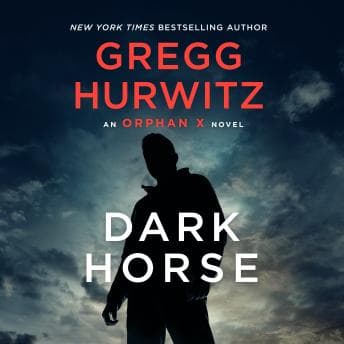

Everyone keeps telling me the Orphan X series is "Jack Reacher meets Jason Bourne," and honestly? That comparison does Gregg Hurwitz a disservice. Because what Hurwitz actually does well — better than most thriller writers — is build a protagonist whose psychological contradictions feel earned rather than manufactured.
I was up past midnight making chana masala, the kind that takes three hours because you toast the spices properly and let everything reduce. The audiobook was keeping me company, and somewhere around the halfway mark, I realized I'd been standing at the stove with the burner off for ten minutes, just listening. That's either a testament to the book or evidence that I need to get out more. Probably both.
The Moral Calculus That Actually Works
Here's what got me: Aragon Urrea. The drug kingpin who's also the local patron saint. Hurwitz doesn't take the easy route with this character — he doesn't make Urrea secretly noble or cartoonishly evil. The man supplies employment, funds infrastructure, provides a brutal but functional justice system for people the legitimate government has abandoned. And he also runs a major drug operation that destroys lives. The protagonist exhibits classic approach-avoidance conflict here: Evan needs to help this man's innocent daughter while confronting the fact that "innocent" and "guilty" don't sort neatly into the categories his moral code demands.
This is a fascinating case study in moral licensing — the psychological phenomenon where doing good gives people permission to do bad. Urrea has built an entire identity around it, and Hurwitz is smart enough to let the reader sit in that discomfort rather than resolving it with some tidy redemption arc.
I found myself asking: why does Evan really take this case? He's just survived an attack, lost his base of operations, has a complicated thing going with Mia. The book says he doesn't want a new mission. But the research actually shows that people with Evan's psychological profile — hypercompetent, emotionally avoidant, raised in institutional settings — can't tolerate purposelessness. He needs the mission more than Urrea needs him.
Scott Brick Is The Right Kind of Flat
So here's where popular opinion and my experience diverge. A lot of listeners praise Brick's narration as simply "excellent" and leave it there. But what makes his performance work for this specific character is something most people would call a flaw: he's emotionally restrained to the point of near-monotone. And that's exactly what Evan Smoak sounds like in my head. The man was raised in a government black-ops program. He's not going to emote like a theater kid. Brick's calm, controlled delivery cracks open at the right moments — when there's urgency, when humor sneaks through Evan's defenses — and those cracks land harder because of the baseline flatness.
That said. The female characters. Mia, Joey, anyone without a Y chromosome — they all sound like men doing an impression of what they think women might sound like if women were also men. Joey especially suffers here. She's Evan's sixteen-year-old protégée, and the writing already makes her a bit grating (the precocious teen hacker archetype that thriller writers love and I find psychologically lazy — real teenagers with her background would present very differently). Layer on Brick's inability to differentiate her voice, and you get a character who's hard to track in dialogue-heavy scenes. My therapist would have thoughts about how often fiction flattens teenage girls into either victims or sarcastic sidekicks, and this book doesn't entirely escape that pattern.
The Fortress Problem (And Why 15 Hours Is The Right Length)
The central tactical challenge — infiltrating a heavily armed, paranoid cartel compound in Mexico — gives the book its structural spine, and it's genuinely clever. At 15 and a half hours, you'd think it would drag, but Hurwitz uses the length to build the impossible logistics piece by piece. Every conversation, every reconnaissance detail, every alliance Evan negotiates adds another layer to the plan. It's not fast so much as relentless. Like watching someone solve a puzzle in real time.
Psychologically, this doesn't track in one area though: the cartel leader's paranoia is described as deep and systematic, but his security infrastructure has the kinds of gaps that only exist because the plot needs them. I noticed. I was annoyed.
The love story with Mia provides the emotional counterweight, and it mostly works — Evan's inability to be vulnerable is portrayed with enough specificity that it doesn't feel like generic "tough guy can't open up" shorthand. He's genuinely wired differently, and the relationship tension comes from that wiring, not from contrived miscommunication. The same kind of psychologically honest character work — where someone's damage is structural, not decorative — is what makes Every Dead Thing worth your time too, even if it goes to much darker places to get there.
Who Gets The Most Out of This
If you've been following the Orphan X series, this is a strong entry — maybe not the strongest, but the moral complexity with Urrea elevates it above standard thriller fare. If you're new to the series, you can start here, but you'll miss the weight of the Mia relationship and why Evan's destroyed home base matters.
Skip it if: poorly differentiated female voices will drive you up a wall, or if you need your thriller protagonists to have realistic emotional range. He's compelling but he's not complex in the way literary fiction demands.
Listen if: you want a thriller that actually asks an interesting moral question and — here's the key part — doesn't pretend it has the answer.
The Case File Stays Open
I finished the audiobook, washed the dishes, and kept thinking about Urrea. Not Evan. Urrea. The man who does terrible things for defensible reasons, who loves his daughter with the same ferocity he brings to running a cartel. What makes this character compelling is that he's not a puzzle to be solved — he's a contradiction to be held. And the fact that a thriller series seven books deep can still introduce a character who keeps me up thinking? That's worth the credit.