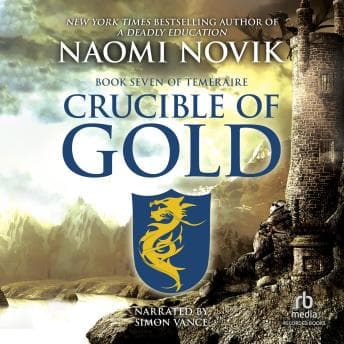

Book 7 of the Temeraire series is basically an incident response runbook where every mitigation creates three new incidents. And I mean that as a compliment.
I wasn't on the train for this one - I was home on a Saturday, half-heartedly refactoring some test infrastructure while Kevin went rock climbing, and I burned through the whole thing in one sitting. Ten hours. Didn't touch the code after hour two.
The Escalation Path from Australia to the Andes
So Laurence and Temeraire have been benched in Australia since the last book - think of it as being put on a PIP after saving the world but annoying management in the process. The British government drags them back because they need someone expendable to negotiate with the Tswana, who've allied with Napoleon and are currently besieging Rio. Classic management move: sideline your best engineer, then panic-page them when the system's on fire.
The pacing here is a genuine improvement over Tongue of Serpents (book 6), which - let's be honest - dragged like a Monday morning standup that should've been a Slack message. Crucible of Gold actually moves. Shipwreck, Incan empire politics, dragon territorial disputes, an old enemy showing up at the worst possible time. Every chapter escalates the stakes in a way that kept my attention even when my caffeine wore off around hour five.
But here's what I didn't expect: the world-building with the Incan empire is genuinely interesting. Novik doesn't just give us European dragons with funny hats. The Incan dragon-human social structure has its own logic, and the culture clash between Laurence's rigid British sense of honor and these completely different power dynamics creates real tension. The science - well, the dragon-science - actually holds up within the rules Novik established six books ago, which is more than I can say for most fantasy series at this point in their lifecycle.
The intricate political maneuvering among dragon factions reminded me of The Two Towers, where alliances shift constantly and every character's agenda collides.Simon Vance Is Load-Bearing Architecture
Simon Vance is not Ray Porter (nobody is), but for this series, he might be the only correct choice. His proper British accent is basically the runtime environment for the entire Temeraire universe. The class distinctions, the military formality, the way Laurence talks like he's composing a formal letter even when everything's actively exploding around him - Vance nails all of it without ever feeling like he's performing.
But the real flex is the dragons. Temeraire comes across as this enormous, earnest intellectual who just wants to discuss philosophy and dragon property rights, and Vance gives him this measured, almost professorial quality that somehow works for a creature the size of a building. Then there's Iskierka - the self-satisfied, fire-breathing chaos agent - and the contrast between her preening confidence and Temeraire's exasperated patience is genuinely funny. Their bickering had me laughing out loud during what was supposed to be a quiet Saturday afternoon. It reads like a Slack thread between two senior engineers who both think the other's architecture is fundamentally wrong.
Seven books in and Vance is still keeping character voices consistent. That's not nothing. Try maintaining state across seven distributed services and tell me it's easy.
His range across genres is remarkable; I found his narration of The Suspicions of Mr. Whicher just as engrossing, even though Victorian whodunits are a completely different beast.Who Gets Paged and Who Can Sleep Through It
Perfect for: commute, weekend binge, long flights. The chapters are well-sized for Caltrain segments and the pacing means you won't zone out during dead spots because there aren't many.
Skip if: you haven't read the previous six books. This is absolutely not a standalone. Jumping in here is like joining a codebase at commit #4,782 with zero documentation - technically possible, but why would you do that to yourself?
If you loved the early Temeraire books but bounced off Tongue of Serpents, come back. This one earns its runtime. And if you're a Novik fan from Uprooted or Spinning Silver wondering whether the series is worth the 60+ hour investment - honestly, yes, but start at book one. The compound interest on character development pays off by this point.
If you haven't read Novik's standalones yet, Uprooted delivers an entirely different kind of magic—darker, Eastern European folklore that still has that signature Novik intelligence.The Commit Message
TL;DR: Worth your commute. The ROI on this audiobook is solid - ten hours of South American dragon diplomacy gone spectacularly wrong, a narrator who's been carrying this world on his back for seven books and still isn't tired, and pacing that actually respects your time. I finished this in one lazy Saturday. No production outages required.