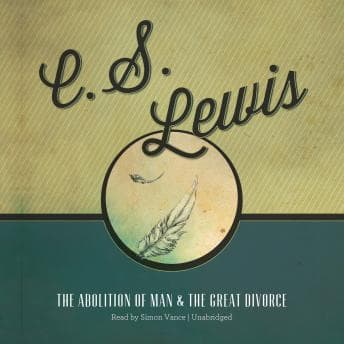

"We make men without chests and expect of them virtue and enterprise."
That line hit me somewhere around hour one, and I had to pull over. I was in a Whole Foods parking lot in Pasadena, supposed to be grabbing groceries, and instead I'm sitting there like an idiot having a moment about moral philosophy. This is what C.S. Lewis does to you.
Look, I've read more business books than I can count about "values-based leadership" and "building culture." Most of them are recycled TED talks with case studies bolted on. There There wrestles with similar questions about identity and what gets lost when you're cut off from foundational truths—though it does it through the lens of urban Native American experience rather than British moral philosophy. Lewis wrote this in 1943 and basically predicted why every corporate ethics training feels hollow. The Abolition of Man isn't about religion, really—it's about what happens when you strip objective moral standards out of education and expect people to still behave well. My parents didn't need a book for this. They just called it "raising kids right." But watching companies fail because nobody actually believes in anything beyond quarterly targets? Yeah. Lewis saw it coming.
The Two-for-One That Actually Works
Here's the thing about this pairing—it shouldn't work. Abolition of Man is dense philosophical argument. The Great Divorce is imaginative fiction about a bus ride from Hell to Heaven. Putting them together feels like bundling a McKinsey white paper with a short story collection.
But it works. Lewis is making the same argument twice—once for your head, once for your gut.
Abolition lays out why moral relativism is a dead end. It's rigorous, it's logical, and honestly? Parts of it are work. I'm not going to pretend I caught everything at 2.0x speed. Some sections I had to rewind. (Jenny would say that's what I get for being "aggressively efficient." Jenny is right.)
The Great Divorce takes those same ideas and shows you what they look like in human souls. The people on that bus from Hell—they're not monsters. They're just... stuck. Clinging to petty grievances, wounded pride, the need to be right. It's uncomfortable because you recognize yourself in them. I recognized a few clients too, but we won't go there.
Simon Vance Earns His Paycheck
I've listened to a lot of Simon Vance. The man is basically the Morgan Freeman of British audiobook narration—you hear that voice and you trust it. What impressed me here is how he handles the tonal shift between the two books.
Abolition of Man requires this measured, almost professorial delivery. Lewis is building an argument brick by brick, and Vance gives it the weight it needs without making it feel like a lecture. When Lewis gets pointed—and he does—Vance lets that edge come through.
Then you hit The Great Divorce and suddenly he's doing voices. Ghosts with their excuses, bright spirits with their clarity. There's this one character—a grumbling wife who followed her husband to Hell basically out of spite—and Vance nails her. The character work reminded me of Scattering, where the narrator also has to inhabit deeply flawed people without making them cartoons. You've met this person. You might be related to this person.
The pacing is excellent throughout. Four and a half hours is short for two books, and Vance doesn't waste a minute.
Who Gets the ROI Here (And Who Doesn't)
If you're looking for light listening, keep scrolling. This is dense, British, 1940s philosophy. But it's also some of the clearest thinking about moral education and human nature I've encountered outside of watching my parents run their business. Skip it if you want background noise. Grab it if you've ever sat in a meeting wondering why nobody believes the values on the wall.
I finished this during a week of client meetings where I watched three different executives talk about "core values" without meaning a single word. Lewis would have had thoughts. Pointed ones.
Skip to The Great Divorce if you want the accessible entry point. But don't skip Abolition entirely—it's the foundation that makes the fiction hit harder.
The Bottom Line on the Books
My parents would have liked this. They wouldn't have had time to read it, obviously. Fourteen-hour days don't leave room for moral philosophy. But they lived it anyway. Lewis just gave it words.