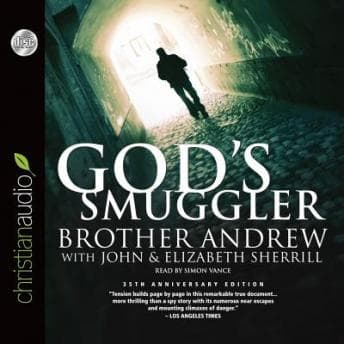

I have a confession. I spent the first hour of this audiobook genuinely annoyed with Brother Andrew.
Not because he's insufferable—quite the opposite. The man is so earnest, so utterly convinced that God will provide, that my cynical teacher brain kept waiting for the other shoe to drop. I was grading sophomore essays on The Scarlet Letter (irony not lost on me) when Andrew describes crossing into Poland with a car literally stuffed with Bibles, praying that the border guards would somehow not see them. And they don't. They just... don't look.
My red pen stopped mid-correction. I muttered something unprofessional.
The Audacity of Radical Faith
Look, I teach literature. I spend my days helping teenagers understand that Hemingway's iceberg theory means what's unsaid matters more than what's said. Brother Andrew operates on the opposite principle entirely. Everything is said. Everything is laid bare. His faith isn't subtle or literary—it's embarrassingly direct. He needs money for a trip, he prays, money appears. He needs a visa, he prays, the visa comes through. The border guards should absolutely find those Bibles hidden under camping gear, but they don't.
This is not how good fiction works. But that's the thing—it's not fiction.
The Sherrills (John and Elizabeth, who co-authored this with Brother Andrew) understand something essential about memoir: the power is in the specific. Andrew's childhood in wartime Holland, watching German soldiers occupy his village. The bullet that should have killed him in Indonesia. The moment he realizes his calling isn't to be a missionary in the traditional sense but something stranger—a smuggler for God behind the Iron Curtain.
Simon Vance Knows When to Disappear
Vance's narration here is a study in restraint. His soft English accent gives the whole thing a quality of—and I'm going to sound pretentious here, but Denise isn't reading this—a kind of oral history being passed down. He doesn't perform Andrew's wonder; he simply presents it. The pacing is careful, almost meditative, which works because the content is anything but calm.
When Andrew describes the fear of crossing into Communist countries—the very real possibility of imprisonment, of endangering local Christians who could be executed for possessing Scripture—Vance's delivery captures the tension without melodrama. The danger is understated, which makes it more terrifying. (My students would hate this approach. They want everything spelled out. I love it.)
There's subtle vocal manipulation for different characters—Dutch contacts versus British missionaries versus Eastern European believers—but Vance never showboats. He understands that this is Andrew's story, not his audition reel.
What Brother Andrew Is Really Asking
Here's what kept me listening past my initial skepticism. Brother Andrew isn't actually telling a story about miraculous border crossings. He's asking a question that made me uncomfortable grading papers at 11 PM: What would you risk for something you believed in?
The Iron Curtain chapters work because they're not triumphalist. Andrew describes meeting believers who have nothing—no Bibles, no resources, no hope of the persecution ending in their lifetimes—and they're the ones encouraging him. There's a scene where a Romanian pastor, who could be arrested at any moment, thanks Andrew for reminding him that the global church hasn't forgotten them.
I had to pause and walk around my kitchen for that one.
This reminds me of what Bonhoeffer said about cheap grace versus costly grace. Falling Upward explores that same tension between easy belief and the kind that demands transformation. Andrew's faith costs him something. It costs the people who help him something. The miracles—if that's what they are—happen in the context of genuine sacrifice and fear. That's what separates this from feel-good religious pablum.
Who Should Listen (And Who Should Skip)
If you need your faith narratives wrapped in literary ambiguity, this will frustrate you. Andrew believes what he believes, and the book doesn't interrogate that belief from a skeptical angle. It's not Dostoevsky wrestling with doubt. Skip it if you want theological complexity or if earnest conviction makes you itch.
But if you're interested in Cold War history from an unusual perspective—the underground church, the human cost of ideological borders, what ordinary people risked for their convictions—this delivers. It's also a genuinely gripping adventure story. The pacing moves, the chapters are tight, and at nine hours, it doesn't overstay its welcome.
I'd recommend focused listening. This isn't background material. Put it on during a long drive or a lakefront walk when you can actually engage.
Class Dismissed
I finished this walking home from school last Tuesday, and I've been thinking about it since. Not because I suddenly believe in miraculous border crossings—my skepticism remains intact—but because Andrew's question lingers. What would I smuggle? What would I risk?
Probably not Bibles. But maybe the question itself is the point.
Simon Vance's narration elevates already compelling material into something that feels less like a memoir and more like testimony. Worth your credit, especially if you've never encountered this corner of Cold War history. My students would probably find it slow. They're wrong.







![Steve Jobs [unabridged audiobook] audiobook cover](/_next/image?url=https%3A%2F%2Fcovers.audiobooks.com%2Fimages%2Fcovers%2Ffull%2F9788499923406.jpg&w=1920&q=75)