
I was halfway through my morning jog along the Charles River when I realized I'd stopped moving entirely. Just standing there on the path like a weirdo, earbuds in, completely absorbed in the details of a Victorian child murder. A jogger had to swerve around me. I didn't even apologize properly.
That's the thing about this audiobook. It grabs you in ways you don't expect from nonfiction.
The Psychology of Victorian Hysteria
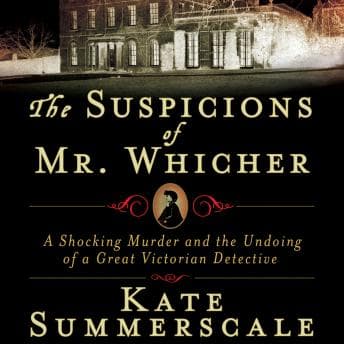
Look, I picked this up because I'm fascinated by how crime shapes cultural psychology. I had a similar experience with Story of My Life - another historical narrative that uses individual experience to illuminate broader cultural patterns. Kate Summerscale delivers something remarkable here - not just a true crime retelling, but a case study in collective Victorian anxiety. The murder of three-year-old Saville Kent in 1860 wasn't just horrifying because a child died with his throat slit. It was horrifying because it suggested the unthinkable: that respectable families could harbor monsters.
Jonathan Whicher walks into the Kent household and immediately sees what the family refuses to acknowledge. He's right. Everyone knows he's right. But being right doesn't protect you when you're accusing the upper classes of something this ugly. Victorian society was obsessed with maintaining the illusion of domestic sanctity. Whicher threatened that illusion, so they destroyed him instead.
Summerscale understands human nature in a way that makes this feel less like history and more like a psychological thriller. She doesn't just tell you what happened - she makes you feel the suffocating pressure of a society that would rather protect its myths than its children.
Simon Vance Gets Victorian Class Distinctions
I couldn't find much about Vance's specific preparation for this narration, but based on his performance? The man clearly did his homework. He captures something essential about how class operated in this period - the subtle condescension, the performative grief, the way people talked around things they couldn't bear to say directly.
His delivery during the sections about Whicher's professional disgrace genuinely moved me. (My therapist would have thoughts about this character, honestly - a man who sees the truth, speaks it, and gets punished for his clarity.) Vance conveys that particular flavor of British disappointment - restrained but devastating. The pacing is excellent too. He knows when to let the horror breathe and when to push forward.
The production is clean, professional, no weird audio glitches. I listened at 1.25x during my commutes and it held up perfectly.
Where the Narrative Wanders (On Purpose)
Here's where I need to be honest. Some listeners found this disjointed, and I understand why. Summerscale is doing something ambitious - she's weaving the actual crime investigation with the birth of detective fiction, showing how Whicher influenced characters like Sergeant Cuff in The Moonstone. It's brilliant if you're into that kind of literary archaeology. It can feel tangential if you just want the murder solved.
I found myself asking: why does this structure work for me when it clearly frustrated others? Probably because I'm already primed to see stories as psychological case studies. The connections Summerscale draws between real detection and fictional detection? That's exactly my area of interest. But if you're coming to this wanting a straightforward true crime narrative - bodies, clues, resolution - you might feel like she keeps wandering off topic.
The other thing: this book doesn't shy away from the darkness. A child was murdered, probably by someone in his own family. There's discussion of sexual transgression, emotional cruelty, the particular horror of violence against children. It's handled with sensitivity, but it's heavy. I wouldn't recommend this for bedtime listening unless you want very strange dreams.
Who Gets Stopped on the Jogging Path
If you're interested in Victorian history, the origins of detective fiction, or the psychology of denial - this is essential listening. Simon Vance elevates already excellent material. But skip it if you prefer your true crime fast-paced and procedural. This is slow, layered, literary. It demands attention. I loved it, but I'm also someone who reads academic papers for fun, so take that with appropriate skepticism.
The Uncomfortable Truth Whicher Left Behind
The real legacy here isn't just Whicher's influence on fiction. It's the uncomfortable truth that societies have always been better at punishing people who expose ugly realities than at confronting those realities themselves. That's not just Victorian psychology. That's human psychology.
And honestly? That's why I kept standing on that jogging path like an idiot. Some books make you forget where you are. This is one of them.