
What happens when a cold case hits too close to home for a detective who grew up without one?
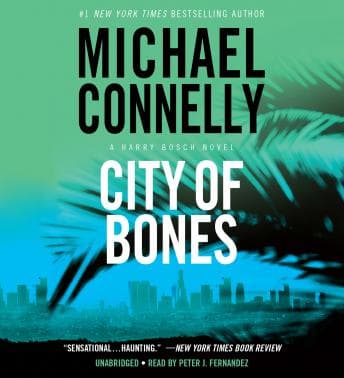
I was three hours into my post-shift decompression—Carlos already asleep, the kids not up yet, just me and my coffee getting cold on the counter—when Harry Bosch found those bones in the Hollywood Hills. And something about a cop who can't let go of a dead kid's case because of his own orphan childhood? That hit different at 7 AM after a night where I'd had a pediatric trauma come through. Sometimes the cases that wreck us aren't the goriest ones. They're the ones that remind us of something we've buried. What Alice Forgot does something similar with memory and buried trauma, though in a completely different genre—sometimes the most devastating revelations come from what we've lost access to.
The Booktrack Thing—Let's Talk About It
Okay, so this is the "Booktrack Edition," which means there's a musical score playing underneath the narration. I know some people hate this. I've read the reviews. "Distracting." "Insipid." "Added nothing."
Here's my take: after 15 years of hospital ambient noise—monitors beeping, ventilators cycling, code alarms going off—I'm basically immune to background sounds. The music didn't bother me at all. It's subtle, kind of atmospheric. Does it add anything essential? Not really. Would I specifically seek out the Booktrack version? Probably not. But it didn't ruin anything either. If you're the type who needs absolute silence to focus, maybe skip this version. If you've ever charted notes while a patient's family watches TV at full volume six feet away, you'll be fine.
Fernandez Gets Bosch Right
Peter J. Fernandez doesn't do the thing where he gives every character a wildly different voice. This isn't a full-cast production with accents flying everywhere. What he does instead is nail the essence of Harry Bosch—that dogged, frustrated, I-will-not-let-this-go energy that defines the character. His narration is clean and smooth. No weird pronunciations that made me yell at my dashboard. (The medical details are accurate. Finally.—okay, there's not a ton of medical stuff in this one, but Connelly clearly did his research on police procedure, and that matters.)
The man won an Audie Award for a reason. He's not flashy, but he's reliable. Night shift approved—this is the kind of narrator you can trust to keep you engaged on a dark highway without suddenly jolting you awake with weird choices.
The Case Itself—Cold But Not Frozen
A dog digs up bones on New Year's Day. Twenty-plus years old. A child's remains. And Bosch, who grew up bouncing through foster care and orphanages, becomes obsessed in a way that's clearly not just professional.
Connelly does something smart here—he layers Bosch's personal history into the investigation without making it feel forced. The detective's childhood trauma isn't a gimmick; it's the engine driving everything forward. There's a rookie cop who becomes romantically involved with Bosch (against regulations, obviously), and honestly? That subplot felt a little predictable. But the core mystery kept me engaged through my entire commute rotation for the week.
I will say—if you've watched the Amazon TV series, apparently this story arc is covered there. Some listeners found that made parts drag. I haven't seen the show, so I went in fresh. Worked for me.
Who This Works For (And Who Should Pass)
Perfect for: Fans of procedural crime fiction who want something character-driven. People who appreciate a detective with actual psychological depth. Anyone who needs a solid 11-hour listen for a road trip or a week of commutes. Night shift workers who need to decompress without their brain going to weird places.
Maybe skip if: You need fast-paced action every chapter. You've seen the TV adaptation and don't want to revisit the same story. You absolutely cannot handle any background music in your audiobooks (get the regular edition instead).
Content note: Violence, language, and some sexual content. Not what I'd call graphic, but definitely adult fiction.
Charting Complete
Carlos asked why I was crying in the car. I blamed allergies. (It was partly allergies. Phoenix in winter is brutal.) But also—there's something about a detective who can't save the kid in front of him but refuses to stop fighting for the one who's been dead for decades. That's the kind of stubborn, futile, necessary work I understand.
Michael Connelly earned his Grand Master title from the Mystery Writers of America. This book is one of the reasons why. Fernandez delivers it with the steady hand of someone who understands that sometimes the best narration is the kind that gets out of the way and lets the story breathe.
My mom would love this (she still thinks I should've been a doctor). But she'd also cry. Fair warning.