
What makes someone want control so badly they'll kill for it?
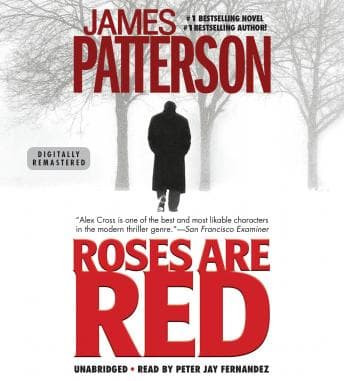
That's the question I kept circling back to during my morning runs through Cambridge, earbuds in, Peter J. Fernandez's voice narrating Alex Cross's hunt for a criminal who calls himself the Mastermind. And look, I've read enough case studies on antisocial personality disorder to know that the desire for perfect control is a red flag the size of a billboard. But Patterson gets something right here that a lot of thriller writers miss—the pathology isn't just window dressing. It's the engine.
The Psychology That Actually Tracks
Here's the thing about the Mastermind as a character study: he's not your garden-variety bank robber. The precision, the demands that must be followed to the letter, the punishment when they're not—this is a fascinating case study in what happens when narcissistic perfectionism meets complete moral disengagement. I found myself asking: why does he really need this level of control? That same question drives the psychological tension in Undone, where control becomes a matter of survival. Patterson doesn't spell it out in clinical terms (thank god, honestly), but the behavioral patterns are there if you know what to look for.
What makes Cross compelling as the counterpoint is his own crisis of control happening simultaneously. He's dealing with personal chaos at home while trying to predict someone who's essentially the anti-him—someone who sees people as variables in an equation rather than, you know, people. Cross exhibits classic compartmentalization, and Fernandez captures that tension between the detective who has to stay focused and the man who's falling apart.
(My therapist would have thoughts about Cross's coping mechanisms. Many thoughts.)
Fernandez Does the Heavy Lifting
Peter J. Fernandez has won Audie Awards for a reason. His vocal portraits—and I don't use that term lightly—are genuinely impressive. He doesn't just do voices; he does psychology. The Mastermind sounds controlled, clipped, almost bored by his own brilliance. Cross sounds tired in a way that's bone-deep. The victims sound like actual terrified humans rather than plot devices waiting to die.
I couldn't find a ton of technical details about Fernandez's approach online, but based on this performance, he clearly understands that pacing is character. When the Mastermind is in control, everything slows down, becomes deliberate. When Cross is racing against the clock, the rhythm picks up. It's not subtle, but it works. The research actually shows that listeners process emotional content better when narrators match vocal pace to narrative tension, and Fernandez nails it.
Some listeners apparently don't care for his style—I saw that in the reviews. I get it. His voice has a particular quality that's either going to work for you or it won't. But if you're on the fence, give it twenty minutes. The production is clean, no weird audio issues, and by the time the first major crime unfolds, you'll know if you're in or out.
Where It Gets Uncomfortable (And Whether That's a Problem)
Let's be real for a second. Patterson has a reputation for graphic content, and this book doesn't shy away from violence. The descriptions of what happens to families who don't follow the Mastermind's rules are—well, they're a lot. I'm not squeamish (you can't study criminal psychology and be squeamish), but there were moments during my jog where I actually stopped running to process what I'd just heard.
Some reviewers complained about repetitive focus on violent and perverse actions. That's fair. If you have a low tolerance for that, this genuinely isn't your book. But from a psychological standpoint, the violence serves a purpose—it establishes the Mastermind's complete lack of empathy in a way that abstract descriptions wouldn't. You understand what Cross is up against because you feel the weight of what's at stake. Murders in the Rue Morgue uses a similar approach—making you feel the horror to understand the detective's urgency.
The ending surprised me. Which doesn't happen often anymore. I've analyzed enough mystery narratives to usually see the twist coming, but Patterson plays fair with the clues while still managing to pull the rug out. One listener mentioned reading it twice to find the clues they missed, and honestly, I might relisten for the same reason.
The Series Context Problem
I'll be honest—I hadn't listened to Pop Goes the Weasel before this, and there were moments where I felt like I was missing context. Not enough to ruin the experience, but enough to notice. If you're new to Alex Cross, you can start here, but you'll get more out of it if you've followed his arc. The personal crisis subplot hits harder if you know what he's already been through.
(Don't tell my students I binged a Patterson novel instead of reading their papers. The irony of a narrative psychology researcher getting sucked into a thriller would not be lost on them.)
Your Prescription (Or Warning)
If you're drawn to thrillers that actually care about the why behind the violence, this one delivers. Fernandez's narration elevates what could be a straightforward cat-and-mouse into something that explores the psychology of control from both sides. Perfect for commutes—fast-paced enough to keep you alert during traffic, suspenseful enough to make you sit in the parking lot for five more minutes.
Skip it if graphic violence isn't your thing, or if you need your thrillers sanitized. The Mastermind's methods are brutal, and Patterson doesn't look away.
Just maybe don't listen before bed. The Mastermind will absolutely follow you into your dreams.