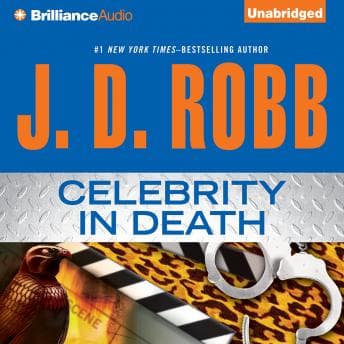

What happens when your own murder case becomes a blockbuster film and you're forced to attend the premiere party? If you're Eve Dallas, you tolerate the champagne, endure the small talk, and then - because the universe has a sick sense of humor - end up investigating a body in the rooftop pool.
I've been burning through the In Death series like it's my job (it's not, my actual job involves a lot more Dewey Decimal), and Celebrity in Death hits this sweet spot where the meta-commentary on fame and performance actually serves the horror. Because make no mistake - this is horror adjacent. The dread isn't supernatural, but watching Eve navigate a world where everyone's playing a version of themselves? That's its own kind of unsettling.
The Hollywood Murder Machine
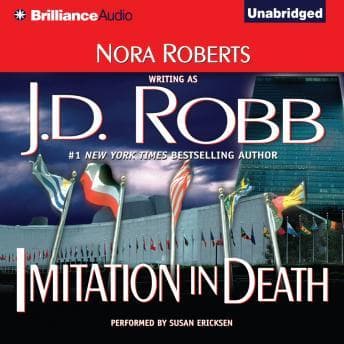
J.D. Robb - or Nora Roberts, if we're being honest about the worst-kept secret in publishing - does something clever here. She takes the artifice of Hollywood and uses it as a funhouse mirror for Eve's own identity struggles. Eve's watching an actress who looks almost exactly like her, playing her, at a party celebrating a case that nearly destroyed her. That's not just plot setup. That's psychological terrain.
The victim, K.T. Harris, is the actress playing Peabody - and she's awful in the way only Hollywood can produce. Rude, scene-stealing, universally despised. When she ends up drowned in the lap pool, the suspect list is basically everyone at the party. Robb layers in enough red herrings and misdirection that I genuinely didn't call the killer until late in the game. (And I host a horror podcast. I'm supposed to see twists coming.)
The pacing moves. Thirteen hours sounds like a commitment, but I listened through two full shifts at the library and a late-night cat-sitting session with Shirley, and it never dragged. The procedural elements are tight - Eve actually does cop work, interviews witnesses, follows evidence chains. It's not just vibes and intuition.
Susan Ericksen Gets It
Look, I've listened to enough audiobooks to know when a narrator is phoning it in. Susan Ericksen isn't. She's been voicing this series for decades, and it shows - not in a tired way, but in the sense that she knows these characters in her bones.
Her Eve is clipped, impatient, occasionally vulnerable in ways that catch you off guard. Her Roarke has that Irish lilt that manages to be charming without veering into parody. And Peabody - honestly, Peabody is where Ericksen really shines. The humor lands because she commits to the delivery.
I've seen some listeners say the narration was the "weakest aspect" and I genuinely don't understand that take. Is it theatrical in a capital-T way? No. But it's consistent, clear, and she handles the massive cast without making me lose track of who's talking. That's harder than it sounds. (I've listened to audiobooks where I had to rewind constantly because the narrator gave everyone the same voice. This is not that.)
The only caveat: if you're coming to this series cold, there's a lot of character history you won't have. Eve and Roarke's relationship, Peabody's arc, the whole future-New-York worldbuilding - it's all assumed knowledge. You can probably follow the murder plot fine, but the emotional beats will hit differently if you've been with these characters for forty-plus books.
Who Gets an Invite to This Premiere
This is comfort food for In Death fans. Full stop. If you've been following Eve Dallas through her cases, this one delivers exactly what you want: a twisty murder, character moments that reward long-term investment, and Ericksen's narration tying it all together. Skip it if you haven't read at least a handful of earlier entries - not because it's bad, but because you'll appreciate it more with context.
And if you're a horror fan like me, looking for something adjacent? There's something here. The celebrity culture critique has teeth. The exploration of identity and performance shares DNA with the best psychological horror. It's not scary in the traditional sense, but it's unsettling in ways that stuck with me. Giving Up The Ghost leans harder into the supernatural dread, but both share that quality of making you question what's performance and what's real.
Closing the Case File
Shirley was unimpressed, as always. But I finished this at 1 AM, immediately queued up the next one, and regretted nothing.