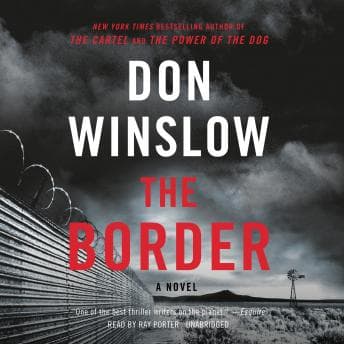
Twenty-nine hours. That's longer than my last deployment flight to Bagram, and I didn't want either one to end.
I finished The Border at 0200 on a Tuesday, sitting in my truck in the driveway because I couldn't bring myself to pause it and go inside. Linda found me out there with Ranger curled up in the back seat, both of us just... wrecked. She asked if I was okay. Honestly? I'm still not sure.
The Last War Keller Never Wanted to Fight
Let me cut to the chase - Don Winslow wrote the definitive American crime epic with this trilogy, and The Border is the closing argument. Art Keller, now running the DEA after spending forty years trying to burn down the cartels, discovers that killing Adán Barrera didn't end a damn thing. It made it worse. Thirty new monsters crawled out of the wreckage, and the heroin they're pushing is devastating American communities at a pace that makes the crack epidemic look like a warmup.
I've seen this scenario play out in real life - not the drug war specifically, but the sickening realization that winning the battle doesn't win the war. That the guy you eliminated gets replaced by something worse. Keller's arc in this book hit me harder than almost anything I've listened to in years because it captures that particular brand of exhaustion - the kind where you've given everything, lost people you love, and the mission keeps expanding in directions you never anticipated. When Keller delivers his testimony about the failed trillion-dollar drug war, it felt less like fiction and more like a classified briefing I'd sat through.
Winslow's research is staggering. The financial pipelines from cartel money through Wall Street real estate. The Guatemalan children fleeing north through corridors of violence. The way fentanyl-laced heroin moves from poppy fields to suburban veins. The author clearly did their homework - this isn't some Hollywood version of the drug war where a lone hero kicks in doors. This is systemic rot, and Winslow traces every vein of it.
And then there's the political angle. An incoming administration potentially in bed with the traffickers Keller's trying to destroy. Winslow wrote this in 2019, and some of these plot threads feel ripped from tomorrow's headlines. Whether that makes you uncomfortable depends on your politics, but the man isn't pulling punches.
Ray Porter Carrying 29 Hours Like It's Nothing
Ray Porter narrated all three books in this trilogy, and by The Border, he IS Art Keller. The exhaustion in his voice when Keller realizes the depth of the corruption around him - that's not acting technique. That's a narrator who's lived in this character's skin for three books and understands exactly where Keller's soul has been ground down to dust.
Porter doesn't do theatrical voice changes between characters. What he does is shift tone - there's a weariness when he's voicing Keller that's distinct from the cold calculation of the cartel figures, distinct from the desperate energy of the street-level addicts and dealers Winslow weaves in. His delivery of Keller's anger isn't shouting - it's that quiet, controlled fury that anyone who's spent time in command recognizes. The kind that scares people more than yelling ever could.
At 1.25x, Porter's pacing works perfectly. His natural cadence is measured - appropriate for the weight of this material - but bumped up slightly, it matches the urgency without losing the emotional texture. Twenty-nine hours is a serious commitment, and Porter made me forget I was listening to a single narrator handling what amounts to a cast of dozens.
Where It Gets Complicated
This is where it lost me - briefly. Winslow juggles so many storylines that around the middle stretch, I had to rewind a few times to keep the threads straight. You've got Keller's main arc, but also Nico the child migrant, various cartel factions cannibalizing each other, Wall Street money men, political operatives, and a heroin-addicted young woman whose story will gut you. It's ambitious as hell, and 90% of the time it works. But there are moments where a new character drops in and you're scrambling to remember which cartel faction they belong to.
That said - every single one of those threads pays off. Winslow doesn't waste storylines. By the climax, when these separate rivers converge, it's devastating in a way that earned every one of those 29 hours.
Content warning: this book is brutal. Cartel violence depicted in unflinching detail. Drug abuse portrayed honestly. If you've lost someone to addiction, some sections will be hard. Winslow doesn't exploit the suffering - he makes you feel it so you understand the stakes.
Who Should Gear Up For This
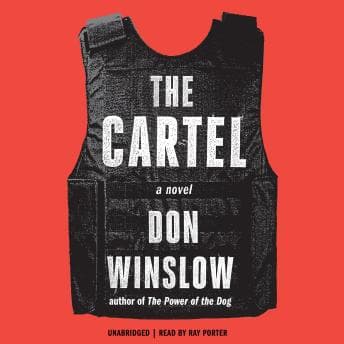
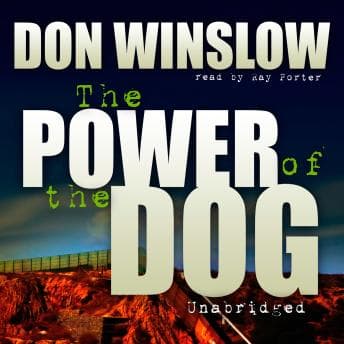
If you haven't read The Power of the Dog and The Cartel, do NOT start here. Go back. Do the work. This trilogy demands sequential commitment, and the payoff is worth it.
If you have read the first two? Worth your time? Here's the debrief: it's the best of the three. Wider scope, higher stakes, and an ending that's going to sit with you for weeks.
Skip it if you want clean, simple thrillers where the good guys win and the bad guys lose. That's not what this is. I tried scratching that itch with Murder List between books in this trilogy, and while it's a competent thriller, it reminded me exactly why Winslow plays in a different league entirely. This is a 29-hour examination of what happens when those categories stop meaning anything.
Mission Complete, But the War Goes On
Don Winslow retired from writing after this trilogy, and honestly, where do you go after this? The Border is the kind of book that makes other thrillers feel small. It's angry, it's sad, it's sprawling, and it respects your intelligence enough to show you the full picture - not just the shootouts, but the money, the politics, the human wreckage.
Ranger didn't move for the last three hours. Smart dog. He knew.
Mission accomplished.