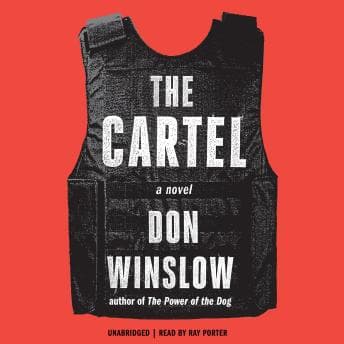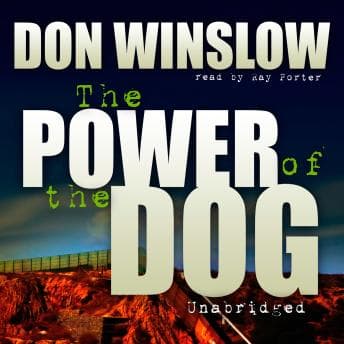

Look, I've worked trauma for fifteen years. I've seen cartel violence come through my ER doors - the kind of injuries that don't make it into novels because editors would say 'that's too much.' So when people tell me a drug war thriller is 'intense' or 'gritty,' I usually roll my eyes. They don't know gritty.
Don Winslow knows gritty.
I started this on a Friday night shift - the quiet kind where you're charting and praying the silence holds. Twenty hours later (spread across two weeks of commutes and post-shift decompressions), I'm sitting in my driveway at 8 AM, engine off, just... processing. Carlos texted asking if I was okay. I blamed allergies. I was lying.
The Violence That Actually Matters
Here's what Winslow gets right that most thriller writers miss: violence has weight. It has consequences. When someone dies in this book, you feel it in your chest because you've spent hours with these people. Art Keller isn't some invincible DEA superhero - he's a man being slowly destroyed by a war that can't be won. The Barrera brothers aren't cartoon villains. They're businessmen who happen to deal in cocaine and murder, and that's somehow worse.
The book spans decades. DECADES. From the jungles of Honduras to the streets of New York to the corruption-soaked halls of Mexican politics. And Winslow doesn't flinch. Not once. There's a scene - I won't spoil it - involving a priest that made me pull over. Just pulled right into a gas station parking lot and sat there. In fifteen years of night shifts, I've learned to compartmentalize. This book broke through that.
Ray Porter Is the Real Deal
Okay, so Ray Porter. I'd listened to him before in some sci-fi stuff Carlos recommended, but this? This is next-level work. (And I don't say that lightly - I teach nursing students, I know what actual teaching looks like.)
He does something smart with the accents. Mexican, Irish, Italian - they're distinct without being caricatures. When Adán Barrera speaks, you hear the education behind the menace. When Callan - the Hell's Kitchen hitman - talks, you hear every cold New York winter in his voice. Porter captures the story's intensity with these pauses that just... sit there. Making you wait. Making you dread what's coming.
Now. The female voices. Yeah, they're the weak spot. Nora Hayden is this fascinating, tragic character - a girl who becomes a high-class escort and gets tangled up with everyone - and every time she spoke, I noticed Porter struggling a bit. The women all sound similar, kind of breathy and interchangeable. It's not terrible, but in a twenty-hour book where the male characters are so perfectly differentiated, it stands out. I didn't smirk like some reviewers apparently did, but I noticed.
This Is Not How You Decompress (But I Did Anyway)
I should clarify: this is absolutely NOT a post-shift decompression book. This is the opposite of that. I usually listen to lighter stuff after a rough night - something that lets my brain unspool. This book wound me tighter.
But I couldn't stop.
Winslow was an investigator before he was a novelist, and it shows. The procedural details feel real. The way corruption spreads through institutions like an infection. The way good people make one small compromise, then another, then wake up one day and realize they've become the thing they were fighting. I've seen that happen in healthcare - on a much smaller scale, obviously - but the mechanism is the same. Small erosions. Justified exceptions. Until suddenly there's nothing left of who you started as.
The pacing is interesting. It's dense - really dense - with these stretches where Winslow goes deep into the history of the drug trade, the politics, the philosophy of it all. Some listeners apparently found those parts dull. I didn't. I had the opposite reaction to Man Who Knew Too Much - that one buried me in details without giving me the payoff. Maybe it's the nurse in me - I'm used to reading between the lines of medical histories, finding the story in the data. Those sections gave me the context to understand why everything else hurt so much.
Who Should Listen (And Who Really Shouldn't)
If you want a beach read, keep walking. If you're sensitive to violence - and I mean really sensitive, not just 'I don't love it' - this isn't for you. There are scenes involving torture, sexual violence, and the murder of innocents that are described with unflinching clarity. Winslow doesn't exploit it for shock value, but he doesn't look away either.
But if you want to understand the drug war - really understand it, not the sanitized version - this is essential. If you want characters who feel like real people making impossible choices in a system designed to destroy them. If you want twenty hours that will leave you different than when you started.
My mom would not love this. She'd call it 'too dark' and ask why I can't listen to nice books about nice people. But Carlos? He's already got the next book in the trilogy queued up on my phone.
Night shift approved. But maybe don't start it at 3 AM when the unit is quiet. You'll forget to check on your patients.