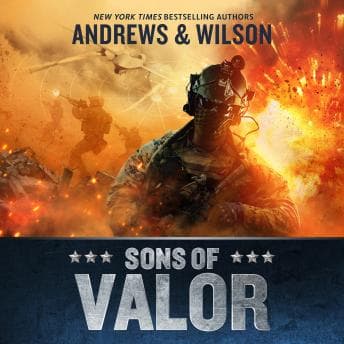

Look, I know what you're thinking. "Tom, you're a fantasy guy. If there aren't hard magic systems or stat blocks, why are you listening to a military thriller?"
Two words: Ray Porter.
I should be fixing the procedural generation algorithm for my thesis (Dr. Patel, if you're reading this, the code is compiling, I swear). Instead, I saw Ray Porter's name on the cover and clicked download faster than a rogue playing a reaction spell.
I usually live in worlds with dragons and spaceships—Bobiverse and Project Hail Mary are my comfort food—but Sons of Valor proves that a well-executed drone strike is basically just a Fireball cast at 9th level. Porter's narration of Project Hail Mary is what got me hooked on his voice in the first place—same gravelly intensity, just applied to saving humanity from terrorists instead of space microbes. And honestly? I'm here for it.
The Ray Porter Effect
Let's just get this out of the way: Ray Porter could narrate the terms and conditions of a software license agreement and I would listen to the whole thing. He did exactly that gravelly magic with Dune, making desert politics feel as urgent as a firefight.
He brings this gravelly, weary-but-capable energy that fits the Tier One operator vibe perfectly. You believe he's holding a rifle. You believe he's been awake for 36 hours tracking terrorists.
(Okay, fair warning: His female voices can sometimes sound a bit like... well, Ray Porter trying to sound gentle. It took me a chapter to adjust to Whitney Watts, the CIA analyst. But once you lock into the rhythm, it doesn't matter. The man knows how to control a scene.)
A Tactical D&D Party
The authors, Andrews and Wilson, are actual veterans, and you can tell. The jargon flows. It doesn't feel like they just Googled "military words."
From a gamer's perspective, this is just a high-stakes campaign. Chunk (the Navy SEAL lead) is your Paladin/Fighter multiclass—tanky, righteous, hits like a truck. Whitney is the Wizard/Diviner, spotting patterns in the data that everyone else misses.
As a CS grad student drowning in data analysis myself, I felt seen by the data-mining plotline. Finally, someone using pattern recognition to save the world instead of just generating slightly different trees for a video game background. The tech aspect—specifically the drone warfare—scratched that sci-fi itch even though it's set in the real world. It's terrifyingly plausible.
Why I Didn't Write My Thesis This Week
The pacing is relentless. Zero chill.
I put this on while "cleaning my apartment" (read: moving piles of books from the floor to the desk) and suddenly four hours had passed. The tension stays tight, the stakes are global, and the bad guys are actually competent—which makes the victory feel earned.
If you usually stick to Sanderson or Abercrombie, this is a solid palate cleanser. Same attention to mechanical detail—just with ballistics instead of mana. Plus, listening to Ray Porter yell tactical commands beats my own inner monologue panicking about graduation dates.
Who's rolling initiative: Fantasy and sci-fi readers who trust Ray Porter to drag them into unfamiliar territory. Gamers who appreciate tactical precision. Anyone who wants their thriller grounded in real-world tech.
Who should skip: If you need magic systems or alien worlds to stay engaged, this might not hold you. Also maybe skip if military jargon makes your eyes glaze over.
Roll for Recommendation
Come for the narrator, stay for the high-tech warfare. Now if you'll excuse me, I have a thesis that's definitely still compiling.