
"She was found bisected at the waist, drained of blood, posed like a broken doll in a vacant lot."
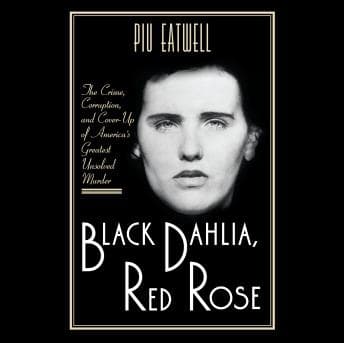
I was making chai when Robertson Dean delivered that line—somewhere around the 45-minute mark—and I had to set down the pot. Not because I'm squeamish (you don't survive three years of abnormal psychology seminars without developing some tolerance), but because of the clinical precision in his voice. Dean doesn't sensationalize Elizabeth Short's murder. He presents it the way a detective might present evidence to a jury. And that restraint? That's what makes the horror land.
The Psychology of a Cold Case Obsession
Here's what fascinates me about the Black Dahlia case from a research perspective: it's become a Rorschach test for American anxieties. Every generation projects onto Elizabeth Short whatever they need her to be—fallen woman, innocent victim, cautionary tale, feminist symbol. Piu Eatwell understands this. She spends considerable time not just on the murder itself, but on the psychological ecosystem of 1947 Los Angeles that made this particular brutality possible.
The protagonist here isn't Elizabeth Short. It's the city. And the city exhibits classic narcissistic personality disorder—glamorous surface, rotting core, pathological need to protect its image at any cost. The LAPD's corruption wasn't incidental to the cover-up; it was structural. Eatwell traces the web of payoffs, the relationships between cops and organized crime, the way the press and police fed each other information like codependent partners in a toxic relationship.
My therapist would have thoughts about this city as a character. Many thoughts.
What Sets Eatwell's Investigation Apart
I've listened to probably a dozen Black Dahlia treatments over the years. (My dissertation committee would call this "research." My mother would call it "morbid." Both are correct.) What sets Eatwell apart is her legal background. She approaches the evidence the way I approach case studies—systematically, skeptically, with an eye for what doesn't track.
The newly unredacted FBI files she obtained? They're not just window dressing. She uses them to demonstrate specific contradictions in the official LAPD narrative. Around hour six, she shows that certain witnesses were actively discouraged from providing testimony that pointed toward particular suspects with political connections.
Is her proposed culprit definitive? I found myself asking: why does this solution satisfy where others haven't? Eatwell builds her case circumstantially but thoroughly. Psychologically, it tracks. The profile she constructs of her suspect aligns with what we understand about organized sadistic offenders. Whether you're convinced will depend on your evidentiary standards.
Dean's Controlled Tension
Dean narrates with what I can only describe as controlled tension. His pacing is deliberate—this isn't a thriller, and he doesn't treat it like one. The nine-hour runtime felt appropriate; he's not rushing through the procedural elements or the historical context.
I will say: if you're expecting distinct character voices for the various witnesses and suspects, you won't find them here. Dean maintains a consistent register throughout, which works for the documentary tone but means you need to pay attention to who's speaking. This is focused listening material. I tried it during a morning jog once and had to rewind three times. Ended up finishing it over several evenings, sitting at my desk with notes open. (Yes, I took notes on an audiobook. This is who I am now.)
Nobody Gets Flattened Into a Type
What makes this case study compelling is Eatwell's refusal to reduce anyone to a symbol. Elizabeth Short wasn't just a victim. She was a young woman with specific dreams, specific vulnerabilities, specific patterns of behavior that made her visible to predators. The men who preyed on would-be actresses in 1940s Hollywood weren't monsters from another planet—they were products of a system that enabled them.
This is a fascinating study in institutional failure. The corruption Eatwell documents isn't cartoonish villainy. It's the ordinary, banal corruption of people protecting their interests, their friends, their careers. The cover-up happened because covering up was easier than accountability. Because Elizabeth Short was a nobody from nowhere, and the suspects had connections.
That's the part that stays with me. Not the gruesome details. The bureaucratic indifference.
Who Will Find This Worth Nine Hours
If you want a quick true crime hit with dramatic reveals every twenty minutes, this will frustrate you. Eatwell is methodical. She's building a case, not telling a thriller. Skip it if you need narrative momentum over documentary rigor.
But if you're interested in how systems fail, how power protects itself, how a single murder can illuminate an entire corrupt ecosystem—this is essential. If you've read other Black Dahlia books and found them sensationalized or incomplete, Eatwell's legal rigor will satisfy.
Content warning: the violence is described clinically but explicitly. The sexual content relates to exploitation and assault. This is not easy listening.
Closing the Case File
I finished this around midnight, alone in my apartment, the chai long cold. And I thought about all the Elizabeth Shorts—the women whose murders became mysteries because solving them was inconvenient. Cases with powerful suspects are statistically less likely to be prosecuted. We know this. We've always known this. That same institutional rot—systems protecting the powerful—is what makes 1986 - Book 3: At the End of Time so unsettling when it examines how authority figures manipulate truth.
Eatwell doesn't claim to have solved the Black Dahlia case definitively. What she's done is demonstrate, with documentary precision, why it remained unsolved. And that's almost more damning than a conviction would have been.