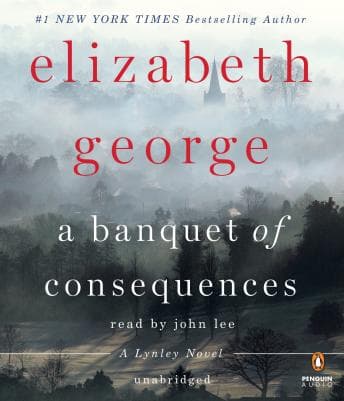

"The suicide of William Goldacre is devastating to those left behind." That line hits you maybe twenty minutes in, and I remember thinking - sitting in my home office at 2300 with Ranger snoring at my feet and a bourbon I'd forgotten about going warm - that Elizabeth George wasn't messing around with this one. She drops you into the aftermath of a young man's leap off a Dorset cliff and then spends the next twenty-one hours pulling every thread connected to that single act of desperation.
Let me cut to the chase: this is a slow-burn investigation that rewards patience. If you need bodies stacking up every chapter, this isn't your mission. I ran into the same patience-versus-payoff question with Sister Simon's Murder Case, though that one never quite earned the slow burn the way George does here. But if you appreciate the kind of methodical detective work that actually resembles how cases get solved - interviews, contradictions, political maneuvering within the department - then settle in.
Where the Aristocrat Meets the Disaster
John Lee does something genuinely clever with the Lynley-Havers dynamic that kept me hooked through those 21-plus hours. Lynley's voice carries this aristocratic ease, the kind of tone I've heard from British liaison officers who somehow make a dusty FOB feel like a gentleman's club. Then he shifts to Havers and it's all blunt edges and stubborn defiance - you can practically hear her rumpled clothing through the audio. The contrast isn't subtle, and it shouldn't be. These two characters operate in completely different social orbits, and Lee makes you feel that class divide in every exchange without ever overdoing it.
The real treat is Nkata - Winston Nkata, the third member of their Scotland Yard trio. Lee gives him this measured, tech-savvy precision that sits somewhere between Lynley's polish and Havers's chaos. The scenes where all three are working the case together? That's where the narration fires on all cylinders.
Havers's Makeover and Lynley's Zoo Vet (Yes, Really)
George throws in character moments that could feel like filler in a lesser writer's hands but actually do real work here. There's a subplot where Havers attempts some kind of personal makeover - I won't spoil the details, but Lee narrates it with this barely-contained amusement that had me grinning on my morning run. You can tell Lee enjoys these characters after spending so many books with them.
Then there's Lynley developing an infatuation with a zoo veterinarian who moonlights as a roller derby player. I'll be honest - when that detail dropped, I pulled out an earbud and looked at Ranger like "did you hear that?" It's so wonderfully bizarre and human. George clearly did her homework on making these investigators feel like actual people with actual lives outside the case file. The author earns these moments because the central mystery - the connection between a cliff suicide and a poisoning in Cambridge - is dark enough to need the counterweight.
The 21-Hour Commitment Question
Here's where I have to be straight with you. Twenty-one hours and forty-four minutes is a serious time investment. That's roughly six round trips between Austin and Dallas, or about fourteen sessions on the treadmill. The pacing is deliberate - this is George building a psychological puzzle, layering family secrets and buried resentments until the picture becomes clear. There were stretches in the middle, maybe hours eight through twelve, where I wanted to bump my speed up to 1.5x. The Dorset countryside descriptions are gorgeous but George lingers. She really lingers.
I stuck with my standard 1.25x and I think that's the sweet spot. Any faster and you'll miss the undercurrents in Lee's delivery - the way he shifts tone when a character is lying, the slight edge that creeps in during interrogation scenes.
The ending, though. I've heard some folks take issue with it, and I get why. Without giving anything away, the resolution felt like George prioritized thematic closure over the kind of satisfying case-cracking moment that mystery readers crave. It's not a fumble exactly - more like she chose to stick the psychological landing at the expense of the procedural one. For me, that trade-off mostly worked. Mostly.
Who Should Deploy on This One
If you've been riding with Lynley and Havers for multiple books, this is considered a return to form after some weaker entries. Worth your time? Here's the debrief: fans of character-driven British crime fiction will eat this up. If you need your thrillers running at combat speed, you'll get frustrated. This is an investigation, not an operation - lots of conversation, psychological pressure, people revealing themselves through small lies.
Content note: there's abuse and some sexual content woven through the backstory. It's handled seriously, not gratuitously, but be aware.
Mission Status: Qualified Success
I came in expecting a standard procedural and got something more ambitious - a book about how one family's secrets can ripple outward and poison everything they touch. John Lee's performance is the engine that keeps those 21 hours moving. George's writing is sharp where it counts, indulgent where it probably shouldn't be, and ultimately worth the investment if you're the type who'd rather understand a criminal than just catch one.
Ranger slept through most of it. But he perked up during the roller derby scenes. Smart dog.