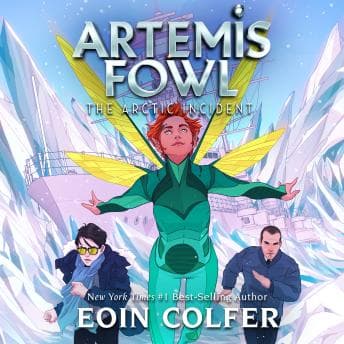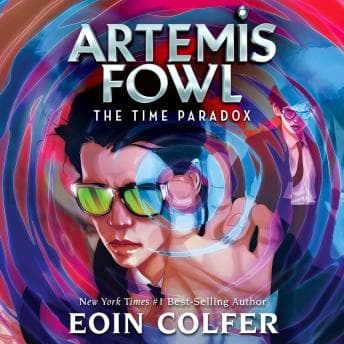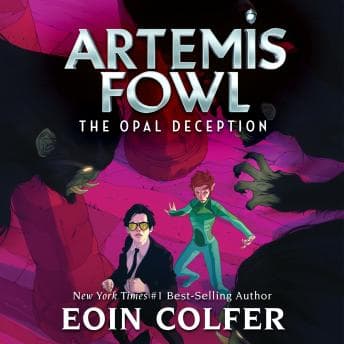

Okay, so I was supposed to be working on my thesis - something about procedural dungeon generation, Dr. Patel would be thrilled to know - but instead I found myself seven and a half hours deep into fairy heists and cloning conspiracies. Worth it? Absolutely. Will I regret this during my next advisor meeting? Also absolutely.
Look, the Artemis Fowl series is basically what happens when you ask "what if a twelve-year-old supervillain ran heists against fairies with military-grade technology?" And by book four, Colfer has this world humming like a well-oiled D&D campaign. The magic system is chef's kiss - it's got rules, limitations, and consequences. Brisingr has that same satisfying crunch to its magic—everything costs something, and the world feels lived-in because of it. The LEPrecon fairy police aren't just whimsical nonsense; they're a functioning paramilitary organization with bureaucracy and politics and internal conflicts. This is Sanderson-level world-building for the middle grade crowd, and I mean that as the highest compliment.
The Gut-Punch Nobody Warned Me About
I need to talk about Commander Root. Without spoiling too much for the uninitiated - this book goes DARK. Like, darker than I remembered from reading these as a kid. Colfer pulls absolutely no punches here, and there's a moment early on that genuinely made me pause my walk to the coffee shop and just... stand there. On a sidewalk. Processing.
Opal Koboi as a villain is genuinely terrifying in a way that works for both kids and adults. She's not cartoonishly evil - she's methodical, patient, and absolutely unhinged in the most calculated way possible. The cloning herself to escape prison? That's the kind of big-brain villain move my D&D group would spend three sessions trying to pull off. And then immediately fail. Because we're not as smart as we think we are.
Nathaniel Parker Does the Heavy Lifting
Here's where I gotta be honest - I hadn't heard much about Nathaniel Parker before this, and I couldn't find a ton of background on his narration work. But based on this performance? The guy gets it. His Artemis is perfectly smug without being punchable (a difficult balance when your protagonist is a teenage criminal genius). Holly Short sounds appropriately tough and frustrated. And his Opal? Genuinely unsettling.
Some reviewers apparently found his pacing too fast, but honestly? For a heist-and-chase book like this, the brisk pace worked for me. The Raven Boys is more that slow-burn type—atmospheric and moody where this is kinetic and urgent. This isn't a slow-burn political fantasy where you need time to absorb the factions and allegiances. It's fairies with guns chasing a megalomaniac pixie through multiple dimensions. Speed is appropriate.
The character differentiation is solid - I never got confused about who was speaking, which is more than I can say for some audiobooks I've suffered through. (Looking at you, that one LitRPG where every character sounded like the same bored guy.) Parker switches between Mulch Diggums' gruff criminal voice and Butler's quiet menace without missing a beat.
Where It Drags (Just a Little)
I'll be real - there are moments in the middle act where the plot mechanics get a bit... mechanical. Colfer has to do some heavy lifting to reset Artemis's memory situation from previous books, and you can feel the gears turning. It's not bad, just noticeable. I found myself zoning out slightly during one exposition dump about fairy technology, but then Opal would do something horrifying and I'd snap right back.
Also - and this is super minor - some of the Irish setting stuff felt a little odd with Parker's accent choices. Nothing deal-breaking, just occasionally pulled me out of the moment.
Would My D&D Group Love This?
Absolutely yes. The heist elements, the tech-magic hybrid system, the morally gray protagonist who's slowly developing something resembling a conscience - it's all stuff we'd steal wholesale for a campaign. (Sorry, "be inspired by." Definitely not stealing.)
If you're coming into this fresh without the earlier books, you might be a little lost on some character dynamics. But honestly? Colfer does enough quick-and-dirty recapping that you could probably manage. I'd still recommend starting from book one, though - the progression is satisfying and watching Artemis slowly become less of a complete sociopath is half the fun.
Who Should Listen (And Who Should Skip)
This one's for fans of clever heists, tight magic systems, and villains who actually feel dangerous. Kids who want something smarter than the usual fare, adults revisiting childhood favorites, anyone who appreciates world-building with actual rules. Skip it if you need a standalone - you'll want the earlier books for full context - or if you're looking for something cozy. This gets genuinely dark.
At 7.5 hours, it's a perfect length for a weekend of chores or a few commutes. Not so long that you lose the thread, not so short that it feels rushed. I burned through it in basically two days while pretending to organize my apartment. (The apartment remains unorganized. The audiobook is finished. Priorities.)
For kids, this is genuinely great - smart, funny, with real stakes and consequences. For adults who grew up on these books? It holds up way better than you'd expect. And for CS grad students avoiding their thesis? Well. It's seven and a half hours you won't spend writing about procedural generation. Make of that what you will.